
Adult ADHD Testing: What to Expect, How It Works, and How to Prepare

For some adults, difficulties with focus, organization, or follow-through have been part of daily life for years. They may affect work, relationships, finances, or everyday responsibilities. When these patterns persist, an adult ADHD evaluation can help clarify whether ADHD or another factor may explain them.
Testing adults for ADHD involves reviewing symptoms, developmental history, and the impact of difficulties on daily life; an online screener alone cannot establish a diagnosis.
A qualified provider evaluates your symptoms, developmental history, and their impact on daily life before determining the next steps.
Key Takeaways
- An online quiz can flag symptoms, but only a qualified clinician can confirm ADHD.
- A clinician reviews your current symptoms, developmental history, and how difficulties affect daily life in different settings.
- A good clinician also checks for other causes, like anxiety, depression, or poor sleep.
- Time and cost vary by provider, so ask what’s included before you book.
- Bring real examples, your medication list, and your questions to the visit.
What an Online Test Can’t Do
An ADHD screener for adults is a preliminary questionnaire that can flag symptoms and help you decide whether to seek an evaluation. It cannot confirm ADHD or replace an assessment by a qualified provider.
A screening tool, such as the Adult ADHD Self-Report Scale (ASRS), can identify symptoms that may warrant further evaluation. It cannot independently establish an ADHD diagnosis.
| Online screener | Full evaluation | |
| What it is | A short questionnaire | A visit with a qualified clinician |
| What it tells you | Whether your symptoms look like a pattern | Whether ADHD, something else, or both explains them |
| Can it confirm ADHD? | No | Yes, when a qualified clinician diagnoses it after a full evaluation |
| Your next step | Talk to a clinician if the result worries you | Review the findings and plan next steps |
Treat the result as a starting point, not a diagnosis. If it flags possible symptoms, discuss them with a qualified clinician. If the result is negative but your difficulties continue, seek advice anyway; a screener alone cannot explain persistent symptoms.
Signs That May Lead You to Seek an Adult ADHD Evaluation
No single sign proves ADHD. But a pattern that won’t go away is worth a closer look. Here’s a quick adult ADHD symptoms checklist, in plain words.
- Do you lose your train of thought halfway through a task?
- Start projects you never finish?
- Miss deadlines, or lose track of time, even when you care a lot?
- Feel restless, or act before you think?
- Forget bills and appointments?
If these patterns persist and affect work, home life, or relationships, discuss them with a clinician. This checklist can help you describe your concerns, but it cannot diagnose ADHD.
These experiences can have many causes. A clinician considers how long they’ve been occurring, whether similar patterns were present earlier in life, and how much they interfere with your daily functioning.
Adults with predominantly inattentive ADHD symptoms may struggle with organization, follow-through, remembering details, or staying focused, even when they do not appear physically hyperactive. Some find it easier to concentrate on highly interesting activities than on routine tasks. These patterns alone do not establish a diagnosis.
Who Can Diagnose ADHD in Adults?
Testing adults for ADHD can involve several kinds of licensed professionals, and the rules change from state to state. What matters most is training and experience with adult ADHD. CHADD, a national ADHD nonprofit, says to look for a qualified professional who has worked with adults.
Psychiatrists are physicians who can evaluate ADHD and prescribe medication within their scope of practice. Psychologists may conduct ADHD evaluations and psychological assessments, depending on their training and licensing. Some primary care providers also evaluate and manage ADHD. Qualifications, prescribing authority, and the services offered vary by state and individual provider.
When you search adhd doctor near me or psychiatrist adhd near me, check the provider’s license, experience with adults, and scope of practice.
How Do Doctors Test for ADHD in Adults?
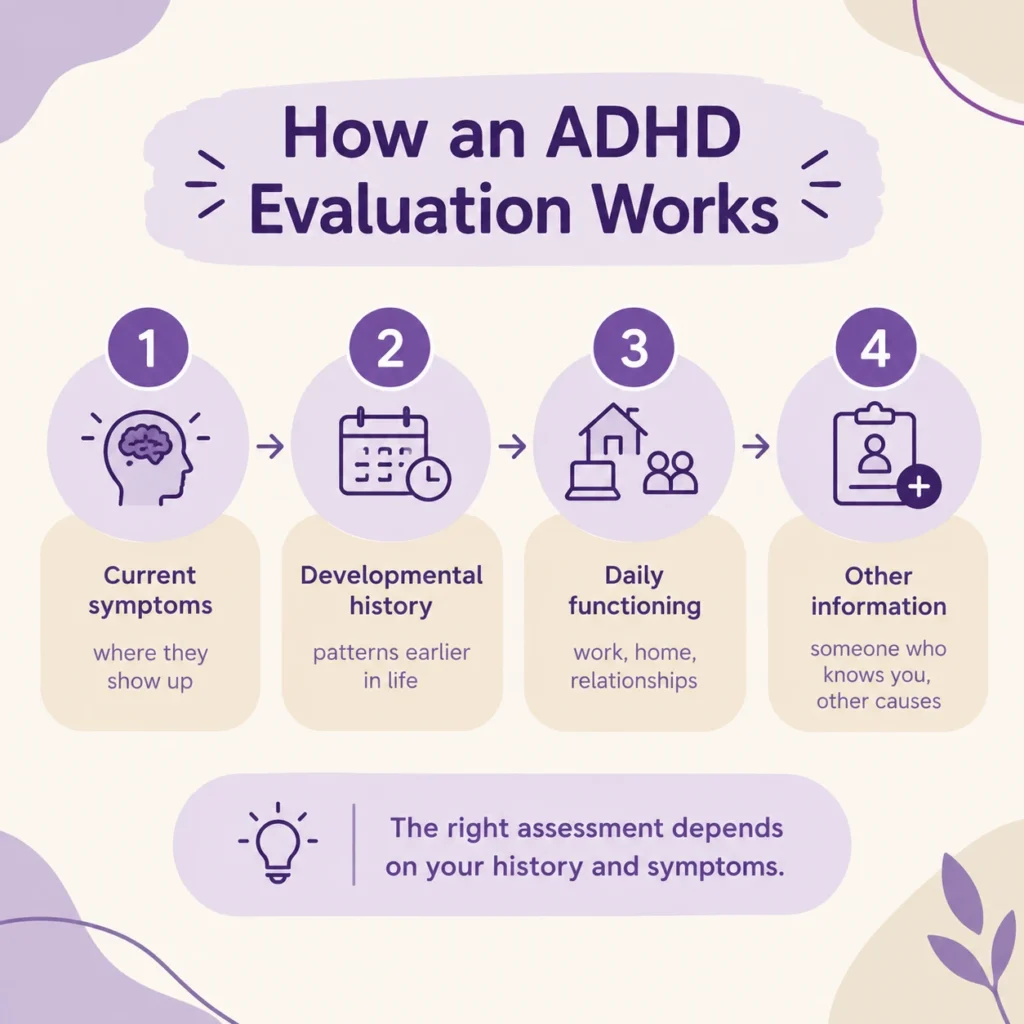
So, how do doctors test for ADHD? A clinician diagnoses ADHD by evaluating symptoms, developmental history, daily functioning, and other relevant information. Most start with what is happening now. What are your symptoms, and where do they show up? Work? Home? Your relationship? Next, they ask about your past, especially whether you saw similar patterns as a kid. Then comes the big one: what does all of this do to your daily life?
A clinician may also assess other conditions that can cause similar symptoms or occur alongside ADHD, including anxiety, depression, sleep difficulties, or relevant medical conditions. A provider may add psychological testing for ADHD, like attention or memory tasks. The appropriate assessment depends on your history and symptoms. Many clinicians also talk with someone who knows you well, like a partner, a parent, or a close friend.
What Questions Might Your Provider Ask?
Every clinic works a little differently, but you can expect questions like these.
- When do you lose focus, and what are you doing at the time?
- How do you handle a task with lots of steps?
- Do you ever speak or act before you think?
- What were you like in school?
- How do these patterns affect your job and your relationships?
- How do you sleep, and what medications do you take?
Specific examples help your provider understand how these patterns affect your daily life.
How to Prepare for an ADHD Evaluation
A little prep makes the ADHD evaluation process go better. Before you go, try to:
- Write down examples of how your symptoms affect relationships, finances, and everyday responsibilities, in addition to work and home life
- Think back to childhood, and grab old school records if you have them (but don’t wait on them)
- Gather your medication and supplement list, your health history, and your sleep habits
- Ask the clinic if you should fill out questionnaires ahead of time
- Ask whether a partner, a parent, or an old friend can weigh in
- Confirm the appointment format, likely number of visits, total fees, insurance coverage, and whether follow-up appointments cost extra
How Long Does ADHD Testing Take?
People often ask, “how long does ADHD testing take?”. The answer depends on the clinician, your needs, and whether additional records, appointments, or assessments are necessary.
If you have ADHD alongside anxiety or depression, it can take longer. Additional concerns, records, or assessments may affect the timeline. Ask the clinic what the process involves rather than judging its quality by appointment length alone.
How Much Does ADHD Testing Cost?
Everyone wants to know how much does ADHD testing cost, and the answer depends on your insurance plan, the type of evaluation, and the services provided. Telehealth visits and office visits can price out differently as well.
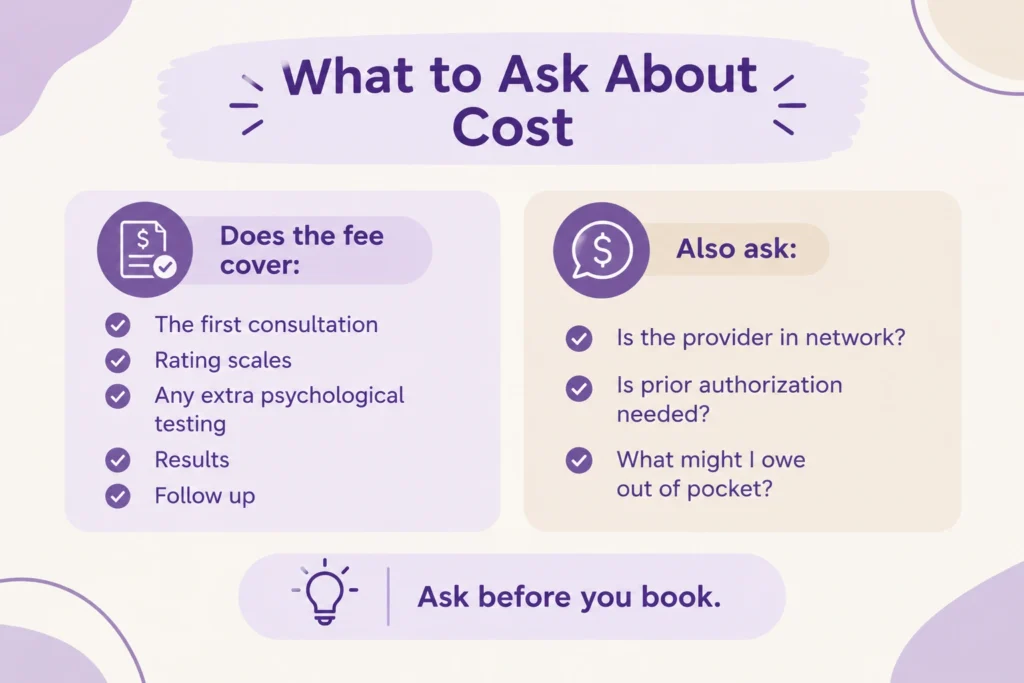
Before scheduling, ask whether the fee covers the initial consultation, rating scales, any additional psychological testing, interpretation of results, and the follow-up. Confirm whether the provider is in-network, whether prior authorization is required, and what you may owe out of pocket.
Can You Get an ADHD Evaluation Through Telehealth?
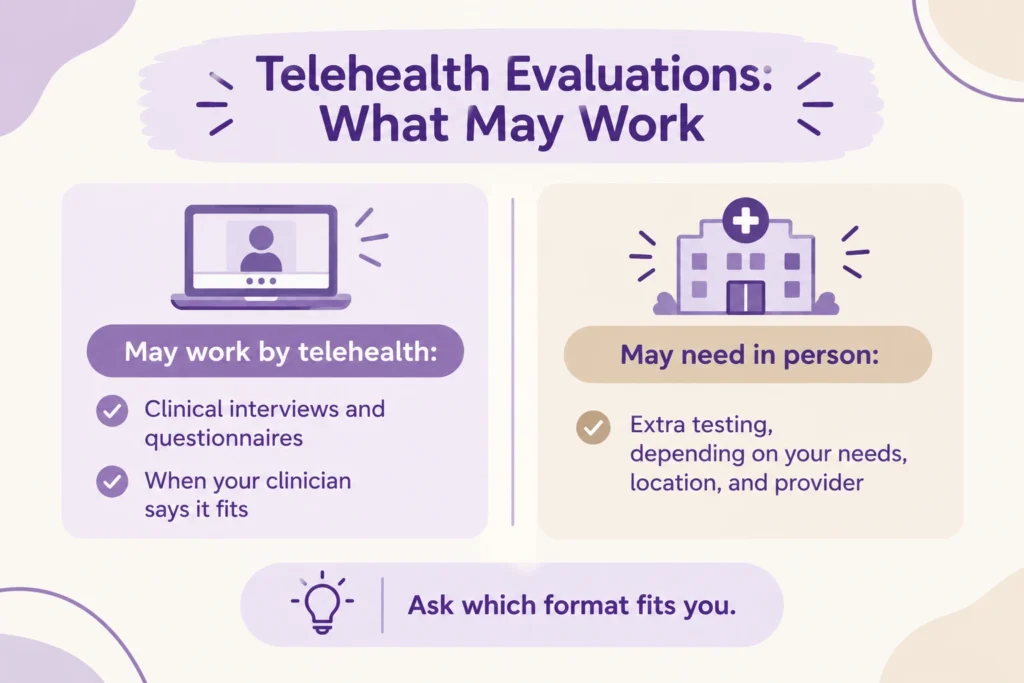
Some providers offer ADHD evaluations through telehealth. Some parts of an ADHD evaluation, including clinical interviews and questionnaires, may be completed through telehealth when the clinician determines that this format is appropriate. Depending on your needs, location, and the provider’s assessment, an in-person visit or additional testing may be necessary. So, ask which format fits you.
If you are searching for an ADHD assessment near you, ask which appointment format is available and appropriate for your situation.
What Comes After the Evaluation
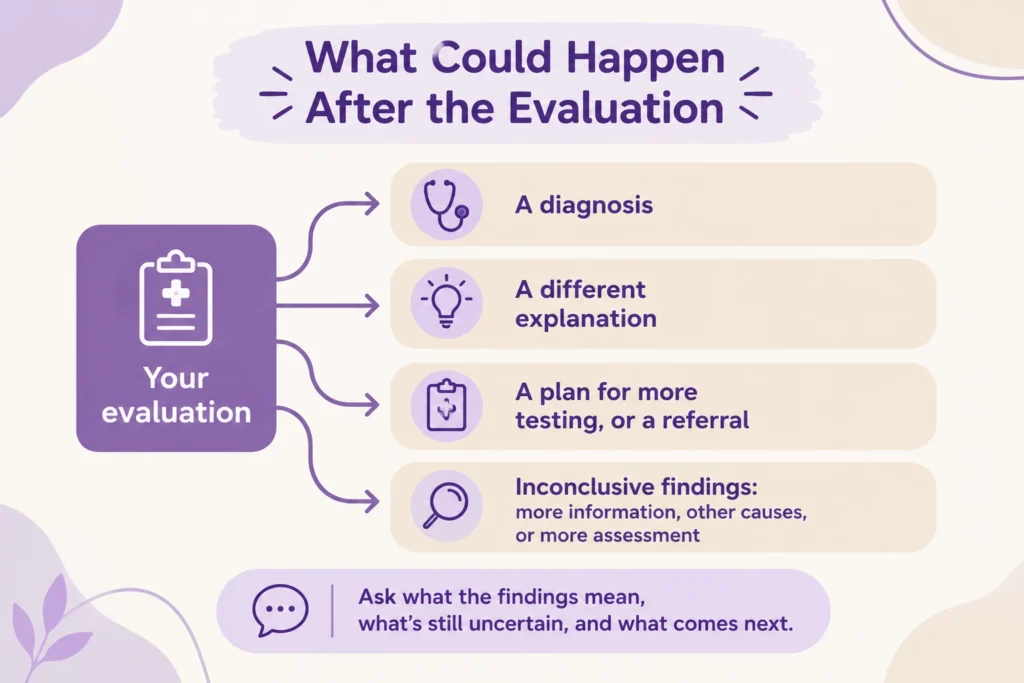
Your provider should walk you through what they found, how it fits your symptoms, and what happens next. You might leave with a diagnosis. Or a different explanation. Or a plan for more testing, or a referral.
If the findings are inconclusive, your provider may recommend gathering more information, reviewing other possible causes, or completing additional assessment. Ask what the findings mean, what remains uncertain, and what the next steps will be.
If you receive an ADHD diagnosis, your provider can discuss treatment options based on your symptoms, health history, preferences, and individual needs. Options may include medication, therapy, skills-based support, or a combination. Not everyone needs the same approach, and your provider can explain the potential benefits, risks, and follow-up involved.
If stimulant medication is not appropriate or is not your preference, ask your provider whether adhd non-stimulant medication may be an option. Your provider can explain how the available treatments differ and discuss their benefits, risks, and suitability for your health history.
Treatment may need adjustment over time. People respond differently to an evaluation or diagnosis, and your provider can help you discuss questions or concerns about the next steps.
Questions to Ask Before Booking an ADHD Evaluation
Not every clinic runs things the same way, so ask before you book:
- What training and experience do you have with adult ADHD?
- What does your evaluation include, and how many visits might I need?
- Do you use validated rating scales as part of a broader assessment?
- How do you check for conditions that look like ADHD or show up alongside it?
- Will you explain your findings and talk through next steps?
- What is the total expected cost, including the evaluation, any additional testing, and follow-up visits? Does my insurance cover any of these services?
- If I need treatment, can you provide follow up care or coordinate it?
Use these questions when comparing providers for adhd doctor near me to assess their qualifications, assessment process, fees, and follow-up care.
Adult ADHD Testing in Frisco, TX
If you’re looking for adult ADHD testing in Frisco, TX, Beautiful Minds can explain its evaluation process, available appointment formats, and fees.
At Beautiful Minds in Frisco, psychiatrists with experience in adult ADHD handle your evaluation. They look at your whole story. That includes inattentive ADHD adults who’ve spent years coping alone, and people whose ADHD comes with anxiety, depression, or both. Nobody rushes you through a checklist. You can discuss the appointment format.
The team checks your insurance benefits ahead of time, so you know what to expect on cost. Ready for an answer? Call 972 (668)-3109 or book an appointment for adhd evaluation using website.
Frequently Asked Questions
No. An ADHD screener for adults can flag symptoms, but a qualified clinician must evaluate the full picture to determine whether ADHD is present.
The timeline varies. Some evaluations require multiple appointments, additional records, or further assessment. Ask the clinic what to expect.
Coverage depends on your plan, network, and services provided. Confirm benefits and out-of-pocket costs with your insurer and clinic before booking.
Qualified psychiatrists, psychologists, and some primary care providers may evaluate ADHD, depending on their training, licensing, and local rules. Ask about adult ADHD experience and follow-up care.
Bring your medication list, relevant health history, and examples of how symptoms affect daily life. Childhood or school records may help if available. Ask the clinic for specific requirements.
A negative screener does not explain persistent difficulties by itself. Discuss your symptoms with a healthcare professional and ask whether further evaluation is appropriate.
Your Next Step: Get a Real Answer
An adult ADHD evaluation can help you better understand your symptoms and identify appropriate next steps. Whether the findings point to ADHD, another explanation, or the need for further assessment, you can work with a qualified provider to decide what to do next.
A screener can be a starting point, but an ADHD diagnosis requires a clinical evaluation. Gather your examples and questions, then speak with a qualified provider about the next steps. Beautiful Minds in Frisco can explain its evaluation process and available appointment options.
Disclaimer: This content is for informational and educational purposes only. It is not a substitute for professional mental health advice, diagnosis, or treatment. If you are in crisis, call or text 988 for the Suicide and Crisis Lifeline or call 911 in an emergency.