Adult ADHD Treatment: Signs You Shouldn’t Ignore
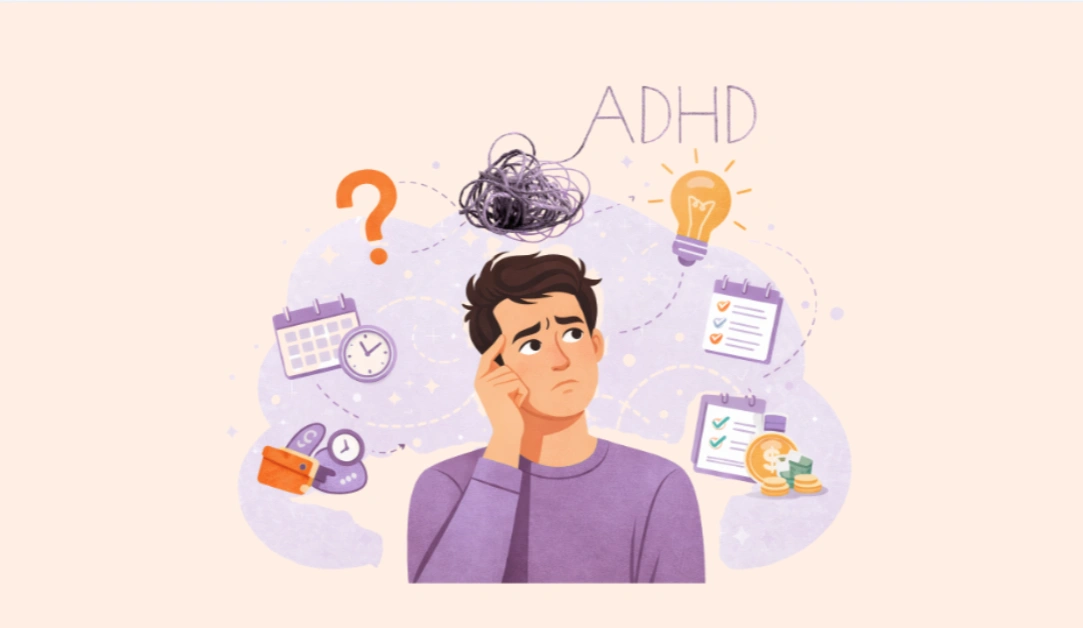
If you are an adult who constantly struggles with focus, unfinished tasks, missed deadlines, or mental restlessness, you may have wondered: Is this stress… or something more?
Many adults in Frisco, across Dallas-Fort Worth silently live with symptoms of ADHD without realizing it. They blame themselves for being “disorganized,” “lazy,” or “bad at time management.” It may be a treatable medical condition.
Adult ADHD treatment helps professionals, parents, entrepreneurs, and students regain clarity, confidence, and control over their lives. This guide will help you understand the signs, differences from anxiety, the evaluation process, treatment options, and when to seek help.
Understanding Adult ADHD
Attention-Deficit/Hyperactivity Disorder (ADHD) is often thought of as a childhood condition. However, research shows that over 60% of children with ADHD continue to experience symptoms in adulthood. In the United States, it is estimated that approximately 4–5% of adults live with ADHD, and many remain undiagnosed.
Unlike childhood ADHD, adult ADHD often looks different. Hyperactivity may become an internal restlessness. Instead of classroom problems, adults struggle at work, in relationships, and with daily responsibilities.
Seeking Adult ADHD treatment means addressing not just attention problems, but also emotional regulation, executive function, and long-term mental wellness. At Beautiful Minds Frisco, TX we have certified providers with more than a decade of experience who have helped several individuals with ADHD treatment and help them to establish a peaceful, balanced, and structured lifestyle.
Common Adult ADHD Symptoms
Recognizing adult ADHD symptoms is the first step toward proper care.
1. Difficulty Sustaining Attention
You might struggle to focus during meetings, find yourself zoning out in conversations, or start projects with good intentions but rarely finish them.
2. Chronic Disorganization
You might find yourself losing things like keys, phones, or important documents, living with a constantly cluttered space, or forgetting appointments even when you set reminders.
3. Time Blindness
You might underestimate how long tasks will take, end up running late more often than you’d like, and occasionally miss important deadlines.
4. Impulsivity
You might interrupt people during conversations, have emotional reactions that feel stronger than the situation, or make impulsive decisions like spending money without thinking it through.
5. Mental Restlessness
You might feel constantly on edge, have racing thoughts that won’t slow down, and struggle to truly relax even when you try.
Many adults in Frisco, Plano, McKinney report thinking, “I’ve always been like this.” But lifelong symptoms do not mean they should be ignored.
ADHD vs Anxiety: Understanding the Difference
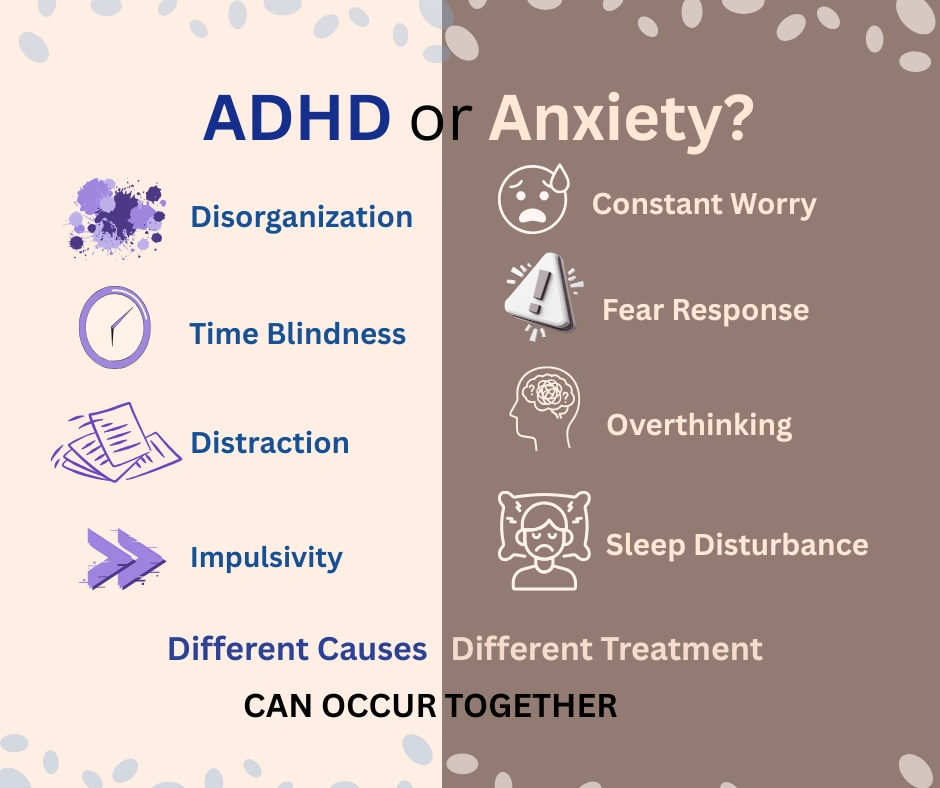
One of the most common questions is the difference between ADHD and anxiety.
Both conditions share overlapping symptoms:
You might feel restless, struggle to concentrate, have trouble sleeping, and find yourself getting irritated more easily than usual.
However, the root cause differs.
ADHD Focus Problems
Your mind may wander easily because of distractions, making it difficult to organize your thoughts or get started on tasks.
Anxiety Focus Problems
Your mind may stay preoccupied with worry, leading you to avoid things out of fear and overthink worst-case scenarios.
Research shows that up to 50% of adults with ADHD also experience anxiety disorders, including generalized anxiety disorders. This is why understanding ADHD vs anxiety symptoms is critical. A misdiagnosis can delay effective treatment.
A proper evaluation helps determine whether symptoms stem from ADHD, anxiety, or both.
Why Proper Diagnosis Matters
Many adults self-diagnose after reading articles online. While awareness is helpful, a professional ADHD diagnosis in adults requires a structured diagnostic process.
An accurate clinical diagnosis helps:
A proper evaluation helps rule out thyroid issues, sleep disorders, or depression, distinguish ADHD from trauma-related symptoms, identify any co-existing anxiety or mood disorders, and create a personalized treatment plan.
Studies show that untreated ADHD in adults is associated with:
Without proper support, it can lead to job instability, more conflict in relationships, a higher risk of substance misuse, and increased rates of depression.
An accurate diagnosis is not about labeling. It is about understanding your brain and choosing the right support.
What to Expect During an ADHD Evaluation
If you seek an ADHD evaluation, the process typically includes:
1. Comprehensive Clinical Interview
A psychiatrist reviews:
An evaluation usually looks at your childhood history, academic performance, challenges at work, and emotional patterns over time.
2. Symptom Assessment Tools
Standardized questionnaires measure:
It often evaluates patterns of inattention, impulsivity, and difficulties with executive functioning.
3. Medical & Mental Health Review
Providers rule out:
It may also check for other conditions such as anxiety disorders, depression, sleep disorders, or thyroid problems.
4. Functional Impact Analysis
How symptoms affect:
It also looks at how symptoms are affecting your work performance, relationships, and everyday tasks.
This structured approach ensures a reliable clinical diagnosis.
If you are ready to take that step, book a consultation with our expert providers at Beautiful Minds Frisco, TX.
Medication Options for Adult ADHD
Medication is often part of ADHD medication for adults’ treatment plans.
Stimulant Medications
They help improve focus and attention by increasing dopamine activity in the brain and are often the first-line treatment.
Non-Stimulant Medications
They can be a good option for people with anxiety and for those who are sensitive to stimulant medications.
Research indicates that stimulant medications improve symptoms in approximately 70–80% of adults with ADHD.
Medication decisions are individualized. Not every patient requires medication, but for many, it significantly improves quality of life.
Behavioral Therapy for ADHD
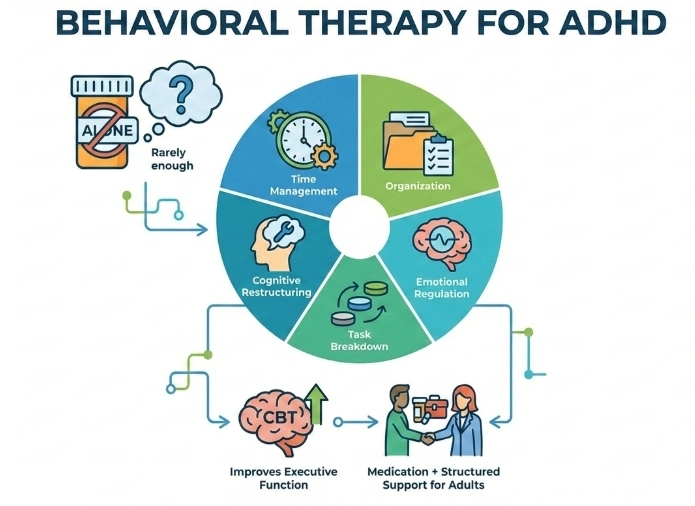
Medication alone is rarely enough.
Behavioral therapy for ADHD focuses on: Therapy can help you build time management skills, create better organizational systems, regulate emotions, break tasks into manageable steps, and reframe unhelpful thinking patterns.
Cognitive Behavioral Therapy (CBT) has been shown to improve executive functioning and reduce ADHD-related distress.
Adults often benefit from combining medication with structured behavioral support.
Why Choose Us for Adult ADHD Treatment
Choosing the right provider matters.
At Beautiful Minds Psychiatry Frisco, TX care is:
Comprehensive
We assess more than symptoms; we evaluate lifestyle, stress levels, work patterns, and emotional health.
Personalized
No two ADHD brains are identical. Treatment plans are tailored.
Evidence-Based
We follow structured diagnostic criteria and updated clinical guidelines.
Local & Accessible
Serving patients locally in Frisco, across Dallas-Fort Worth area, and virtually throughout Texas, our goal is accessible for mental healthcare.
Compassionate
Many adults feel shame about their struggles. We provide a judgment-free environment.
To explore more options, schedule a consultation with Beautiful Minds, Frisco.
When to Seek Help
You should consider Adult ADHD treatment if:
It may be time to seek help if you repeatedly miss deadlines at work, your relationships suffer because of forgetfulness or impulsivity, you feel mentally exhausted from constantly “trying harder,” your anxiety increases due to disorganization, or you’ve started to suspect lifelong attention challenges.
If symptoms interfere with daily functioning, seeking professional support is not a weakness; it is proactive in self-care.
Long-Term Impact of Untreated ADHD
Ignoring ADHD can have long-term consequences:
Over time, it can lead to more disciplinary issues at work, financial instability from impulsive decisions, ongoing stress and burnout, and a drop in self-esteem.
Data shows adults with untreated ADHD are more likely to experience job changes and relationship dissatisfaction.
Early intervention improves life outcomes significantly.
How Adult ADHD Affects Relationships and Self-Esteem
Many adults in Frisco and nearby areas report that they feel misunderstood. Partners may think they are careless. Colleagues may assume they are irresponsible. Over time, repeated criticism can damage self-esteem.
Common relationship challenges include
You might forget important dates or conversations, interrupt people without meaning to, react emotionally during conflicts, struggle with shared responsibilities, or seem distracted during important discussions.
These patterns are not intentional. They are often linked to executive functioning challenges and emotional regulation difficulties associated with ADHD.
Over years, untreated symptoms may lead to:
Over time, this can lead to chronic guilt, shame, feeling “not good enough,” avoiding new opportunities, and pulling away from social situations.
This is why proper evaluation and support matter. When adults finally receive a diagnosis, many describe it as a moment of relief. It helps them understand that their struggles were neurological, not personal failures.
With structured treatment including medication when appropriate and behavioral therapy relationships often improve significantly. Better focus leads to better communication. Better emotional control leads to healthier conflict resolution.
Seeking help is not just about productivity. It is about restoring confidence and rebuilding connections.
FAQs
Many people are diagnosed with ADHD in their 30s, 40s, or even 50s. For a lot of them, the signs were there earlier but were overlooked or misunderstood. ADHD doesn’t disappear with age, it often just shows differently in adulthood, especially through challenges with focus, organization, time management, and emotional regulation. A proper evaluation can help clarify what’s going on and open the door to effective treatment and support.
It depends on your insurance provider and the type of plan you have. Many insurance plans partially or fully cover psychiatric evaluations, including ADHD assessments. However, coverage can vary things like psychological testing, follow-up visits, or therapy, so it’s always a good idea to check with your insurance provider or the clinic beforehand to understand what’s included.
Licensed psychiatrists in Texas can prescribe both stimulant and non-stimulant medications for ADHD after completing a proper evaluation. They assess your symptoms, medical history, and overall mental health before recommending medication, and they continue to monitor your progress to make sure the treatment is safe and effective.
Research suggests ADHD has a strong hereditary component. It often runs in families, meaning if a parent or close relative has ADHD, the chances of another family member having it are higher. Genetics play a major role, though environmental and developmental factors can also influence how symptoms appear.
ADHD and anxiety commonly occur together. When both are present, treatment usually focuses on addressing each condition through an integrated approach, which may include medication, therapy, and practical coping strategies.
Final Thought
Living with undiagnosed ADHD can feel frustrated and isolated. You may have spent years blaming yourself for struggles that were never about effort or intelligence.
Adult ADHD treatment offers clarity, direction, and hope. With proper evaluation, accurate diagnosis, and personalized care, many adults experience dramatic improvements in focus, productivity, and emotional balance.
If you recognize these signs in yourself or someone you love, do not wait.
Book an ADHD evaluation at Beautiful Minds Psychiatry in Frisco, TX.
Don’t ignore the signs. Early diagnosis leads to better outcomes and a healthier future.
Disclaimer: This content is for informational and educational purposes only. It is not a substitute for professional mental health advice, diagnosis, or treatment. If you are in crisis, call or text 988 for the Suicide and Crisis Lifeline.