Difference Between a Psychiatrist and a Psychologist
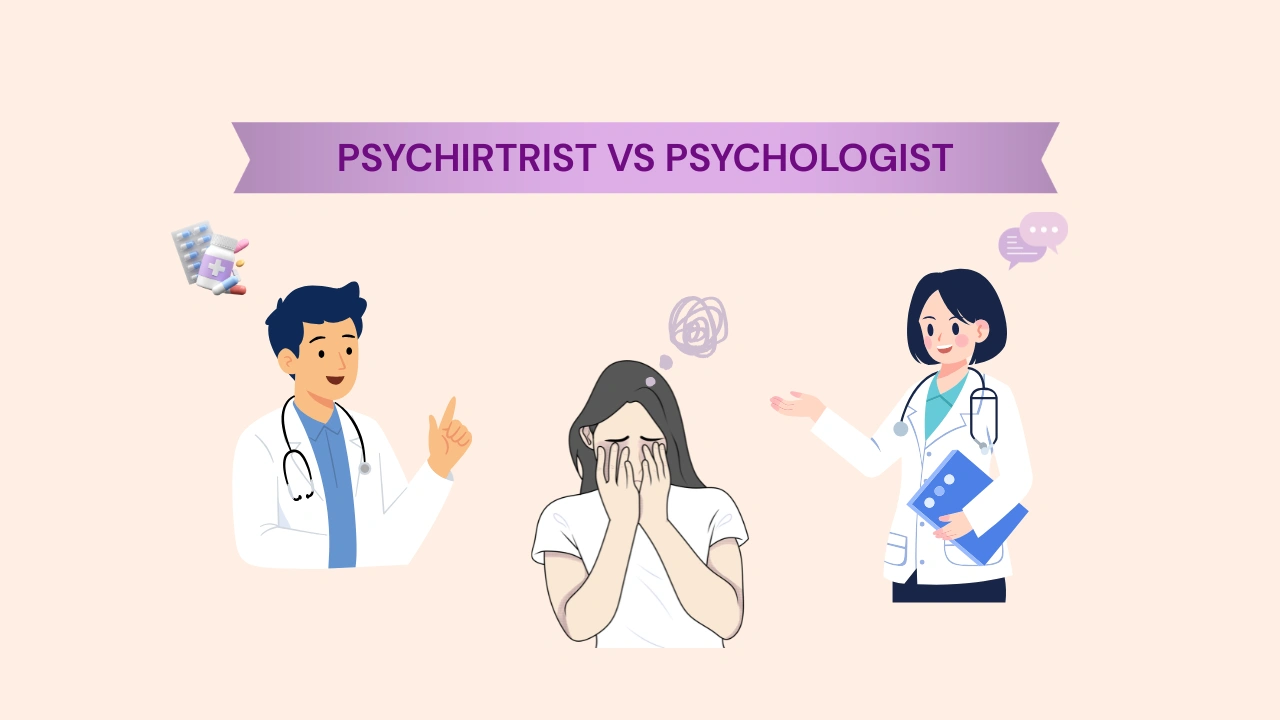
Mental health care can feel like learning a whole new language. Therapy, medication, testing, evaluations. Which one do you need? And who even does it?
Here’s the short version. The difference between a psychiatrist and a psychologist comes down to training and tools. A psychiatrist is a medical doctor. They can diagnose, prescribe medicine, and guide treatment. A psychologist usually has a doctoral degree in psychology, and their work centers on testing and talk therapy.
Key Takeaways
- A psychiatrist is a medical doctor who can diagnose, prescribe medicine, and guide treatment.
- A psychologist usually has a doctoral degree and focuses on testing and talk therapy.
- Both can help, and plenty of people see both.
- Not sure where to start? Pick either one. They can send you to the other.
- Rules on prescribing and training vary by state, so check any provider’s license.
What Is the Difference Between a Psychiatrist and a Psychologist?
Both want you to feel better. They just get there in different ways.
A psychiatrist starts out in medical school. That’s why they can look at your mind and your body together. They know how health problems, sleep, and other medicines can change how you feel and think.
A psychologist studies behavior, feelings, and how people think. They use tests and talk therapy to help you see what’s going on. They also help you build coping skills you can use every day.
The two jobs overlap a little. Both can look at your symptoms and help plan your care. Say someone sees a psychologist each week for therapy, and a psychiatrist every few months to check on their medicine. That works fine.
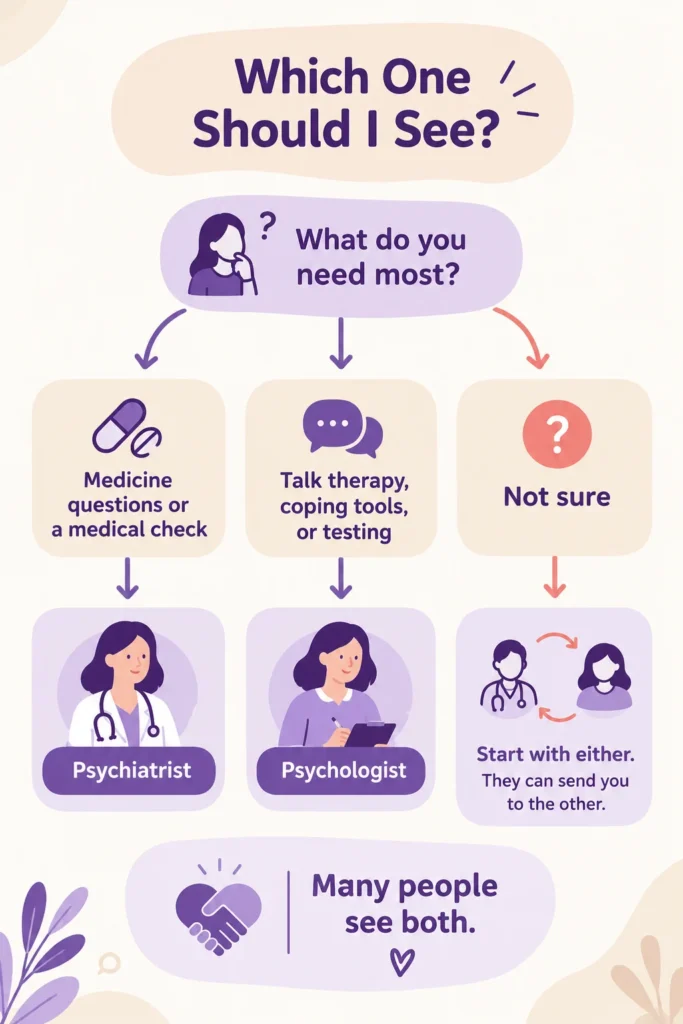
So which one is right for you? It depends on what you need. Not sure? Pick either one to start. They can send you to the other.
Psychiatrist vs Psychologist Education and Training
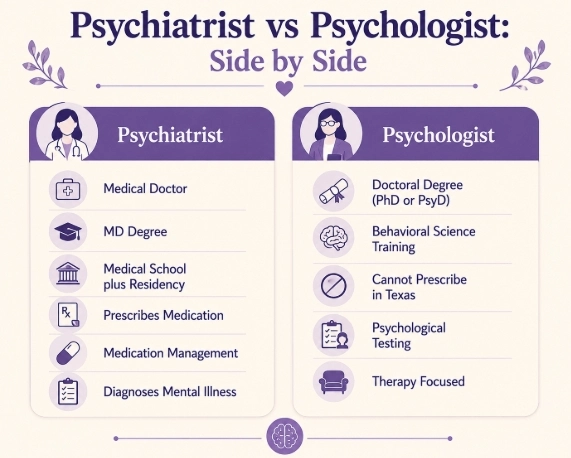
Psychiatrist vs psychologist education looks different, but both paths take a long time.
How Psychiatrists Train
A psychiatrist starts with four years of medical school and comes out with an MD or DO degree. After that, they do a psychiatry residency, which usually takes four more years. That’s how psychiatrists train. Some doctors keep going and train even more, in areas like child and adolescent psychiatry.
How Psychologists Train
Most psychologists earn a doctoral degree, either a PhD or a PsyD. That usually takes five to seven years, with research, classes, and supervised hands on work. Then they have to meet their state’s licensing rules.
Rules and job titles change from state to state. Counselors and social workers also offer therapy, with different training. Whoever you choose, check their license on your state licensing board’s website.
Do Psychiatrists Prescribe Medication?
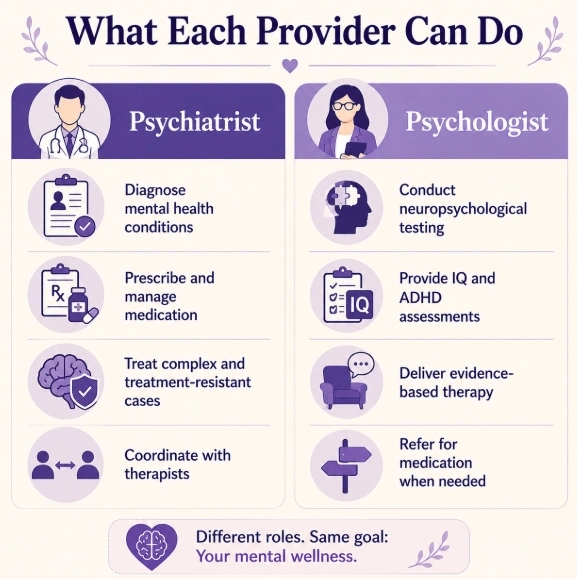
Yep, They do Because psychiatrists are medical doctors, writing prescriptions is simply part of the job. That’s one big reason a lot of people look for one in the first place. Of course, not everyone needs medicine, so it helps to ask about all your options.
But medicine is only a tool, and nobody has to take it. Some people do, some go with therapy instead, and some do a bit of both. A good psychiatrist walks you through your choices and lets you pick what feels right.
On your first visit, expect lots of questions. Your symptoms, your health, your family’s health, and any medicines you take right now. After that, visits are usually shorter, and the doctor mostly asks how you’ve been feeling.
People react to medicine in different ways. So before you start, say what’s on your mind. Ask about the good parts, the side effects, and anything that worries you. And please, don’t change a dose or stop a medicine on your own.
What Is Psychiatrist Medication Management?
Psychiatrist medication management is what continues long after your initial appointment. Your psychiatrist will ask about how you have been doing and whether the treatment works for you, check for any side effects and adjust the treatment plan accordingly.
Not everyone needs medication, and there is no guarantee that it will work. At Beautiful Minds, we offer medication management as one of our services to kids, teens, and adults.
What Does a Psychologist Do?
Psychologists help people see how their thinking, emotions, behaviors, and relationships connect. They provide talk therapy, behavior therapy, and psychological assessments within their license.
The therapy can be focused on coping skills, negative thoughts, or traumatic experiences. At first, sessions take place once a week. Picture a college student who is constantly having panic attacks.
In therapy, he/she learns to relax the body and confront frightening thoughts. Should the symptoms persist, psychiatrist can become involved later.
Can a Psychologist Perform IQ Testing?
Often, yes. If you want an IQ testing psychologist, look for someone who’s trained to give these tests and explain the results. Not every psychologist does this, so ask about their training first.
An IQ score is only one small piece of the picture. It doesn’t tell you what a person can do, whether they have a diagnosis, or how their life will go. The testing usually includes interviews and other tools too, and schools often use it when they’re planning for a child or looking into a learning problem.
Psychiatrist or Psychologist for ADHD?
Here’s the thing: there’s no one right answer. Picking a psychiatrist or psychologist for ADHD mostly depends on who does evaluations near you, and what you want to learn.
Most evaluations start with a talk. The clinician asks what’s been happening, what your past looks like, and what a regular day is like for you. They also look for other reasons you might feel this way. Anxiety, poor sleep, depression, and learning problems can look a lot like ADHD, so those get checked first.
When Should You See a Psychiatrist or a Psychologist?
You don’t have to wait for a crisis. It’s fine to reach out early.
You might think about a psychiatrist if:
- Anxiety or depression has lasted for weeks and is getting in the way of your day
- You have questions about starting, changing, or stopping a psychiatric medicine
- You want a medical check that looks at your body and mind together
- Past treatment didn’t help as much as you hoped
You might think about a psychologist if:
- You want talk therapy for stress, grief, relationship problems, or habits
- A child or teen is struggling with feelings or behavior
- You need testing, like for learning or attention concerns
- You want practical tools for coping
Not every rough patch needs a specialist. But if your symptoms are hitting your sleep, work, school, or relationships, it’s worth a conversation. Plenty of people end up seeing both.
Finding a Psychiatrist for Eating Disorders or Trauma
Eating disorders and trauma are hard to handle alone, so good care is usually a team effort.
A psychiatrist for eating disorders can look at your mental health symptoms, check for things like anxiety or depression, and talk about whether medicine could help. Health checks, food and nutrition support, and therapy often matter too.
A psychiatrist for trauma can look at things like trouble sleeping, memories that keep popping up, or feeling on edge all the time. Therapy that focuses on trauma, from a trained clinician, is often a big part of care.
No one professional can cover everything. Ask any provider how much experience they have with your concern, and who else they would bring in.
What Is Integrated Mental Health Care?
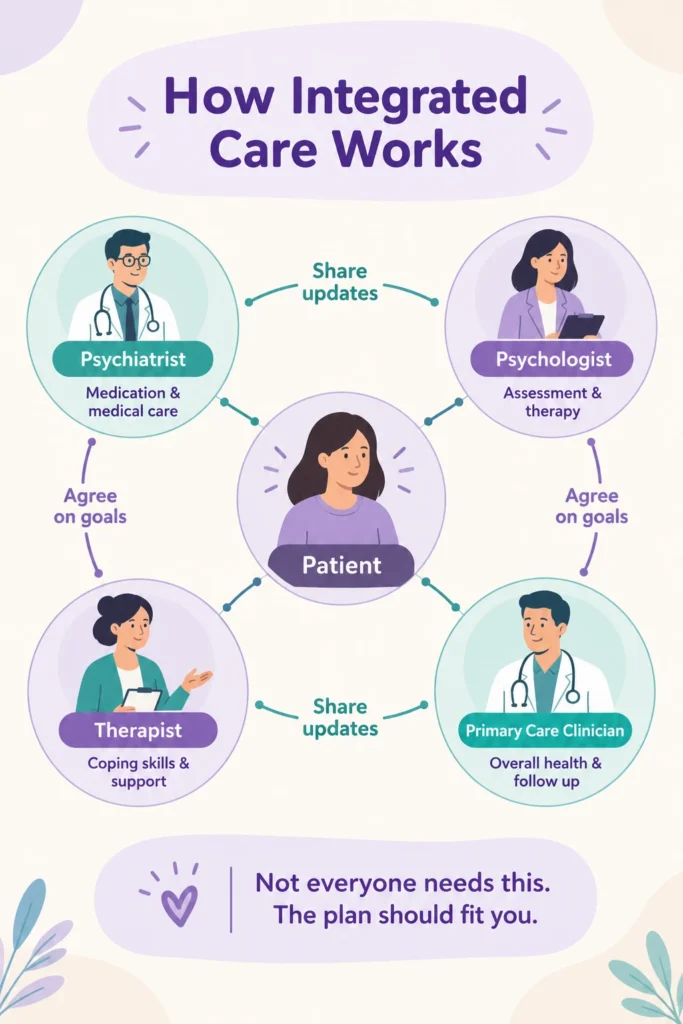
Integrated mental health care means your providers work together as one team, instead of each doing their own thing. The team might have a psychiatrist, a psychologist, a therapist, and a primary care clinician.
If you say it’s okay, they share updates, agree on what you’re working toward, and make sure their advice doesn’t clash. Regular check ins keep your plan up to date as things change for you.
Not everyone needs this. If your symptoms are mild, one provider may be enough. The plan should fit you, not the other way around.
Psychiatrist vs Psychologist: Key Differences
Here’s the Difference Table. Scope, training, and prescribing rules vary by state and by each person’s qualifications.
Difference Table: Psychiatrist vs Psychologist
| Area | Psychiatrist | Psychologist |
| Primary role | Diagnoses and treats mental health conditions using a medical approach | Assesses and treats mental health concerns, often with therapy and testing |
| Education and training | Medical degree (MD or DO), then psychiatry residency | Doctoral degree (PhD or PsyD), supervised training, and licensure |
| Medical evaluation | Yes, can check medical factors | Not usually, but may work with medical providers |
| Medication prescribing | Yes | Usually no, though a few states allow it with extra training |
| Psychotherapy | Some provide it, but many focus on medication | A core part of the work |
| Psychological and IQ testing | Not usually | Often, if trained in testing |
| May be helpful when | You have medication questions or complex symptoms | You want therapy, testing, or coping skills |
How to Find the Right Mental Health Professional Near You
Type “psychiatrist near me” into a search bar and a long list pops up. A few quick checks can help you pick.
- License: Look it up on your state board’s website to make sure it’s real.
- Experience: Ask how often they help people with your problem.
- Services: Find out if they offer therapy, medicine, testing, or video visits.
- Wait time: Ask how soon a new patient can get in.
- Cost: Call your insurance first, so you know what you’ll pay before you book.
If you’re searching for a mental health professional near me, call the office and ask how the first visit works. A good office gives you a clear answer.
Beautiful Minds is a psychiatry practice in Frisco, Texas, serving the Dallas Fort Worth area. Dr. Humera Chowdhary and Dr. Naveed Khokhar see children, teens, and adults, with in person and telehealth visits. You can request an appointment or call (972) 668-3109.
A Note on Mental Health Care at Beautiful Minds
Beautiful Minds recognizes the importance of finding mental health support that fits each person’s needs. Mental health concerns can affect emotions, relationships, sleep, work, and everyday routines, and different people may need different forms of care.
Psychiatric evaluation, medication management, and therapy may each play a role in a treatment plan, depending on the services available and the individual’s needs. Learning about these options can help people make informed decisions and understand what to discuss with a qualified provider.
Frequently Asked Questions
A psychiatrist is a medical doctor who can diagnose conditions, prescribe medication, and sometimes provide therapy. A psychologist typically holds a doctoral degree and focuses on testing and psychotherapy. That’s the core difference between psychiatrist and a psychologist: medical training and prescribing versus psychological assessment and talk therapy.
Yes. Psychiatrists are medical doctors, so prescribing is part of their practice. Rules are set by each state or country, so details can vary. Medication isn’t right for everyone. A psychiatrist can explain options, benefits, and side effects so you can decide together.
Either can be a starting point, depending on who offers ADHD evaluation near you. An evaluation looks at symptoms, history, and other explanations. Psychological testing helps in some cases but isn’t always needed. A psychologist may offer behavioral support, and a psychiatrist can discuss medication.
Usually not. In most U.S. states, psychologists can’t prescribe. A small number of states allow specially trained psychologists to prescribe within defined limits. Rules differ by location, so check your state licensing board or ask the provider.
Yes, and many people do. A psychologist might provide therapy while a psychiatrist manages medication, sharing updates with your consent. This helps some patients, especially when symptoms are complex. It isn’t required, though. Some people do well with just one provider.
Start by checking licenses. Then compare experience with your concern, services, availability, and insurance. Ask about telehealth, too. Afterward, notice how comfortable you felt.
Finding the Right Path to Mental Health Support
The main difference is training and tools. Psychiatrists bring medical training and can prescribe. Psychologists bring skill in testing and therapy. The best place to start depends on your symptoms, your goals, and the kind of help you want.
If you’d like to talk with a psychiatrist, you can request an appointment with Beautiful Minds.
Disclaimer: This content is for informational and educational purposes only. It is not a substitute for professional mental health advice, diagnosis, or treatment. If you are in crisis, call or text 988 for the Suicide and Crisis Lifeline or call 911 in an emergency.