
Anxiety vs OCD: How to Tell the Difference and Why It Matters for Treatment

Most people who eventually get diagnosed with OCD spent years thinking they just had really bad anxiety. The thoughts felt anxious. The worry felt like anxiety. The way it took over their day felt anxious. And because anxiety vs OCD looks so similar from the outside, and sometimes even from the inside, the wrong treatment got tried first and things got worse instead of better.
That is not a small problem. Treating OCD like generalized anxiety does not just fail to help. It can actively make OCD harder to manage over time.
Key takeaway:
- What anxiety vs OCD looks like when you are living inside it
- How OCD and avoidance work together in ways that feel like relief but keep the cycle running
- What intrusive thoughts treatment looks like and why it is different from anxiety therapy
- How OCD is diagnosed and what that process involves
- What TMS therapy for OCD offers when other treatments have not been enough
- Where Texas residents can find online OCD therapy and real in-person support
Two Conditions That Look Almost Identical from the Outside
A lady had been in therapy for three years for anxiety before anyone mentioned OCD. She worried constantly. She could not stop thinking about whether she had said something wrong, whether she had hurt someone without realizing it, or whether she was a bad person. Her therapist worked with her on anxiety management. They practiced relaxation. They talked through her fears.
Nothing got better. If anything, the more she talked about the thoughts, the louder they got.
What nobody had caught yet was that she did not generalize anxiety. She had OCD, and the therapy she was doing was feeding the cycle rather than breaking it.
This happens more than most people realize. Anxiety vs OCD is one of the most missed distinctions in outpatient mental health care and getting it right changes everything about what treatment looks like.
What Anxiety Actually Is
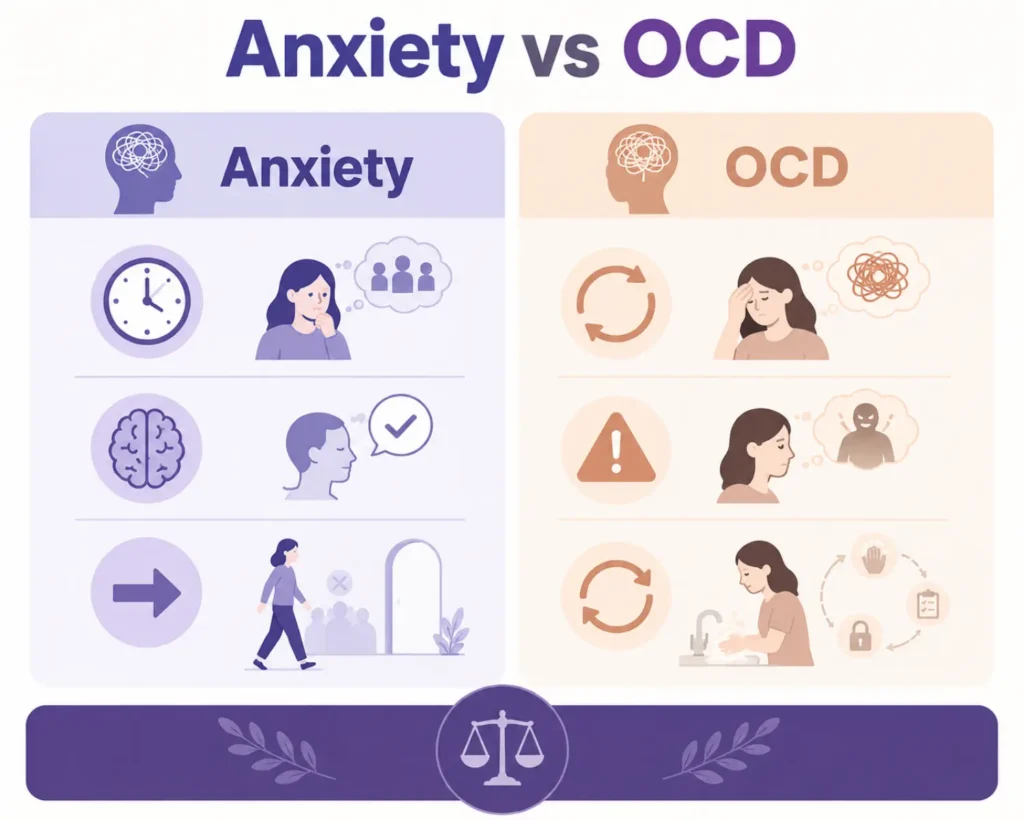
Anxiety centers on real world worry. People with generalized anxiety disorder worry about things that could actually happen in real life. The DSM 5 defines it as excessive worry across multiple areas of life that the person simply cannot get under control, and that worry never really shuts off.
Work performance. Relationships. Health. Finance. The worry is proportionate enough to the real world that it can feel completely justified even when it has taken over.
According to the National Institute of Mental Health, anxiety disorders are the most common mental health condition in the United States, affecting roughly 19 percent of adults annually. The anxiety DSM 5 criteria for generalized anxiety disorder requires the worry to be present more days than not for at least six months and to cause real functional impairment.
Anxiety and avoidance tend to travel together. When something feels threatening, the natural response is to avoid it. That avoidance brings temporary relief, which teaches the brain to keep avoiding, and the world gradually gets smaller.
What OCD Actually Is
OCD is not simply about being neat or organized. When you look at anxiety vs OCD, the key difference is that OCD drives a person through unwanted obsessions and compulsions that keep pulling them back into the same cycle of distress over and over.
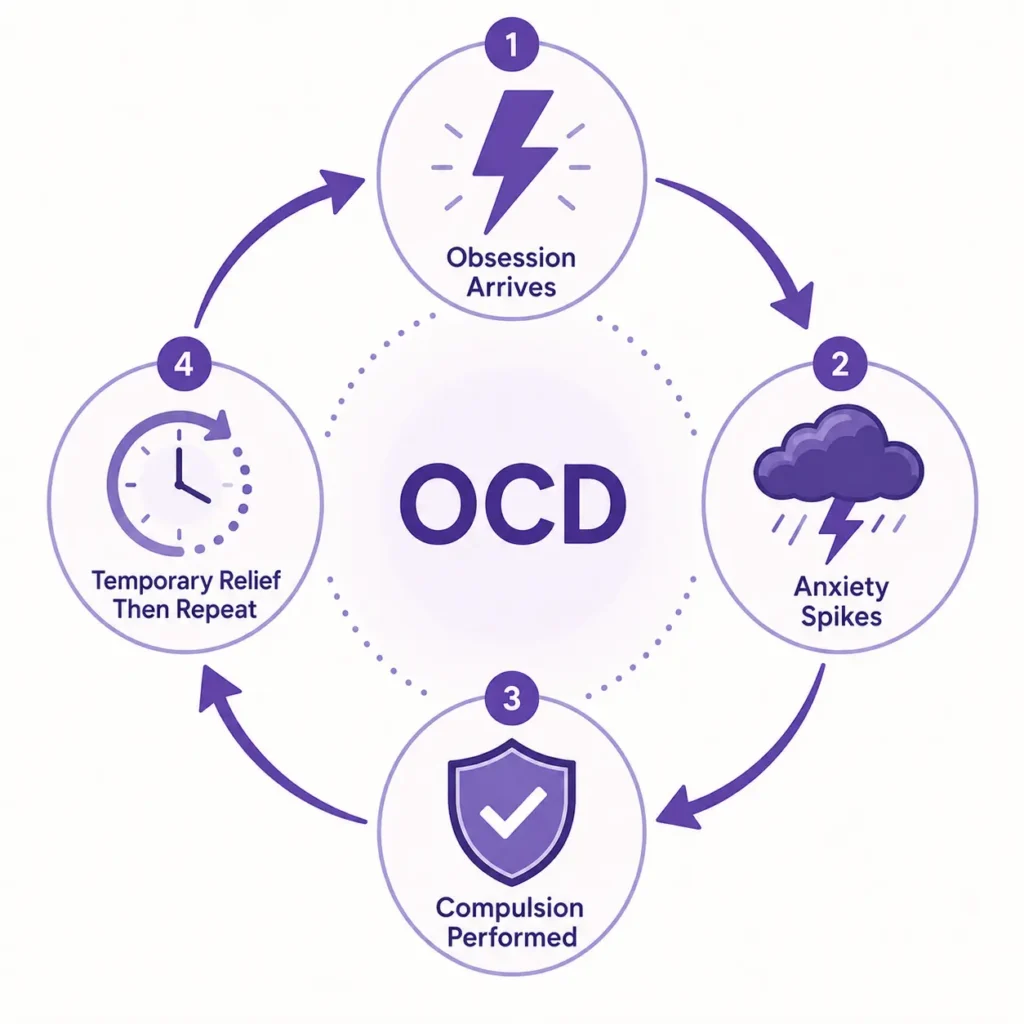
Obsessions are intrusive thoughts, images, or urges that feel impossible to ignore. Compulsions are the mental or physical behaviors used to reduce that anxiety, but the relief is only temporary. This is why OCD and fear become so closely connected, the brain learns to see obsession as a real threat.
OCD and avoidance often develop alongside compulsions. People may avoid places, situations, or relationships linked to their obsessions, reinforcing the cycle instead of breaking it.
Effective intrusive thoughts treatment focuses on reducing compulsions and helping people respond differently to obsessive thoughts rather than avoiding them.
How OCD Is Diagnosed
How is OCD diagnosed? A psychiatric evaluation looks beyond symptoms to understand your obsessions, compulsions, and how they affect daily life.
OCD diagnostic criteria in the DSM-5 require obsessions, compulsions, or both that are time-consuming and cause significant distress. The symptoms must also not be better explained by another condition. While the anxiety DSM 5 criteria focus on excessive worry, OCD follows its own diagnostic standards.
During the evaluation, your provider assesses intrusive thoughts, visible and mental compulsions, and the strategies you’ve developed to cope with. Distinguishing anxiety vs OCD really comes down to the nature of the thoughts. OCD brings thoughts that feel unwanted and intrusive, completely out of sync with who the person is, while anxiety tends to center on worries about things that could realistically happen.
What Intrusive Thoughts Treatment Actually Looks Like
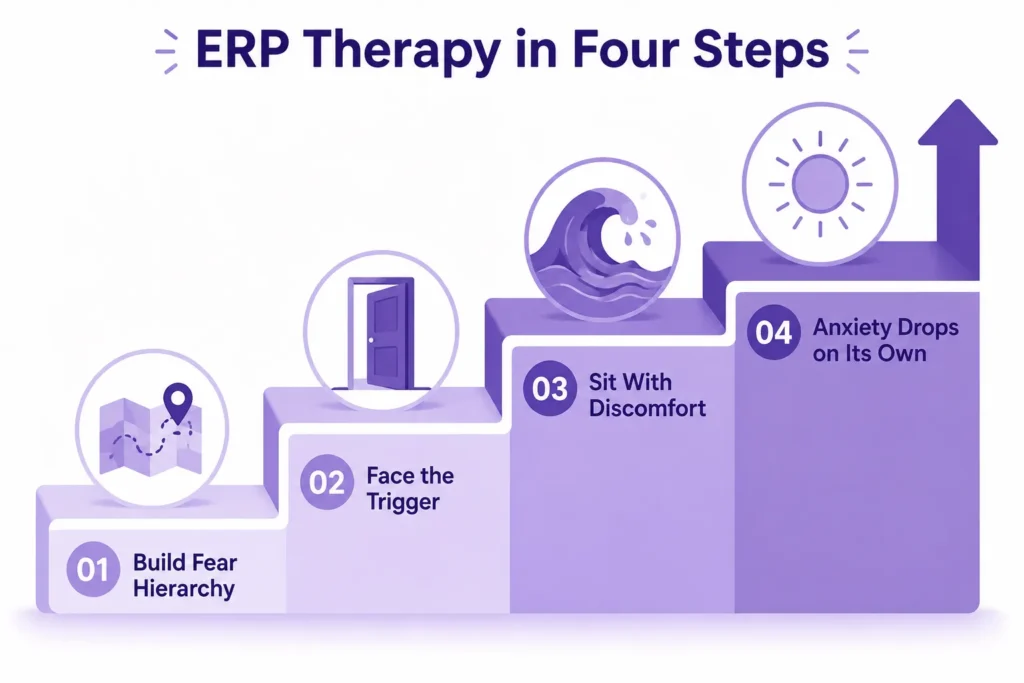
Intrusive thoughts treatment for OCD is different from standard anxiety treatment. The most effective approach is Exposure and Response Prevention (ERP), a specialized form of cognitive behavioral therapy that helps people face obsessive thoughts without performing compulsions. Over time, the brain learns that thoughts are not dangerous, reducing the OCD cycle.
Unlike traditional anxiety therapy, ERP does not focus on analyzing obsessive thoughts, as this can reinforce them. Instead, it teaches you tolerate uncertainty without responding compulsively.
Therapy for anxiety and OCD requires a provider who understands both conditions and knows how to treat them effectively. For many people, addressing OCD first leads to better overall outcomes.
Online OCD therapy has also made expert care more accessible. When delivered by a trained ERP therapist, online OCD therapy is as effective as in-person treatment for many individuals.
When Medication Is Part of the Picture
SSRIs are the first-line medication for OCD and they work differently in OCD than in anxiety. OCD typically needs higher medication doses than depression or generalized anxiety, and it takes longer to respond too. Most people need to wait twelve weeks or more before they can really tell whether the medication is working.
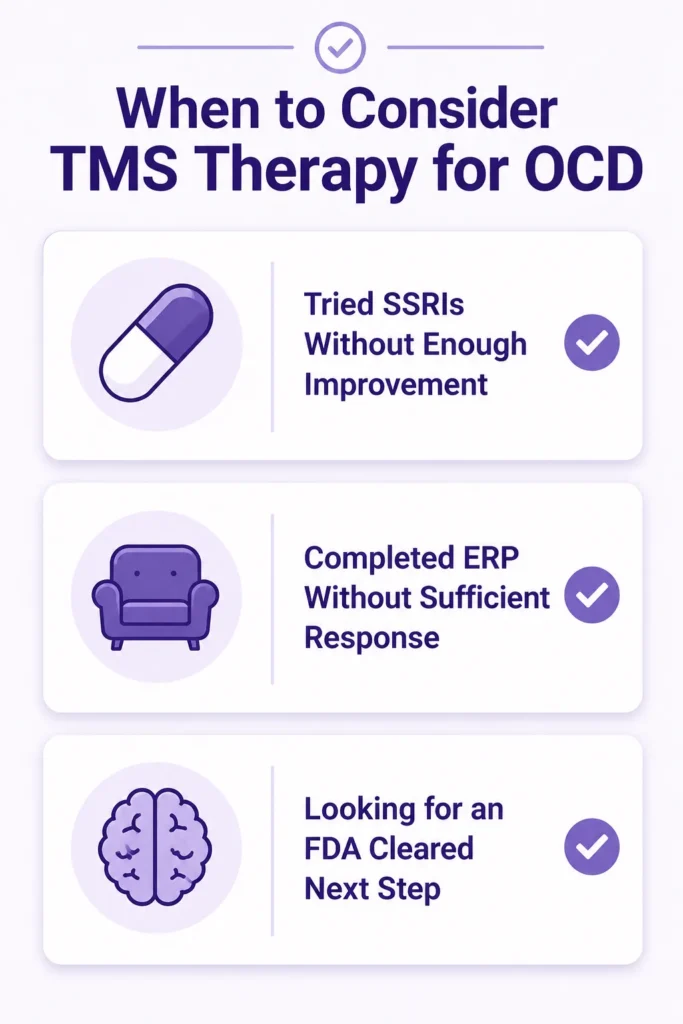
For people whose OCD has not responded adequately to medication and therapy, TMS therapy for OCD is an option worth discussing with a psychiatrist. The Brainsway deep TMS system received FDA clearance for OCD specifically, targeting brain circuits involved in the obsessive-compulsive cycle that standard treatments do not reach as directly.
TMS therapy for OCD is not a first-line treatment. It sits in the picture for people who have genuinely tried adequate trials of medication and ERP without sufficient improvement. For that group it represents a meaningful additional option rather than a last resort with no evidence behind it.
According to the International OCD Foundation, roughly 40 to 60 percent of people with OCD do not achieve adequate response from medication alone, which is part of why having a full range of treatment options available matters.
Frequently Asked Questions
Anxiety involves worry about real-life situations. OCD involves intrusive thoughts and compulsions that temporarily reduce distress. An accurate diagnosis is essential because treatment differs for each condition.
A psychiatrist diagnoses OCD by sitting down with the person and evaluating their intrusive thoughts, compulsions, how severe the symptoms are, and how much the condition is affecting their daily life. Diagnosis follows DSM-5 criteria, not just a questionnaire.
Yes. Online OCD therapy can be just as effective as in-person treatment when provided by a therapist trained in Exposure and Response Prevention (ERP).
OCD intrusive thoughts show up uninvited and cause real distress, and they usually push a person toward compulsions to cope. Anxiety thoughts work differently and tend to stay focused on real life worries rather than pulling in those unwanted obsessive ideas.
TMS therapy uses magnetic stimulation to target brain circuits linked to OCD. It’s generally recommended for people who haven’t improved with medication and ERP therapy.
Getting Support at Beautiful Minds Frisco
Beautiful Minds in Frisco works with patients across the DFW area who are dealing with OCD, anxiety, and the conditions that show up alongside them.
Evaluations are thorough enough to distinguish OCD from generalized anxiety, social anxiety, health anxiety, and other presentations that overlap in ways that are easy to miss in a shorter assessment. Both telehealth and in-person appointments are available. Online OCD therapy coordination and medication management are both part of what the practice offers, which means the full picture gets addressed rather than just one piece of it.
If you have been treated for anxiety and things have not improved, or if the thoughts you are dealing with feel more specific and relentless than general worry, a proper evaluation is the right next step.
Disclaimer: This content is for informational and educational purposes only. It is not a substitute for professional mental health advice, diagnosis, or treatment. If you are in crisis, call or text 988 for the Suicide and Crisis Lifeline.