Still Convinced Something Is Wrong? Post-COVID Anxiety Explained

Something shifted for a lot of people after COVID. Not just physically, but in the way they relate to their own bodies. A headache that used to mean nothing now sends you to Google.
A tight chest has you wondering if something serious is happening. Your heart skips a beat, and you spend the next hour tracking your pulse. If that sounds familiar, post covid anxiety might be exactly what you are dealing with, and you are far from the only Texan going through it.
This is not hypochondria. This is not a weakness. For many people, COVID genuinely rewired how their nervous systems respond to physical sensations, and understanding that is the first step toward feeling better.
Key takeaway:
- What post covid anxiety is and why it developed for so many people
- What health anxiety disorder looks like when it takes hold after illness
- Why does reassurance-seeking anxiety make things worse instead of better
- What mindfulness for health anxiety does and how it helps
- When to see a doctor for anxiety versus a regular physical concern
What Post-COVID Anxiety Actually Is
Post covid anxiety is not simply being nervous about getting sick again. It is a pattern where the body and mind stay locked in a state of threat detection long after the actual illness has passed. COVID, for many people, was the first time their bodies felt genuinely out of control. Breathing became difficult.
The symptoms were unpredictable. The uncertainty about what was happening and how serious it would get left a mark that did not disappear when the infection cleared.
Something changed for a lot of people after COVID. The nervous system started treating normal body sensations like threats. That response came on fast and never really left. Post-COVID anxiety shows up as constant body checking, catastrophic thinking about ordinary symptoms, and a baseline worry that feels new and unfamiliar.
Providers across Texas and nationally have been seeing this since 2020. Putting a name to it and understanding where it started makes it far less scary to address than carrying around unexplained dread every day.

What Health Anxiety Disorder Looks Like
Health anxiety disorder is what post covid anxiety can develop into when it goes unaddressed long enough. It is a condition where fear of having a serious illness dominates daily thinking, even when medical tests come back to normal, and doctors find nothing wrong.
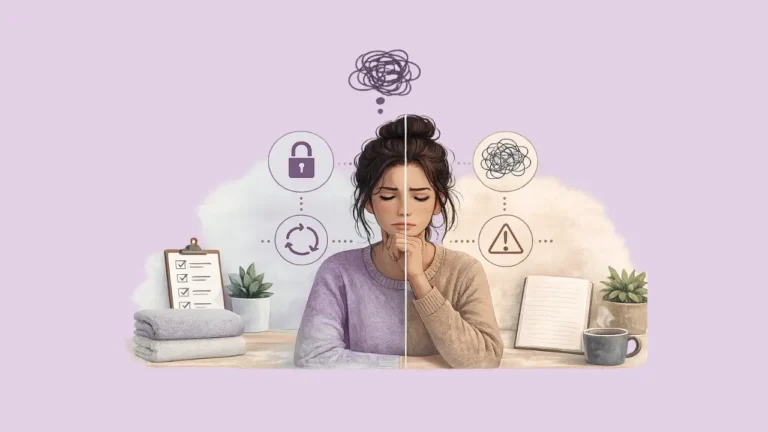
For people dealing with health anxiety disorder after COVID, the cycle tends to look like this. A physical sensation shows up, something as minor as a muscle twitch or a slightly elevated heart rate. The brain immediately flags it as potentially serious. Anxiety spikes create more physical symptoms, which the brain then interprets as further evidence that something is wrong. The whole loop reinforces itself every time it runs.
Health anxiety disorder pulls people away from their lives in ways that are hard to explain to people who have not experienced it. Plans get cancelled because leaving the house feels risky. Work suffers because concentration keeps getting pulled toward physical monitoring. Relationships strain because the people around you can only reassure you so many times before they run out of ways to help.
Why Reassurance Seeking Makes It Worse
Reassurance seeking anxiety is one of the most important patterns to understand because it feels like the solution, but it is part of what keeps health anxiety going.
When anxiety spikes about a physical symptom, the natural response is to seek reassurance. First comes Google. Then a phone call to someone you trust. Before long, you are back at the doctor asking for another test. Your hand ends up on your pulse again, just to check, just to be sure. Each of these actions produces temporary relief, but that relief trains the brain to keep seeking reassurance every time anxiety rises because it learned that reassurance is what makes the fear go away.
The problem is that relief never lasts. The next symptom triggers the same cycle, and now the threshold for seeking reassurance has actually lowered. Over time, reassurance-seeking anxiety requires more reassurance to produce less relief, and the anxiety underneath keeps growing.
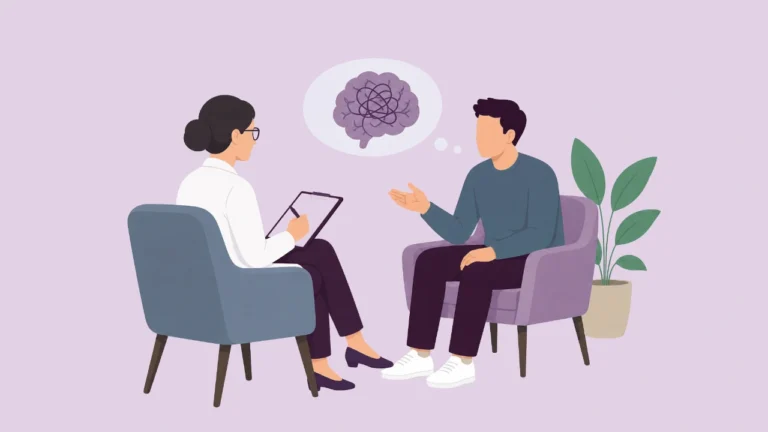
Breaking that cycle requires learning to sit with uncertainty rather than immediately reaching for something to make the fear go away. That is genuinely hard to do on your own, which is why working with a provider who understands this pattern makes such a significant difference.

Mindfulness for Health Anxiety
Mindfulness for health anxiety is one of the most well-researched tools out there. It directly targets the body monitoring and catastrophizing cycle that keeps post-COVID anxiety going. The evidence behind it is strong and consistent.
The way it works is not complicated. Mindfulness for health anxiety teaches you to notice physical sensations without immediately attaching meaning to them. Instead of feeling a tight chest and jumping straight to what if this is something serious, you learn to observe the sensation, recognize that a thought is not a fact, and let the moment pass without pulling you into the spiral.
Knowing what to do and actually doing it are two different things. When your nervous system has been running on high alert for months, even simple steps feel difficult at first. The research is solid on this, though. Mindfulness-based approaches have strong evidence for health anxiety specifically. Practicing them regularly matters far more than only pulling them out when things get bad.
Apps like Headspace and Insight Timer offer guided mindfulness practices that work well alongside professional treatment. They are not a substitute for that treatment, but they are a meaningful daily support tool that costs almost nothing to start.
When to See a Doctor for Anxiety
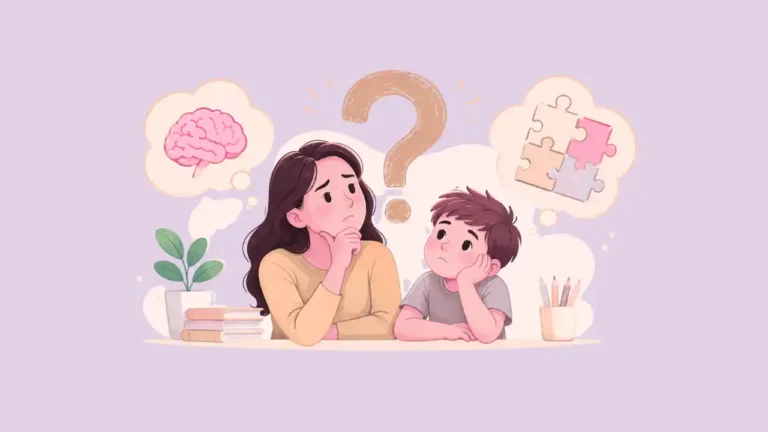
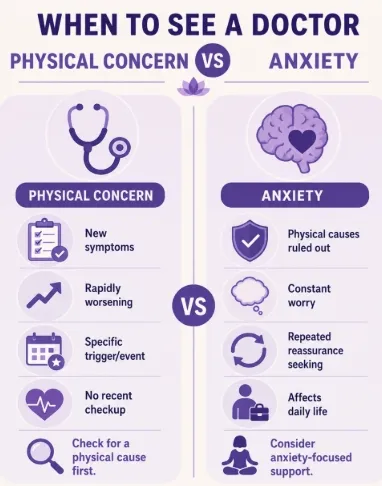
Knowing when to see a doctor for anxiety is something a lot of people with post-COVID anxiety genuinely struggle with, because part of the fear is that what they are feeling might be medical rather than anxiety-driven.
Ruling out physical causes first is completely reasonable, and a good psychiatrist will encourage that. But if a thorough physical workup has come back clear, continuing to chase medical testing is more likely to feed the anxiety than resolve it.
When to see a doctor for anxiety is worth knowing before things get worse. Health worry consuming a big chunk of your day counts. Anxiety affecting your work or relationships counts too. Reassurance seeking that has become a regular habit is a signal. Feeling this way consistently for more than a few weeks without improvement is reason enough to reach out.
At that point, what you need is not another blood test. What you need is a provider who understands anxiety and can help you work through what is actually driving it.
What Treatment Actually Looks Like
The good news is that post-COVID anxiety and health anxiety disorder both respond well to treatment when the right approach is in place.
Cognitive behavioral therapy is the most well-supported treatment for health anxiety disorder. It works by identifying the thought patterns that keep the cycle going and gradually reducing the reassurance seeking that locks anxiety in place. Medication, particularly SSRIs, is part of the picture when anxiety is severe enough that therapy alone cannot gain traction.
Anxiety treatment in Dallas TX has expanded significantly in both availability and quality. Behavioral health Dallas providers who specialize in anxiety disorders understand exactly how health anxiety after COVID presents and build treatment plans that address the pattern, not just the surface symptoms.
An online psychiatrist that Texas patients can access through telehealth means getting evaluated does not require sitting in a waiting room when you are already anxious about your health. A psychiatrist in Frisco, TX, can connect with you virtually and provide the same quality of care as an in-person visit, with significantly less friction to get started.
Frequently Asked Questions
Search for a licensed therapist who specializes in anxiety disorders. Beautiful Minds TX offers both telehealth and in-person appointments for post-COVID anxiety. You can get started at beautifulmindstx.com.
Stopping health anxiety symptoms starts with breaking the reassurance-seeking cycle. Every time you Google a symptom or check your pulse, you are feeding the pattern rather than calming it. Cognitive behavioral therapy builds the skill of sitting with uncertainty, and that is genuinely what moves the needle long term.
Most telehealth psychiatric platforms now offer sliding scale fees, insurance billing, and flexible scheduling, which makes getting help significantly more accessible than traditional in-person care. Looking for a provider who offers both evaluation and ongoing medication management in one place keeps costs lower over time than bouncing between multiple providers.
Health anxiety disorder’s physical symptoms are real, not imagined. Chest tightness, racing heart, shortness of breath, and stomach upset are the most common ones. The anxiety itself produces them, which is exactly what makes it so hard to dismiss.
Getting Support at Beautiful Minds
Beautiful Minds in Frisco works with patients across DFW dealing with post-COVID anxiety, health anxiety disorder, and conditions that develop alongside them.
Evaluations are thorough enough to tell health anxiety apart from generalized anxiety, OCD, and other overlapping conditions. Getting the right picture is what makes treatment actually work. Telehealth and in-person appointments are both available, so the first step does not have to feel like another thing to dread.
If you have been stuck in the cycle of worry, checking, brief relief, and more worry, that is worth addressing. Anxiety treatment in Dallas TX, is more accessible than most people realize. It does not have to stay this hard.
Disclaimer: This content is for informational and educational purposes only. It is not a substitute for professional mental health advice, diagnosis, or treatment. If you are in crisis, call or text 988 for the Suicide and Crisis Lifeline.