ADHD and Anxiety in Adults: A Complete Guide for Patients
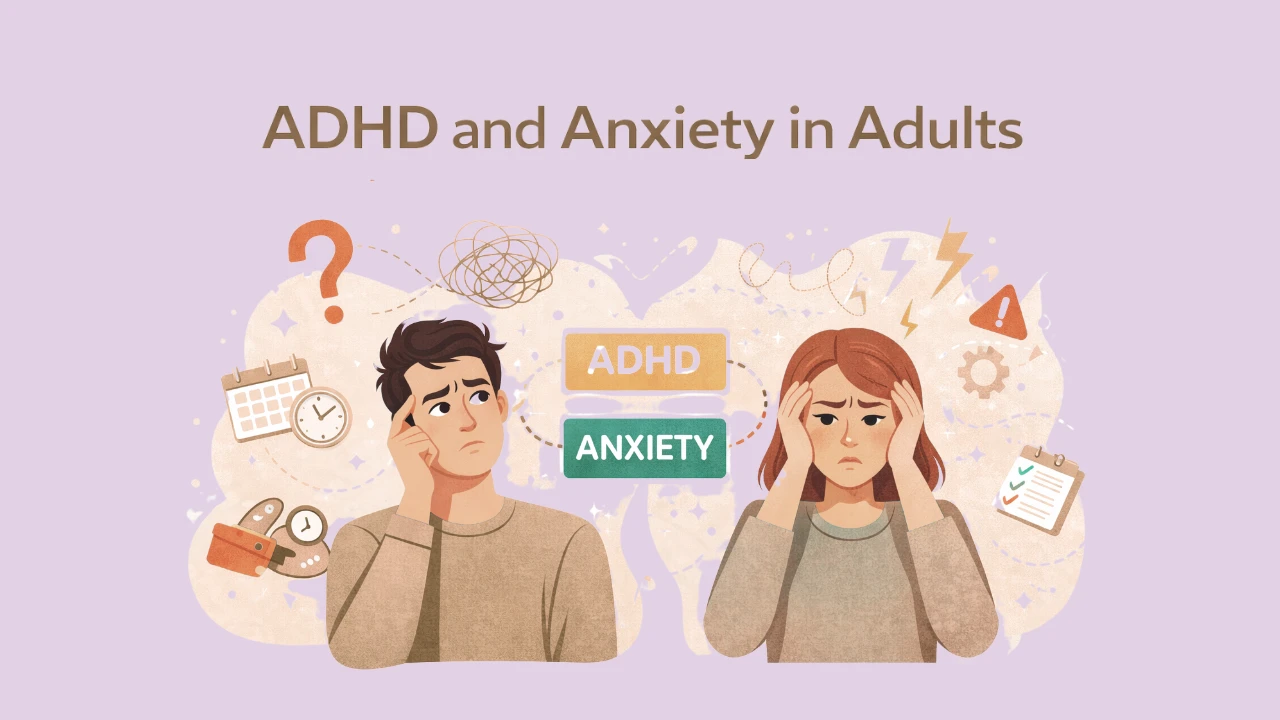
Why Am I Always Behind, Even When I’m Trying My Best?
If you’re stressing out with work deadlines, family responsibilities, and a packed schedule but still feel mentally overwhelmed, you’re not alone. Many adults deal with this daily, especially in fast-growing communities like Frisco and Dallas-Fort Worth.
You may notice:
When you sit down to focus, but your mind drifts. You plan your day, yet nothing seems to go according to schedule. Small decisions turn into overthinking; you feel restless even when you’re exhausted, and there’s a constant worry about falling behind.
You may ask yourself:
“Is this stressful? Is this anxiety? Or is something wrong with my focus?”
For many adults, the answer is a combination of ADHD and Anxiety Disorder.
According to the CDC, about 4–5% of adults in the United States have ADHD, and many remain undiagnosed. Research also shows that nearly 60% of adults with ADHD experience an anxiety disorder at some point. The National Institute of Mental Health reports that over 30% of adults experience anxiety during their lifetime.
This overlap can make symptoms confusing, but with the right evaluation, it becomes manageable.
If you are searching for answers or considering Adult ADHD Treatment in Frisco, TX, understanding this connection is your first step toward clarity.
What Is ADHD in Adults?
Attention-Deficit/Hyperactivity Disorder (ADHD) is a neurodevelopmental condition affecting the brain’s executive functioning system. This system controls:
These challenges can affect planning, organization, emotional regulation, impulse control, and the ability to maintain consistent focus.
In adults, ADHD does not always look hyperactive. Instead, it often appears as:
This can show up as chronic procrastination, poor time management, difficulty finishing tasks, emotional sensitivity, forgetfulness, feeling mentally scattered, and trouble prioritizing what needs to be done.
ADHD is linked to differences in dopamine regulation, which affects motivation and reward processing.
It is important to understand:
ADHD is not laziness.
It is not a lack of intelligence.
It is not a character flaw.
Many high-functioning professionals live with undiagnosed ADHD teachers, engineers, entrepreneurs, and healthcare providers and struggle silently with structure and consistency.
Why ADHD and Anxiety Often Co-Exist
Research shows that nearly 60% of adults with ADHD experience an anxiety disorder at some point. The National Institute of Mental Health provides detailed research on this connection. You can explore this at www.nimh.nih.gov/health/topics/adhd where they explain the neuroscience behind how these conditions interact.
Many adults in Frisco and Plano say:
“I feel distracted, but I also worry constantly.”
Here’s why both conditions commonly occur together
Executive Dysfunction Creates Mental Chaos
Repeated experiences of missed deadlines and underperformance create chronic stress. Over time, stress develops into anxiety.
How Disorganization Triggers Anxiety
When your brain struggles with organization, your life feels unpredictable. The brain responds with worry.
Emotional Dysregulation
Adults with ADHD often experience intense emotional reactions. This can amplify anxiety symptoms.
Performance Pressure
Living in achievement-driven communities like Plano increases expectations. Fear of failure builds anxiety on top of ADHD challenges
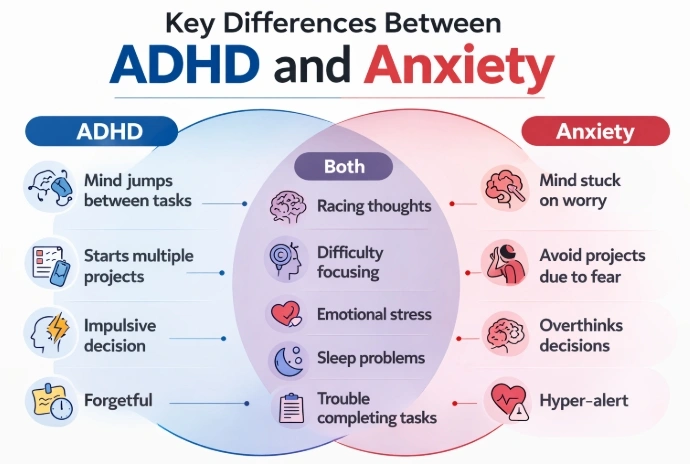
In ADHD, focus drifts.
In anxiety, focus locks onto fear.
This is why a proper professional evaluation is essential before starting Adult ADHD Treatment. Book a consultation with Beautiful Minds Psychiatric Frisco, TX.
How These Conditions Impact Daily Life
Work Performance
Adults often experience:
You might struggle to manage emails, procrastinate until deadlines are close, feel mentally exhausted, worry about disappointing your supervisors, and experience instability at work.
Studies show that untreated ADHD increases the risk of job turnover and lower productivity scores.
Relationships
You may notice:
You might forget important dates, have emotional overreactions, avoid difficult conversations, and often feel misunderstood.
Over time, this can affect marriages, friendships, and family dynamics.
How Can You Reduce or Prevent Symptom Worsening?
While professional treatment is often necessary, there are steps that reduce severity:
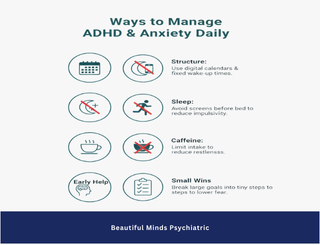
Build Structured Routines
Try waking up at the same time each day, using digital calendars to keep track of tasks, and breaking larger tasks into smaller, manageable steps.
Improve Sleep Hygiene
Poor sleep worsens both ADHD symptoms and anxiety levels.
Try avoiding screens before bed and keeping a consistent sleep schedule to help your mind and body rest properly.
Exercise Regularly
Research shows that aerobic exercise increases dopamine and reduces anxiety.
Limit Caffeine
Excess caffeine increases restlessness and nervousness.
Practice Cognitive Restructuring
Challenge thoughts like:
- “I always fail.”
- “I’m not capable.”
Replacing these with balanced thinking reduces anxiety of intensity.
Do ADHD and Anxiety Symptoms Last?
ADHD is a lifelong neurological condition.
It does not “go away,” but symptoms can be effectively managed.
With proper treatment:
Over time, focus can improve, emotional regulation becomes stronger, productivity increases, and anxiety often reduces significantly.
Anxiety disorders, however, can fluctuate.
Without treatment:
Anxiety can persist for years and often becomes worse during stressful periods like career changes, family pressure, or financial strain.
With treatment:
Many people begin to notice improvement within 4–8 weeks, and therapy-based coping skills can provide long-term stability.
In growing areas across Dallas-Fort Worth, where professional and academic expectations are high, untreated symptoms can intensify due to lifestyle stress.
Over time, it can contribute to depression, burnout, career setbacks, and chronic stress-related health problems.
Early intervention reduces long-term complications. Seeking help is not a weakness, it is a self-awareness.
Treatment Options for ADHD and Anxiety
Medication Management
For ADHD:
Treatment options may include stimulant medications as well as non-stimulant alternatives, depending on individual needs.
For Anxiety:
Treatment may include medications such as SSRIs, SNRIs, and other targeted treatments designed to manage anxiety symptoms.
Careful monitoring is essential when both conditions exist.
Cognitive Behavioral Therapy (CBT)
CBT helps:
Therapy can help reduce catastrophic thinking, improve organization skills, build practical coping tools, and strengthen emotional regulation.
Lifestyle Integration
Treatment works best when combined with:
Structured planning systems and better sleep regulation can help improve daily functioning and overall well-being.
How to Prevent ADHD and Anxiety from Getting Worse
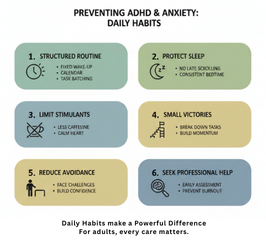
While professional care is often necessary, daily habits make a powerful difference.
Create Predictable Structure
The ADHD brain often thrives on routine, such as having a fixed wake-up time, using calendar reminders, and batching similar tasks together.
Protect Sleep Aggressively
Lack of sleep can increase both impulsivity and anxiety sensitivity, so it helps to avoid late-night scrolling and keep a consistent bedtime.
Limit Stimulants
High caffeine intake can increase heart rate, restlessness, and irritability.
Break Tasks into Small Wins
Large goals can trigger anxiety, while breaking them into small steps helps build momentum.
Reduce Avoidance
Avoidance may reduce anxiety for a moment, but it often makes it stronger over time. Facing small challenges gradually helps build confidence.
Seek Professional Evaluation Early
Many adults in Plano delay care for years, thinking it is “just stress.” Early assessment prevents burnout and depression.
Why Choose Us Beautiful Minds Psychiatry
Choosing the right provider in Frisco or across Dallas-Fort Worth matters.
At Beautiful Minds Psychiatry, patients receive:
They provide comprehensive adult ADHD evaluations, anxiety-sensitive treatment planning, evidence-based medication management, ongoing monitoring and follow-ups, and personalized care plans.
The focus is not quick prescriptions.
The focus is sustainable improvement and long-term mental clarity.
We specialize in careful evaluation before starting Adult ADHD Treatment in Frisco, TX, ensuring anxiety symptoms are also addressed.
The Long-Term Impact of Untreated ADHD and Anxiety
Without treatment, these conditions can:
Without proper support, it can increase the risk of substance misuse, lead to financial mismanagement, contribute to chronic burnout, and raise the likelihood of mood disorders.
With the right support, many people experience improved productivity, better emotional balance, reduced worry, healthier relationships, and greater confidence. The goal isn’t perfection; it’s stability and steady progress.
FAQs
Long-term unmanaged ADHD can often lead to anxiety. When someone constantly struggles with focus, organization, deadlines, and daily responsibilities, repeated stress and pressure can build up over time. This ongoing stress may eventually turn into chronic worry, self-doubt, and anxiety symptoms.
Anxiety can sometimes mimic ADHD because constant worry and racing thoughts make it hard to concentrate, stay organized, or complete tasks. This is why a proper evaluation is important to determine whether the symptoms are caused by anxiety, ADHD, or a combination of both.
When properly prescribed and monitored, medication doesn’t change who you are. It simply helps improve focus, clarity, and emotional balance, allowing your natural personality to come through more clearly.
ADHD symptoms typically begin in childhood, but they may not become noticeable until adulthood. Many people only recognize the challenges later in life when responsibilities increase, and symptoms start affecting work, relationships, or daily routines.
Some people start noticing improvements within a few weeks, especially with the right treatment plan. However, managing ADHD is usually an ongoing process that involves medication, behavioral strategies, and lifestyle adjustments over time.
Medication helps symptoms; therapy builds skills.
Final thoughts
Living with ADHD and Anxiety Disorder can feel exhausted especially when you appear “high functioning” on the outside.
But these are medical conditions, not personal failures.
With proper evaluation, personalized treatment, and supportive care, adults can experience clearer thinking, reduced worry, improved work performance, better emotional balance, and stronger relationships.
If you are tired of guessing and ready for clarity, professional support is available.
You deserve focus, calmness, stability and peace!
Disclaimer: This content is for informational and educational purposes only. It is not a substitute for professional mental health advice, diagnosis, or treatment. If you are in crisis, call or text 988 for the Suicide and Crisis Lifeline.