What Are the Early Signs of Autism That Most Parents Miss in the First Two Years
Most parents do not have a clear moment where they realize something is different. It builds slowly. A baby who does not respond to their name the way other babies do. A toddler who lines up toys instead of playing with them. A two-year-old who stopped saying the words they used to say. Small things that feel easy to explain away until there are too many of them to ignore.
If you have been quietly paying attention and something feels off, that instinct is worth following. This blog is for parents in Frisco, Plano, and across North Texas who want honest information about what the early signs of autism look like before the second birthday and what to do when they show up.
Key takeaway:
- What are the early signs of autism at 12 months and 2 years old
- What autism regression signs look like and why they matter
- How autism and eye contact, pointing, and nonverbal communication connect
- What autism developmental milestones parents should know
- Where North Texas parents can find an autism specialist near me and real support
What Are the Early Signs of Autism at 12 Months
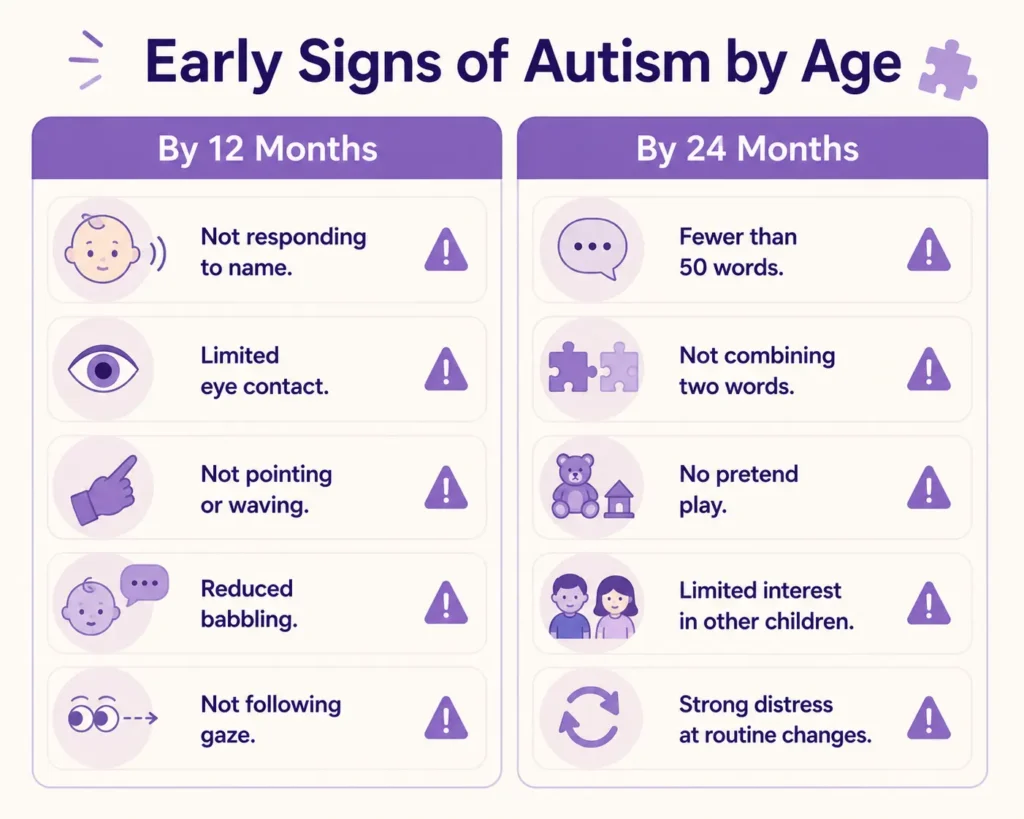
The earliest window most parents and pediatricians look at is the first year of life. Autism signs at 12 months are subtle enough to miss easily, especially for first-time parents without another child to compare development against.
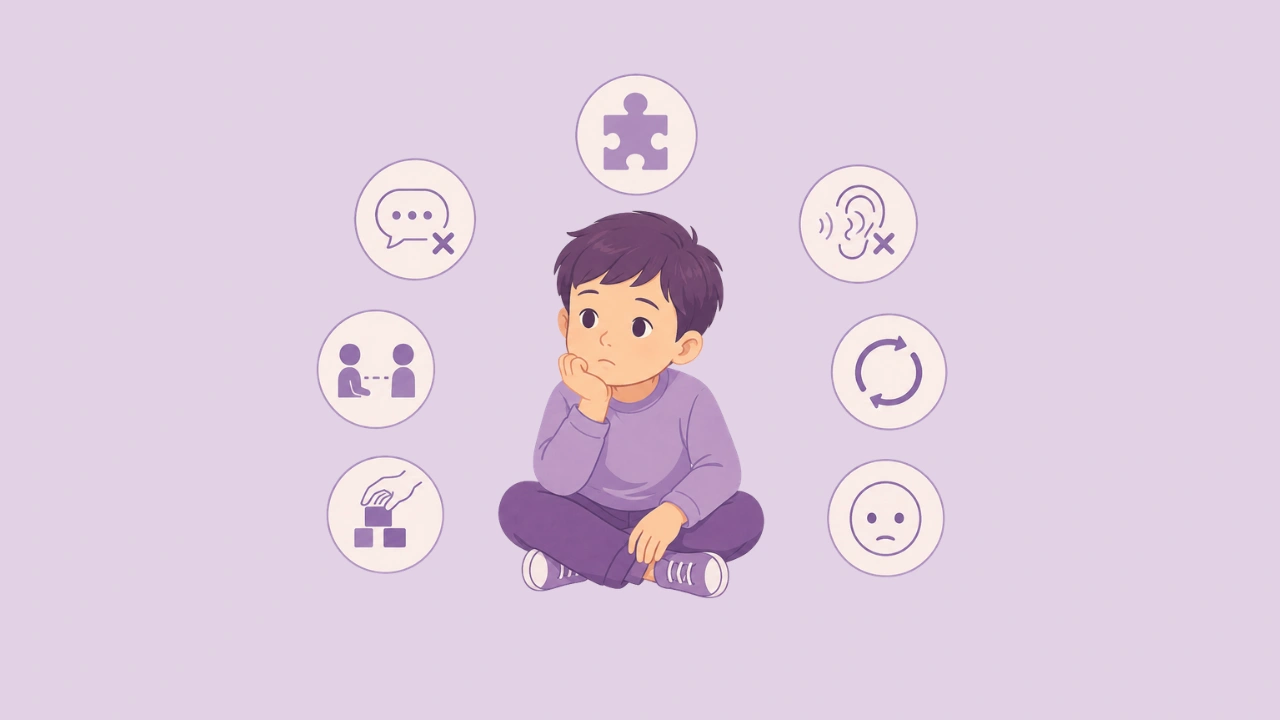
Autism and eye contact is one of the earliest and most consistent indicators. Most babies naturally seek out faces and make sustained eye contact during feeding and play. A baby who consistently avoids eye contact, looks past faces rather than at them, or does not follow a parent’s gaze is showing a pattern worth bringing up with a pediatrician.
Autism and pointing are another key early marker. By around 12 months most babies point at things they want and things they find interesting, not just to request but to share excitement. A child who does not point by 12 months, or who only points to get rather than to share attention, is worth discussing with a pediatrician.
Speech patterns matter too. A baby who babbles less than expected, does not respond consistently to their name, or skips gestures like waving or reaching is showing early signs worth bringing up at the next well-child visit. Starting that conversation early is when intervention matters most.
Autism Signs at 2 Years Old
By age two, autism signs at 2 years old become more visible as the developmental gap between a child with autism and their peers begins to widen.
Autism developmental milestones expected by two include combining two words, simple pretend play, and showing interest in other children. A two-year-old missing several of these warrants for a formal evaluation, not a wait and see approach.
Autism and social skills differences show clearly in group settings. A toddler who avoids back-and-forth play, misses other children’s emotions, or consistently prefers solitary activity is showing a social communication difference worth assessing.
Autism and routines have become more pronounced at this age too. Distress around disrupted routines goes beyond typical toddler frustration. It is more intense, harder to redirect, and tied specifically to the change itself.
If these patterns feel familiar, connecting with a developmental pediatrician or autism specialist sooner rather than later makes a real difference in how early support can begin.
Autism Regression Signs
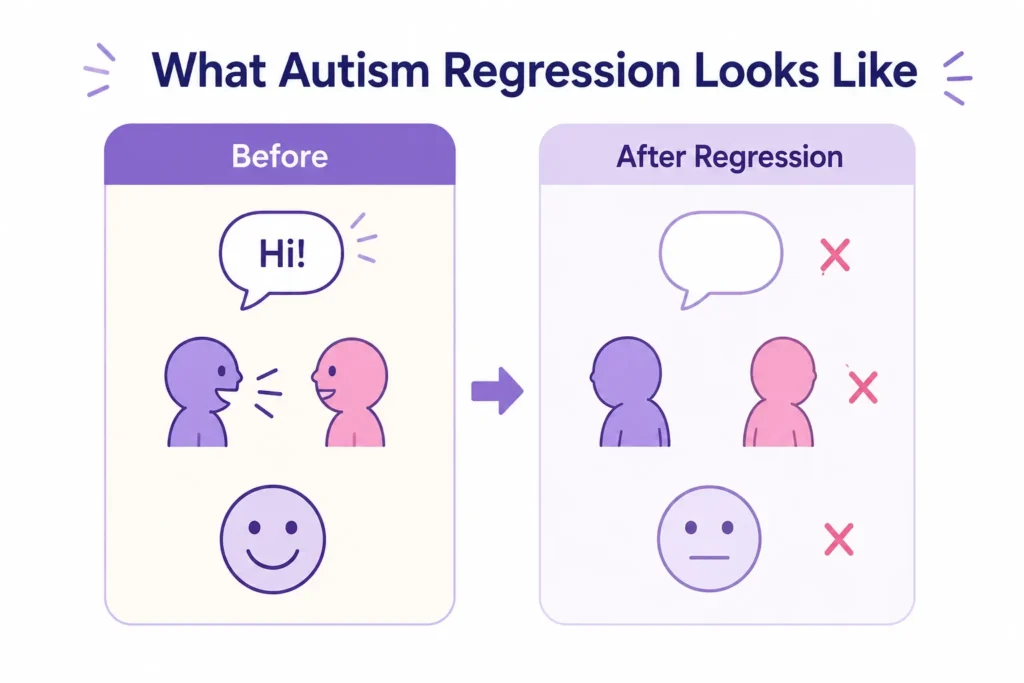
One of the most alarming experiences for parents is autism regression, and it is one that parents frequently describe as the moment they knew something had changed.
Autism regression signs involve a child who had been developing typically, using words, making eye contact, engaging socially, and then stops. Words that were there disappeared. Skills that have developed seem to fade. The child who was engaged becomes harder to reach.
This pattern, sometimes called regressive autism, tends to happen between 15 and 24 months and is experienced by a significant portion of children who receive an autism diagnosis. It does not mean the child is getting worse. It means a pattern that was present but not yet visible has become more apparent as developmental demands increase.
If your child has lost skills they previously had, that is not something to wait out. According to the American Academy of Pediatrics, any loss of language or social skills at any age warrants immediate evaluation rather than a monitoring approach.
Autism and Nonverbal Communication
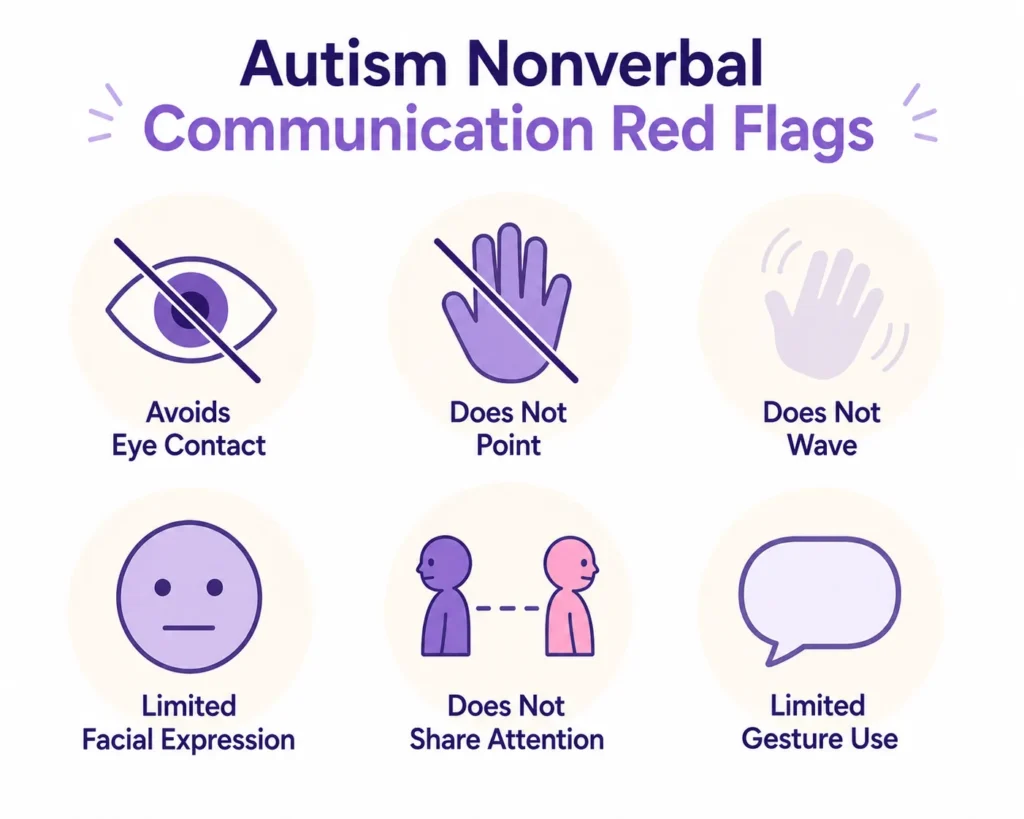
A large part of what distinguishes autism in early childhood is how children use nonverbal communication, not just whether they are talking.
Autism nonverbal communication differences include reduced gestures, limited facial expressions, difficulty following another person’s gaze, and not using the body to share interest or excitement. A child who does not wave, reach up to be held, or show objects to share excitement is showing a profile worth evaluating.
Autism and speech disorders overlap but are not the same. A child with autism may have strong vocabulary but use language differently repeating phrases, talking extensively about one topic, or struggling with back-and-forth conversation while a speech disorder primarily affects articulation rather than social use of language.
If either pattern sounds familiar, a developmental pediatrician autism evaluation will give you a clearer picture than observation alone.
Autism and Behavioral Therapy
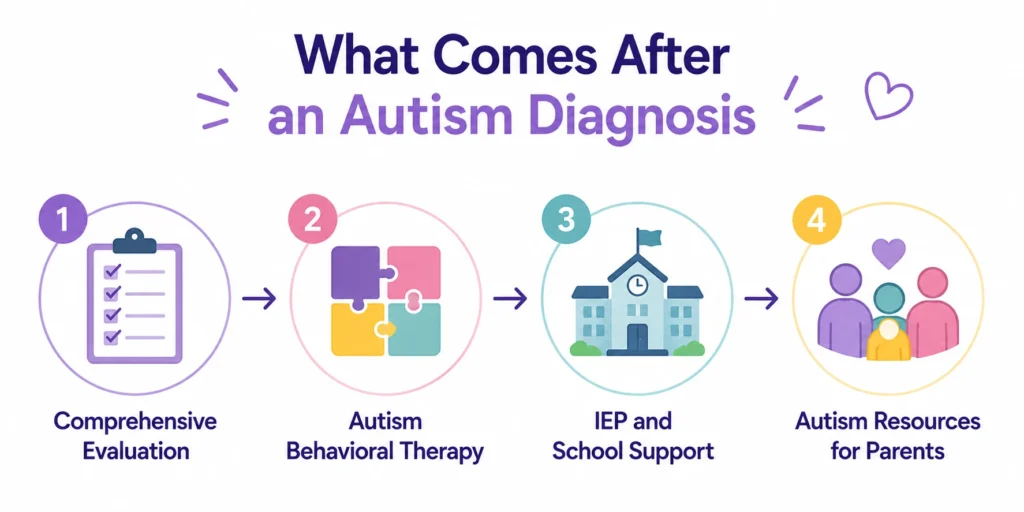
Getting an early diagnosis opens the door to autism behavioral therapy, and the research is consistent with earlier intervention produces better long-term outcomes across communication, social skills, and daily living.
Autism behavioral therapy most commonly involves Applied Behavior Analysis, a structured approach that builds skills through targeted teaching and reinforcement. Speech therapy, occupational therapy, and social skills groups are also commonly part of an early intervention plan depending on the child’s specific profile.
Autism school support is another important piece of the picture in autism North Texas families to navigate regularly. Children diagnosed with autism are entitled to evaluation and services through their school district under the Individuals with Disabilities Education Act. An Individualized Education Program can include speech therapy, behavioral support, and classroom accommodations tailored to the child’s specific needs.
Knowing how to navigate that process is part of what a good autism specialist near me should help families understand from the beginning.
Autism Resources for Parents
Getting a diagnosis is the beginning of a process, not the end of one, and having the right autism resources for parents around you makes a real difference.
The Autism Society of Texas at autismsocietytx.org offers local support groups, resource navigation, and family advocacy across North Texas. The organization connects families with providers, legal guidance around school services, and community events that reduce the isolation many parents feel in the early months after diagnosis.
Autism Speaks at autismspeaks.org maintains a searchable tool kit for newly diagnosed families that covers everything from understanding the diagnosis to navigating insurance coverage for therapy services. Their 100 Day Kit specifically for families of newly diagnosed children is one of the most practically useful resources available.
For families in Plano, Frisco, McKinney, and the wider Collin County area, autism Plano TX and autism North Texas provider directories are worth searching specifically rather than relying on general searches, because local knowledge about school district processes and regional service availability matters.
Frequently Asked Questions
Limited eye contact, reduced babbling, not responding to their name, and not using gestures like autism and pointing or waving. A consistent cluster of these across different settings is worth bringing to a developmental pediatrician autism specialist rather than waiting.
Yes. Autism and not talking is not the only indicators. Some children with autism have strong vocabulary but repeat scripted phrases, talk extensively about one topic, or struggle with back-and-forth conversation. A proper evaluation looks at far more than vocabulary.
Raise concerns with your pediatrician and ask for a developmental screening. If concerns persist, seek a referral to a developmental pediatrician or a clinic like Beautiful Minds that specializes in early childhood developmental evaluation.
Most commercial insurance plans in Texas cover autism behavioral therapy for children with a diagnosis. Texas state law requires autism treatment coverage, verifying your specific benefits before starting therapy.
Autism regression signs involve losing previously acquired language or social skills, typically between 15 and 24 months. Lost words or skills warrant an immediate evaluation, not a wait and see approach.
Getting Evaluated at Beautiful Minds Mental Health
If the signs described in this blog sound familiar, Beautiful Minds Mental Health offers comprehensive developmental and psychiatric evaluations that go deeper than quick screenings.
The practice understands that autism signs at 12 months, and autism signs at 2 years old rarely show up clearly during a standard pediatric checkup. Evaluations cover communication, social behavior, sensory responses, and adaptive skills fully.
Both telehealth and in-person appointments are available. The team helps families access autism school support and autism resources for parents across North Texas.
Your autism specialist near me searching for DFW starts here. Visit beautifulmindstx.com today.
Disclaimer: This content is for informational and educational purposes only. It is not a substitute for professional mental health advice, diagnosis, or treatment. If you are in crisis, call or text 988 for the Suicide and Crisis Lifeline.