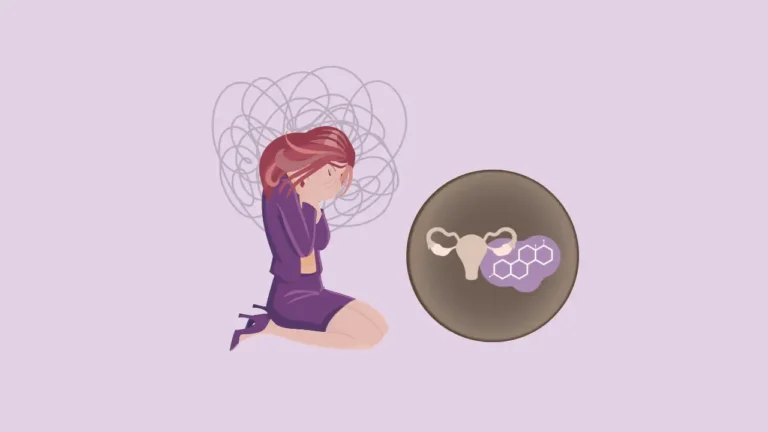
Women’s Mental Health in Frisco: When Hormones Affect Mood
You know that feeling when you wake up one morning and nothing is technically wrong, but everything feels harder than it should?
You are snapping at people you love; you cannot focus, you lie awake at night with your brain running in circles. And somewhere in the back of your mind, you are wondering if this is just who you are now.
It is probably not. And the fact that you have been telling yourself to just push through it is one of the most common reasons women end up suffering far longer than they need to.
Women’s mental health is deeply connected to what happens inside your body, specifically your hormones. And most women never get that explained to them clearly enough to do something about it.
Your Hormones Are Not Just About Reproduction
A lot of women grow up thinking about hormones mostly in terms of periods, pregnancy, and menopause. But hormones and mental health are connected in a much more immediate, daily way than that.
Hormones are messengers. They travel through your bloodstream and talk to almost every organ in your body, including your brain. When they are balanced, your mood tends to feel stable. When they shift, everything can shift with them.
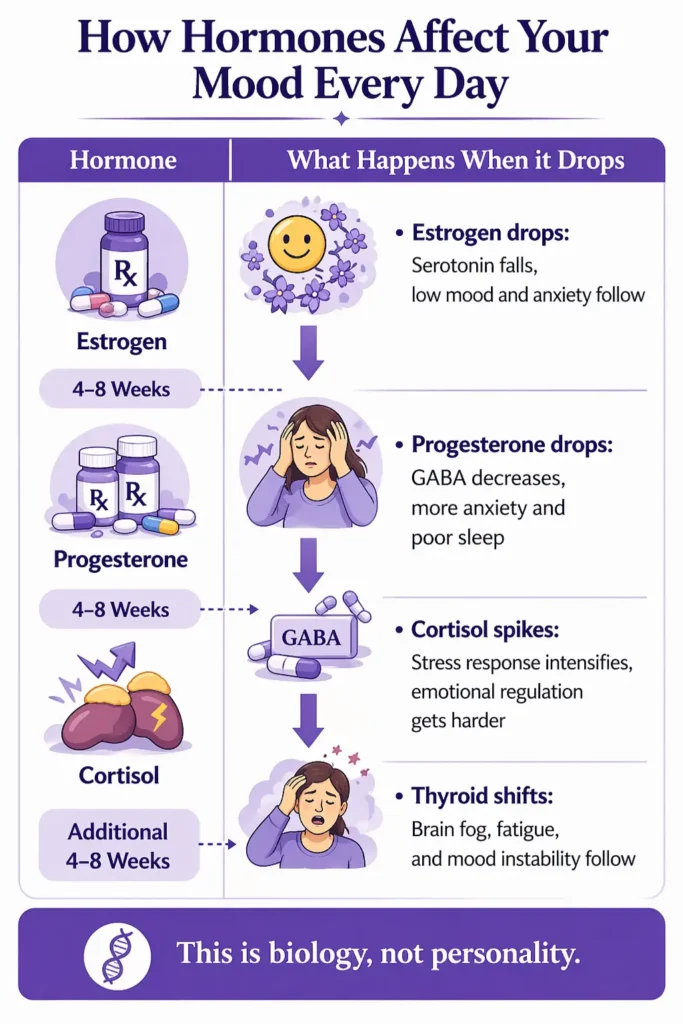
Estrogen and serotonin are directly connected. Serotonin is the neurotransmitter that helps you feel calm, focused, and okay. Estrogen helps your brain produce and use it properly. So, when estrogen drops, serotonin often drops with it. That is not a coincidence. That is how estrogen and mood are linked to a biological level.
Progesterone and mood work in a similar way. Progesterone supports GABA, the chemical that helps you feel settled and sleep deeply. When progesterone falls, you may notice more anxiety, more irritability, and sleep that suddenly feels thinner and less restoring than it used to. You are not imagining it. Something real is changing.
PMS That Goes Beyond Uncomfortable
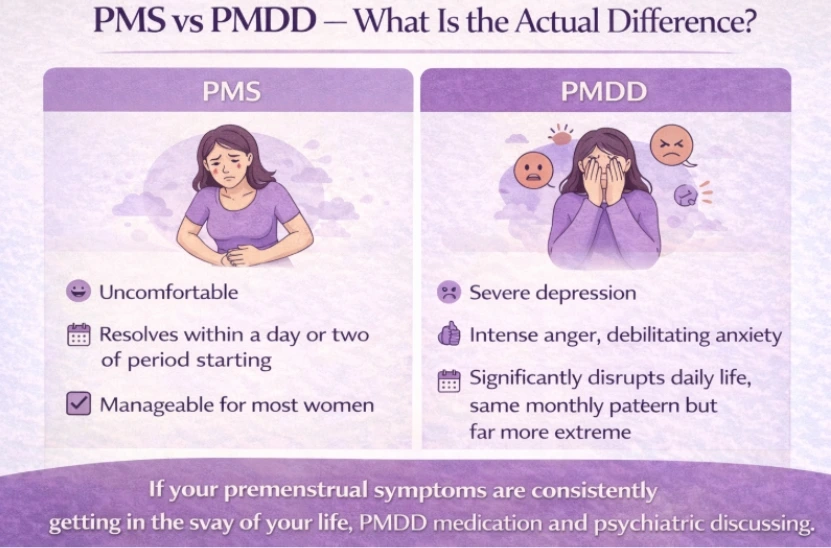
Most women know what PMS (Premenstrual Syndrome) feels like. Bloating, in a low mood, wanting to eat everything, feels irritable for a few days. For a lot of people that are manageable, even if it is unpleasant.
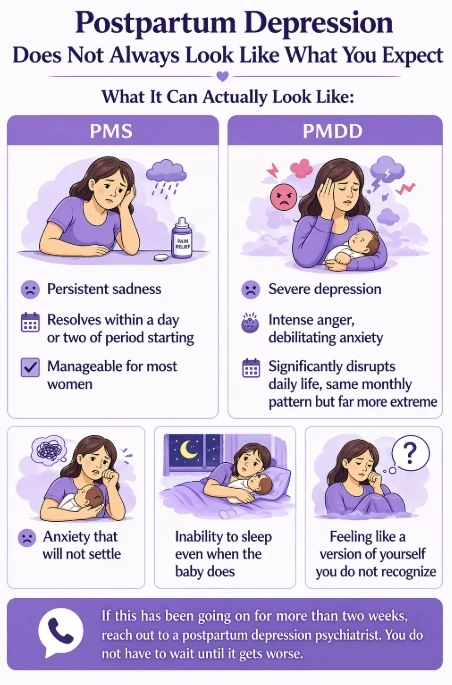
But some women experience something significantly worse than that. PMDD (Premenstrual Dysphoric Disorder) is what happens when premenstrual mood shifts stop being uncomfortable and start being genuinely debilitating. The kind of depression getting out of bed feels impossible. Anger that is completely out of proportion to what triggered it. Anxiety that spikes without warning. And then your period starts and within a day or two you feel almost completely like yourself again.
If that pattern sounds familiar, it is worth taking it seriously. PMDD medication options exist; they work, and they do not necessarily mean taking something every single day for the rest of your life. For some women, targeted use of an SSRI (Selective Serotonin Reuptake Inhibitors) during the second half of the menstrual cycle is enough to change the experience entirely.
According to the Office on Women’s Health, PMDD affects around 5% of women of reproductive age. That is not a small number. And yet most women with it spend years thinking it is just bad PMS before anyone suggests otherwise.
Mental Health During Pregnancy Gets Overlooked
Everyone talks about what happens after the baby arrives. The mental health during pregnancy piece gets a fraction of that attention, which means a lot of women fall through the cracks during a time when they need support.
Pregnancy involves some of the most dramatic hormonal shifts a woman’s body will ever go through. For women who are already prone to anxiety or depression, those shifts can push things to a place that genuinely needs care. And that is before you factor in life changes, the uncertainty, the physical discomfort, and the well-meaning but overwhelming opinions from everyone around you.
Depression during pregnancy is not a sign that you are ungrateful or not ready. It is a medical situation. According to the American College of Obstetricians and Gynecologists, it is also one of the most common and most undertreated complications of pregnancy.
If you are pregnant and not feeling okay, that is worth telling someone. Not just your OB at your next appointment. A psychiatrist who actually understands perinatal mental health can work alongside your existing care team to find something that is safe and genuinely helpful.
Postpartum Depression Does Not Always Look the Way You Expect
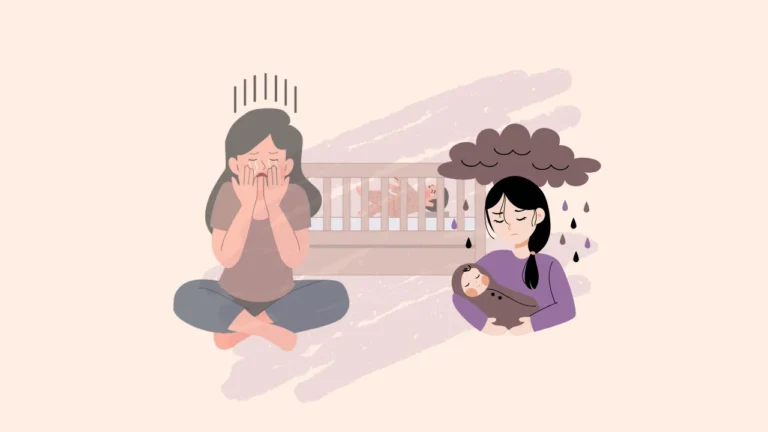
The image most people have of postpartum depression is a mother who cannot bond with her baby. Sitting in a dark room, I am unable to function. And while that does happen, it is one version of something looks different across different women.
Sometimes it looks like a rage. Sudden, overwhelming anger at small things that caused nausea to bother you. Sometimes it looks like numbness, going through the motions of caring for a newborn without feeling anything at all. Sometimes it looks like anxiety is so constant and physical that you cannot sleep even in the rare moments your baby does.
If you have been searching for postpartum depression to help near me, that search is reason enough to make the call. You do not need to be certain of your diagnosis before you reach out.
A postpartum depression psychiatrist can actually dig into what’s going on, sort out postpartum depression from other things that can look a lot like it and help you build a plan that fits your real life. Beautiful Minds Psychiatry in Frisco weaves postpartum care right into their wider women’s mental health support, specifically for new moms who need more than just hearing that it’ll pass with time.
The Years Before Menopause That Nobody Warns You About
Perimenopause and mental health are one of the most under-discussed combinations in women’s healthcare. Most women know menopause is coming at some point. Very few know that the years leading up to it can be some of the most emotionally turbulent of their lives.
Perimenopause can start in your late 30s or early 40s, sometimes earlier. And what makes it particularly disorienting is that the hormone shifts are not smooth or predictable. They spike and crash unpredictably, sometimes within the same week. That unpredictability is what makes perimenopause anxiety feel so hard to manage.There’s no way to really prepare yourself for it. Nothing warns you that it’s coming either. One second, you’re fine, and the next you’re anxious, or crying, or just flat out furious for no clear reason.
Perimenopause brain fog is another piece of this that women frequently describe but rarely feel believed about. Forgetting words, you know. Reading the same sentence multiple times without sticking. Walking into rooms and standing there blankly. These are real symptoms with a real hormonal cause.
According to the North American Menopause Society, women in perimenopause are at significantly higher risk for depression even if they have never experienced it before in their lives. That fact alone is worth sitting with.
Menopause and Irritability Is Not Just a Hot Flash
Menopause gets reduced to hot flashes in most conversations. But menopause and irritability, sudden mood shifts, depression, and sleep that completely fall apart are just as significant and far less openly discussed.
The reason this happens is the same reason all of this happens. Estrogen and mood track together. When estrogen falls sharply during menopause, serotonin regulation is directly affected. Women who have never dealt with significant depression or anxiety in their lives sometimes find themselves in genuinely unfamiliar emotional territory during this transition, and they have no framework for understanding why.
Hormonal mood swings during menopause can feel like a personality change. They are not. They are a biological response to a significant shift in your body’s chemistry. That does not make it easier to live with, but it does mean they can be addressed.
What actually helps looks different for every woman. Some find that talking it out in therapy is enough to make a real difference. Others need medication to get things back on track. A lot of times, it honestly takes both working together to see real progress. And for women whose depression just hasn’t budged with the usual treatments, Beautiful Minds offers options like TMS therapy and Spravato, built specifically for when the standard stuff hasn’t been enough.
FAQs
Estrogen and serotonin are tightly connected, so when one drops, the other usually follows, which is why hormonal shifts hit your mood so hard. Progesterone ties into GABA, that keeps anxiety and sleep in check. When these hormones fluctuate, the emotional impact is real and biological, not something you’re imagining.
PMS is uncomfortable, but PMDD is severe. It causes intense depression, anxiety, and extreme mood swings that shows up every month. Many women do well take an SSRI just during that premenstrual window. A quick psychiatric eval can tell you if PMDD is actually behind what you’re feeling.
Mental health during pregnancy matters just as much as physical health, and safe treatment options do exist. Actually, depression is one of the most common yet undertreated issues during pregnancy. A psychiatrist can team up with your OB to find the right approach that keeps both you and your baby safe.
A postpartum psychiatrist is specifically trained to spot the many ways postpartum depression and anxiety can show up, tell them apart from other conditions, and put together a treatment plan that actually fits your situation as a new mom. Instead of waiting to come up at a routine OB visit, reaching out directly to a psychiatric practice gets you faster and more targeted support.
Honestly, it can be both. Some women feel a difference just from lifestyle tweaks. For others, the mood shifts during menopause are severe enough to need actual psychiatric support, whether that’s medication, therapy, or both. If it’s affecting your relationships or daily life, that’s worth talking to psychiatrist who understands what’s happening hormonally.
When Is It Time to Actually Reach Out
This is the question most women sit with for too long. They wonder whether what they are feeling is bad enough to warrant professional help, or whether they should just try harder to manage it on their own.
Here is a more useful way to think about it. If this has been dragging on for more than two weeks, that’s worth paying attention to. Something’s really off when it starts indulging into your work, your relationships, or things that used to bring you joy. Feeling like a stranger in your own skin is not something you just tough out and ignore. Those are signs to talk to someone.
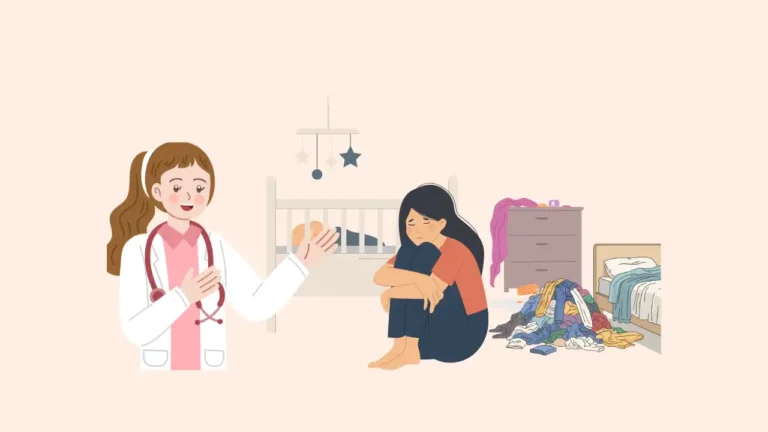
At Beautiful Minds Psychiatry in Frisco, women’s mental health care starts with a thorough psychiatric evaluation that looks at your full picture, not just your symptoms in isolation. From there, medication management and other treatment options are built around what is happening for you.
Both in-person and telehealth appointments across Texas are available. You do not have to have everything figured out before you call. That is what the first appointment is for.
Disclaimer: This content is for informational and educational purposes only. It is not a substitute for professional mental health advice, diagnosis, or treatment. If you are in crisis, call or text 988 for the Suicide and Crisis Lifeline.