Treatment-Resistant Depression: What Are Your Options
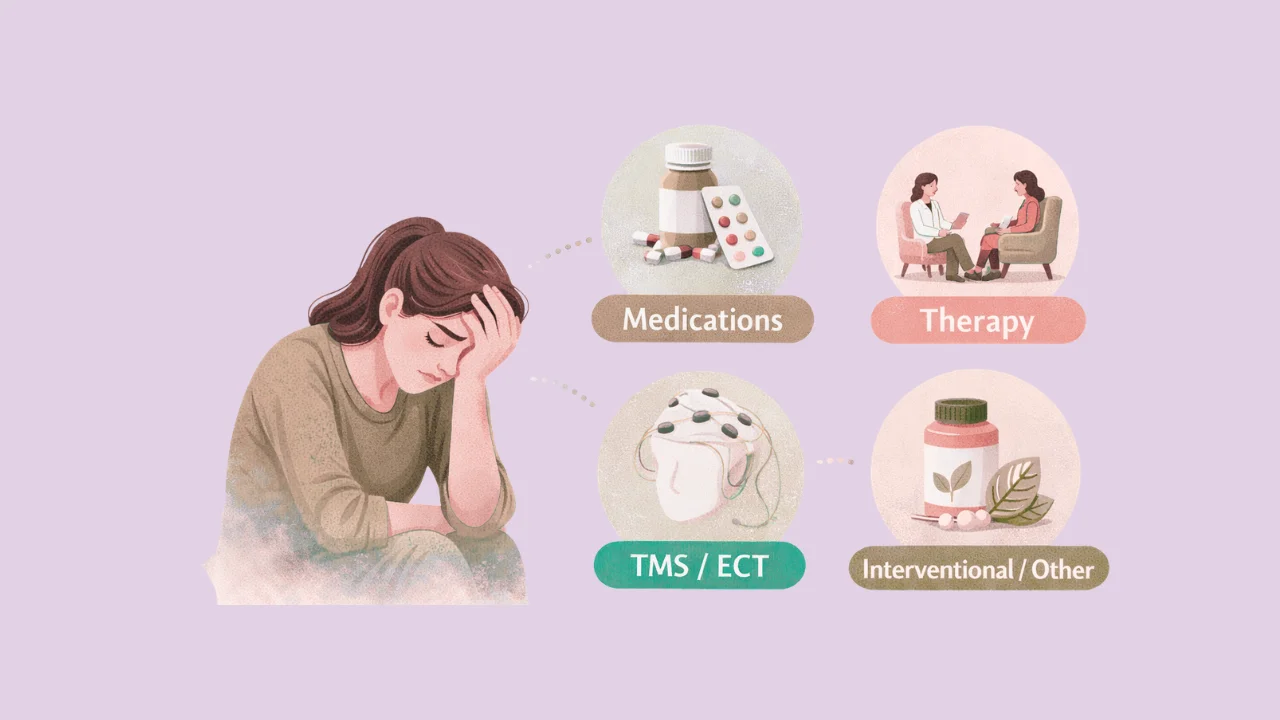
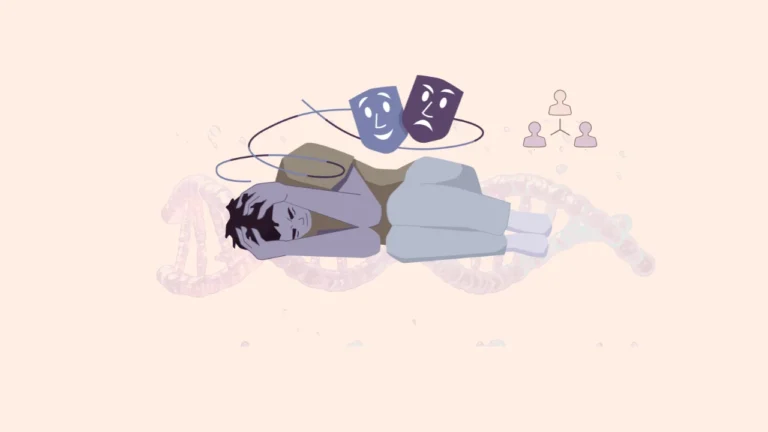
You’ve tried everything. Taking on antidepressant after antidepressant. You’ve done therapy and tried lifestyle changes. And nothing works. You still wake up feeling like life is pointless, can’t find joy in anything, and still feel empty.
If this is you, if antidepressant not working is your reality, you’re not broken. You’re not hopeless. You just have treatment-resistant depression. And there are actual options that work. Real options that people are using right now. Options that give people their lives back.
Spravato for depression is one option. TMS therapy is another thing. There are newer treatments that bypass traditional antidepressants completely. And they work for people who thought nothing would ever help.
In this guide, I’m going to walk you through what treatment-resistant depression is. What your options are. How to find a personalized treatment plan that actually fits you. And how to find the right psychiatric medication management support wherever you are in the country.
When Does Depression Become Treatment-Resistant
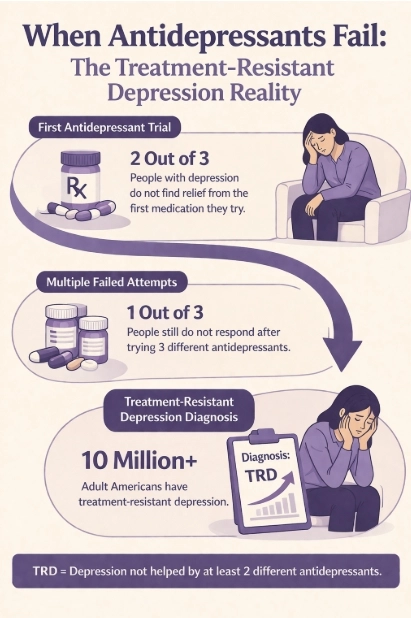
You’ve probably heard the term, but what does it actually mean. Treatment-resistant depression is when you’ve tried at least two different antidepressants at proper doses for a proper amount of time. And they didn’t work. Your depression hasn’t improved. You didn’t feel better.
It’s not rare. About 30 percent of people don’t respond to their first antidepressant. And plenty of those people don’t respond to the second or third either. At some point it becomes clear that the standard approach isn’t working for you.
That’s when antidepressant not working becomes obvious. That’s when you need to think about other options. Because continuing to try new antidepressants when nothing is working is like banging your head against a wall.
The good news is that there are alternatives. Options that have nothing to do with swallowing pills every day. Options that actually work for people with treatment-resistant depression.
Understanding Your Treatment-Resistant Depression Options
Spravato for Depression
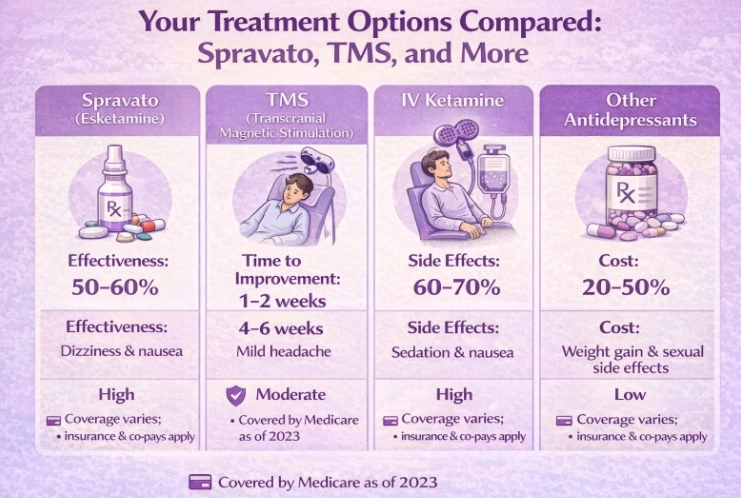
Spravato for depression is a nasal spray. Its FDA is approved specifically for treatment-resistant depression. And it works differently than any antidepressant you’ve ever tried.
Spravato effectiveness is backed by research. Studies show that people who failed multiple antidepressants responded to Spravato. People who were suicidal responded to Spravato. People who had given up hope responded to Spravato.
Here’s how it works. Spravato works on the glutamate system in your brain. Most antidepressants work on serotonin or norepinephrine. So Spravato approaches depression from a completely different angle. That’s why it works for people antidepressant not working describes perfectly.
You take Spravato at a clinic. Under supervision. The effects start fast. Some people notice improvement within hours or days. Not weeks. Not months. Days.
TMS Therapy for Depression
TMS stands for transcranial magnetic stimulation. And its FDA approved for treatment-resistant depression too.
With TMS, you don’t take anything. You don’t have medication in your system. The treatment uses magnetic pulses to stimulate specific parts of your brain. Parts that are underactive in depression.
You come to a clinic. They place a magnetic coil on your head. You feel tapping sensations. The session takes about 30 minutes. Then you go home.
Most people do TMS therapy five days a week for four to six weeks. And depression remissions happen to a lot of people. Not everyone. But a significant percentage of people with treatment-resistant depression see major improvement.
Neuromodulation Depression Treatment
Neuromodulation depression treatment is a fancy term for using technology to stimulate your brain. TMS is a form of neuromodulation of depression treatment. But there are others.
Deep brain stimulation is another option. It’s more invasive. It requires surgery. But for some people it’s what works.
Vagus nerve stimulation is another neuromodulation of depression treatment. It involves a small device implanted under your collarbone. It sends signals to your brain that help regulate mood.
These are options for people where other treatments have failed. They’re not first line treatments. But they exist. They’re available. They work for people.
TMS vs ECT: Which Is Better
TMS vs ECT is a question people ask. ECT stands for electroconvulsive therapy. It’s been around for decades. It works but it requires anesthesia. It has more side effects. It’s more invasive.
TMS vs ECT comes down to this. TMS is non-invasive. No anesthesia. Minimal side effects. You can drive yourself home. TMS vs ECT really depends on your situation and how severe your depression is.
But for most people with treatment-resistant depression, TMS is the first advanced option to try.
Building Your Personalized Treatment Plan
The most important thing is that your treatment works for you. Not for someone else. Not for the average person. For you, specifically.
That’s where a personalized treatment plan comes in. Your psychiatrist should be evaluating your specific situation, specific depression, and all your medical history. And creating a treatment plan that fits you.
For some people, a custom plan means trying a new mix of medications. In other cases, it looks like working with a provider who adjusts your doses step by step. Sometimes it’s about fine tuning what you already take until it feels right.
For others, a custom plan means adding therapy. You might do counseling for depression along with medication. Some people try cognitive behavioral therapy, while others go with acceptance and commitment therapy. Each person responds in their own way.
Then again, a custom plan might include looking into Spravato or TMS. Some people use one, while others try both at the same time and notice better results.
Depression Anxiety Comorbidity and Treatment
Sometimes depression doesn’t come alone. Depression anxiety comorbidity is really common. You have depression and anxiety happening at the same time. And antidepressant not working might be partly because the anxiety piece isn’t being addressed properly.
Your personalized treatment plan needs to be addressed to both. Some medications help both. Some therapies help both. But if you’re only treating the depression piece, you’re missing half the problem.
Counseling for depression should also address anxiety. Your psychiatric medication management should consider both conditions. Your neuromodulation depression treatment might help both too.
Psychiatric Medication Management That Actually Works
Psychiatric medication management is different from just taking pills. It’s active management. Adjustment. Monitoring. Optimization.
Your psychiatrist should regularly check in with you. See how you’re doing. Asking specific questions about whether things are improving. Watching for side effects. Making medication adjustments when needed.
Medication monitoring is ongoing. Not just at the first appointment and then yearly. Regular check-ins, assessment, and medication adjustment if needed.
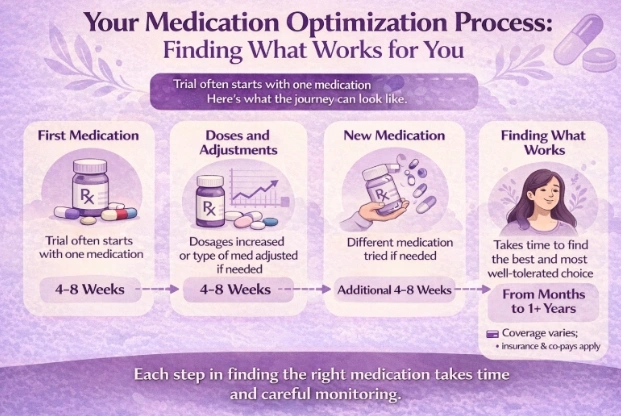
Medication optimization means fine tuning. Maybe your dose isn’t quite right and needs adjusting. It could be too low or too high. Sometimes a different medication helps, or a mix of medicines works better. Psychiatric medication management figures out.
This is what people with treatment-resistant depression often didn’t have before. They were prescribed something and then left alone. There’s no proper medication management. There’s no real support. Nothing is being optimized.
Virtual Psychiatric Care Options Across America
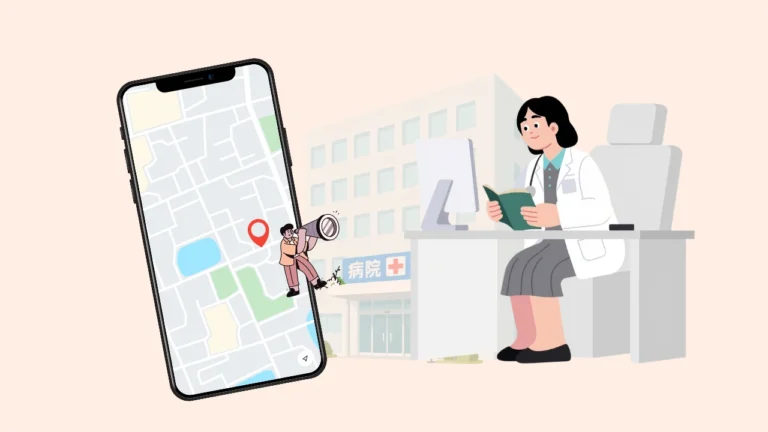
You don’t have to be in a major city to get good psychiatric care. Virtual psychiatric care makes advanced treatment available everywhere.
Teletherapy means you can do counseling for depression from your home. Telehealth psychiatry means you can consult with specialists regardless of where you live. Virtual psychiatric care for complex cases like treatment-resistant depression is becoming more available.
Some places offer virtual psychiatric care for TMS therapy consultations. You video call with a specialist, discuss your options and figure out if TMS is right for you.
Spravato for depression still requires in person treatment. It has to be supervised at a clinic. But the consultations can be virtual. The follow-up can be virtual. Virtual psychiatric care makes the process easier.
Understanding Medication Adjustment and Medication Monitoring
When you’re trying to find what works, medication adjustment and medication monitoring are crucial.
Medication adjustment might mean increasing your dose. Decreasing your dose. Switching to a different medication. Add another medication. Removing a medication that’s not helping.
Medication monitoring means tracking how you’re doing. Watching for improvements, side effects, and any adverse reactions.
This process takes time. You can’t judge if something is working in one week. It usually takes four to six weeks to really know if a medication is helping.
That’s where medication optimization comes in. Once you’ve given enough time, you evaluate. Is it working. Does it need adjustment. Should you try something else.
The Path to Depression Remission
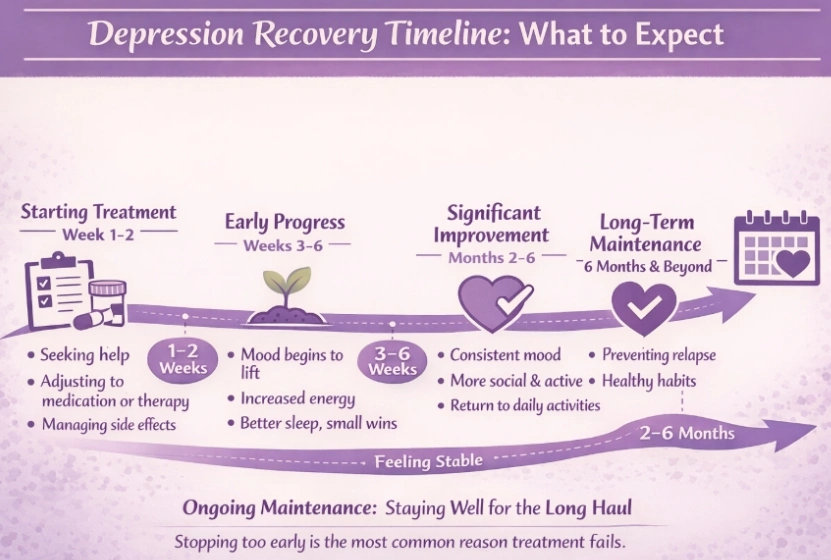
Depression of remission is the goal. Complete remission. No symptoms. Or at least so few symptoms that you can live your life fully.
Remission from depression doesn’t always mean zero symptoms. For some people, it means symptoms are so mild they don’t really interfere with life. For others, it means complete symptom of freedom.
Depression recovery is possible. It might take time. It might require trying several different approaches. But depression recovery happens. People who thought they’d never feel better do feel better.
Depression remission rates for treatment-resistant depression are actually pretty good. Spravato for depression has remission rates in the 30 to 50 percent range depending on the study. TMS therapy has similar rates. Combining approaches often improves rates.
Cost Considerations and Mental Health Coverage
Depression treatment costs are a real concern. TMS therapy costs can be significant. Spravato for depression has a cost. Psychiatric medication management adds up.
But mental health coverage exists. Insurance often covers these treatments. Mental health coverage has improved over the years.
A lot of plans pay for TMS therapy when depression doesn’t respond to treatment. Many also cover Spravato for depression. Most include psychiatric medication management too.
Depression treatment cost varies by insurance. By location. By provider. But before you assume you can’t afford treatment, talk to your insurance. Ask about mental health coverage. Ask what’s actually covered.
Finding the Right Provider Anywhere in America
Whether you’re in Texas or anywhere in between, you need the right provider.
Find psychiatrists who focus on treatment-resistant depression. Look for those experienced with Spravato. Choose someone who knows TMS therapy. Make sure they understand all the neuromodulation options for treating depression.
Ask how they create a personalized treatment plan. Check how they handle psychiatric medication management. Find out how they adjust and monitor medications over time.
Look for providers who offer virtual psychiatric care if you can’t travel. Look for providers in your area if you need in-person treatment.
Don’t settle for a provider who just keeps trying new antidepressants when nothing is working. Find someone who thinks about treatment-resistant depression differently. Who explores other options. Who actually helps people recover.
Questions People Ask About Treatment-Resistant Depression
If you’ve tried two or more antidepressants at proper doses for long enough and they didn’t help, you probably have treatment-resistant depression. Talk to a psychiatrist about this. Get a formal assessment. They can evaluate whether you actually have treatment-resistant depression or if there’s something else going on.
Spravato for depression is FDA approved. It’s been studied extensively. Yes, it has side effects like dissociation during treatment. But it’s carefully monitored. And for people where antidepressants not working describes their situation, the benefits usually outweigh the risks.
Studies show that depression remissions happen for many people with TMS therapy. Not everyone. But a significant percentage sees major improvement. And TMS vs other options show it has good effectiveness rates with fewer side effects than some alternatives.
Costs vary by provider and by insurance. Some offer sliding scale fees. Others take insurance, and some give lower rates if you don’t have insurance. Always ask about cost upfront before starting treatment.
Many people do medication adjustment plus TMS therapy together. Personalized treatment plans might include psychiatric medication management plus TMS. Or counseling for depression plus Spravato for depression. Different combinations work for different people
You Have Options Now
If antidepressant not working is your story, if treatment-resistant depression is your diagnosis, if depression remission feels impossible, I want you to know something. You have options. Real options. Options that work.
Spravato for depression. TMS therapy. Neuromodulation depression treatment. Psychiatric medication management. Virtual psychiatric care. Counseling for depression. Personalized treatment plan designed just for you.
You don’t have to accept that nothing will help. You don’t have to give up. Treatment-resistant depression is hard, but it’s treatable.
Find a psychiatrist who specializes in this. Look for someone who believes in a personalized treatment plan. Choose a provider who will truly manage your medications. Make sure they take the time to go over all your options.
Depression recovery is possible. Remission from depression is possible.
You don’t have to keep feeling this way, and you don’t have to figure it out alone.
Reach out to Beautiful Minds Psychiatry and start finding what actually works for you. You deserve to feel better.
Disclaimer: This content is for informational and educational purposes only. It is not a substitute for professional mental health advice, diagnosis, or treatment. If you are in crisis, call or text 988 for the Suicide and Crisis Lifeline.