Are Psychiatric Medications Safe Long-Term? What Research Shows

Most people ask this question quietly. Usually after they have been on something for a while and someone, a family member, a friend, something they read at midnight planted a seed of doubt they cannot shake.
So, let’s talk about it honestly.
The Question Nobody Asks Out Loud
You are probably not worried in a dramatic way. It is more like a background hum. Is this, okay? Should I still be on this? What is it doing to me that I cannot feel?
That is a completely reasonable thing to worry about. And the fact that you are asking means you are paying attention to your own health, which is exactly what you should be doing.
The long-term effects of psychiatric medication are real. They are also manageable when someone is actually monitoring what is happening and adjusting when needed. That last part matters more than most people realize going in.
How Long Does It Take for Depression Medication to Work
Before anything else, this question deserves a straight answer because it is the one that causes people to give up too early.
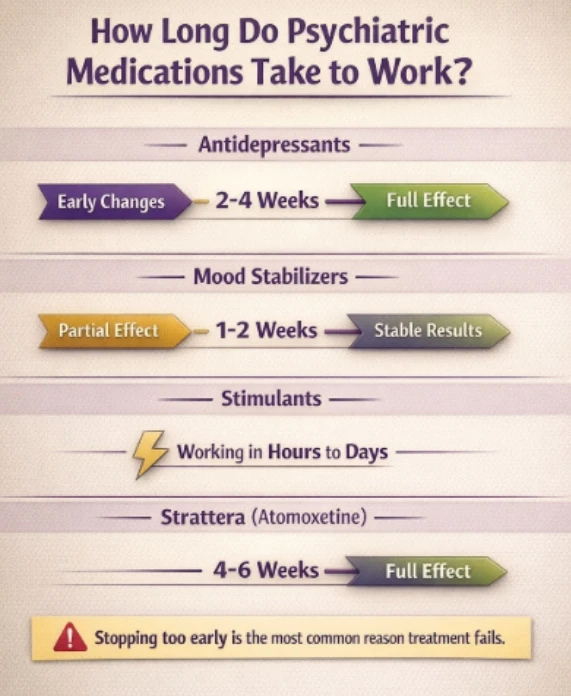
How long does it take for depression medication to work? Most antidepressants take two to four weeks to show early changes and six to eight weeks to reach full effect. It takes a long time to wait when you to struggle. But stopping before that window closes is one of the most common reasons people end up back at square one.
According to the National Institute of Mental Health, stopping too soon is one of the leading reasons depressions comes back. If you are in that early stretch and not feeling much yet, that is not the medication failing. That is the medication that is still working.
Long-Term Antidepressant Use and What Actually Happens
For people with recurring depression, staying on an antidepressant long-term is not just acceptable; it is often the recommendation. The American Psychiatric Association suggests that anyone who has had two or more episodes of major depression considers maintenance treatment because the risk of another episode without it is high.
The most honest thing to say about long-term antidepressant use is this. Weight changes, shifts in sexual function, and that slightly flat emotional feeling are real side effects that real people experience. They are not permanent damage. A dose adjustment or a medication switch can usually fix those issues.
What makes long-term antidepressant use go wrong is not the duration. It is silent. People quietly tolerate side effects for years instead of mentioning them at their next appointment. That is the part worth fixing.
Long-Term Effects of Depressant Drugs
When people search long-term effects of depressant drugs in a psychiatric context, they are usually asking about medications that calm or slow the nervous system mainly benzodiazepines.
This category requires more caution than antidepressants. Benzodiazepines were designed for short-term use. Taken over months or years, they can lead to physical dependency and cognitive dulling that builds so gradually you almost do not notice it happening.
That does not make them wrong for everyone. It makes them something that deserves an honest conversation with your prescriber about how long is appropriate and what the plan looks like going forward. If you have been on something in this category for a while without a recent review, that conversation is worth having at your next psychiatric evaluation.
Long-Term Effect of Lithium
Lithium has been used longer than almost any other psychiatric medication, and the research on it is detailed enough to feel actually trustworthy.
The long-term effect of lithium is genuinely two sides. The good side is that it is one of the most effective medications for keeping bipolar disorder stable, and research through NAMI suggests it may even be protective for brain health over time.
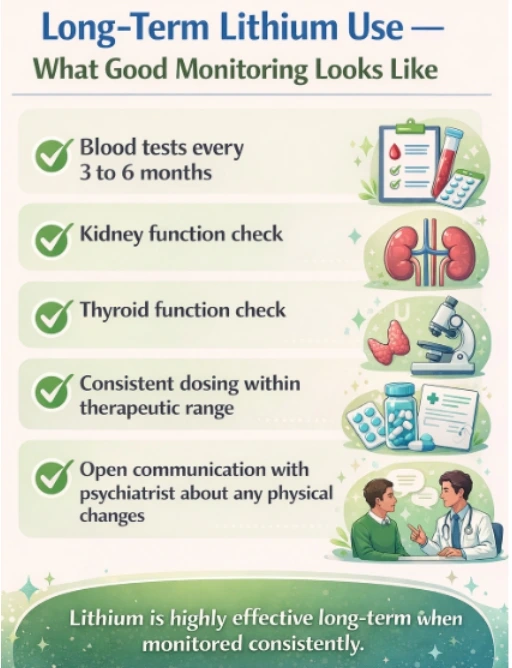
The part that requires attention is the kidney and thyroid function. Long-term lithium use can affect both, which is why regular blood work is not optional; it is the whole point. When lithium is monitored properly, most people do not develop serious problems. When it is not, that is where things go wrong.
If you are on lithium and your last blood test was more than six months ago, follow up.
Ritalin, Adderall, and Concerta Long-Term
Parents asking about the Ritalin long-term effect, the Adderall long-term effect, or the long-term effect of Concerta are all really asking the same thing. Is what I am giving my child to hurt them?
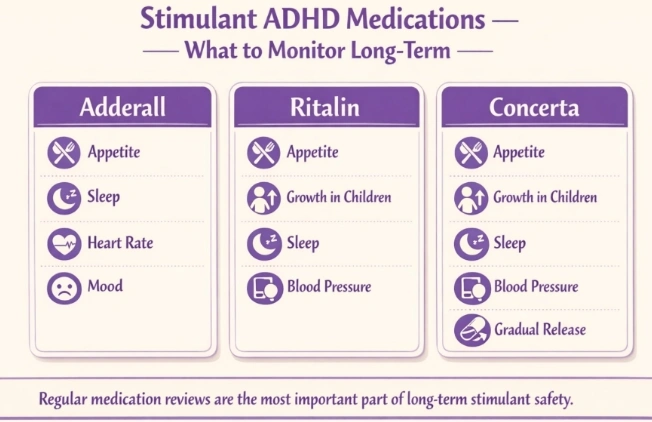
The short, honest answer is that the research following children on stimulants for years has not found significant damage to brain development or overall health when the medication is used as prescribed and checked regularly. The things worth monitoring are appetite, sleep, growth rate, and heart rate not because problems are inevitable but because catching changes early is the whole point of regular follow-up.
One thing worth knowing about the Adderall long-term effect, specifically some of what people interpret as damage when they stop taking it is actually just the return of untreated ADHD. Feeling scattered and foggy after stopping does not necessarily mean Adderall hurts you. It can mean it was doing more than you realized.
Long-Term Effects of Strattera
Strattera sits in a different category from stimulants entirely. It is not a controlled substance; it works on norepinephrine rather than dopamine, and it does not carry the same dependency concerns.
The long-term effects of Strattera are generally considered cleaner than stimulants for people who have anxiety alongside ADHD or a history of substance use. The tradeoff is patience it takes four to six weeks to fully work, and the early weeks can include nausea, and mood shifts that feel discouraging.
Long-term it is well tolerated for most people, but blood pressure monitoring still matters. That is not a warning. That is just good care.
FAQs
For most people, yes, as long as it’s prescribed and monitored properly. Long-term effects are real but manageable when your psychiatrist is actually checking in, not just refilling prescriptions. What worked two years ago may need adjusting today, and that’s just part of good care, not a sign anything went wrong.
Two to four weeks pass before most antidepressants do anything noticeable, and the full effect takes six to eight weeks. That feels like forever when you’re already struggling. Quitting too soon is actually one of the biggest reasons depressions comes back. Stay in touch with your psychiatrist during those early weeks rather than stopping on your own.
The long-term effect of lithium on kidneys is real but manageable with proper blood monitoring every three to six months. Most people on lithium for years do not develop serious kidney problems when their levels stay within the therapeutic range. The risk comes from inconsistent monitoring, not from lithium itself being inherently damaging with proper care in place.
Long-term care at Beautiful Minds means regular follow-ups where your psychiatrist reviews your medication, symptoms, and how you’re doing overall. Side effect conversations are part of that, along with bloodwork when needed. TMS therapy and Spravato are also available when standard treatments aren’t cutting it.
What Long-Term Psychiatric Care in Texas Actually Looks Like
Good long-term psychiatric care Texas is not a monthly five-minute prescription refill. It is someone actually tracking how you are doing over time.
That means honest conversations about side effects you might be quietly pushing through. It means blood work when your medication requires it. It means revisiting whether your original diagnosis still fits your life today. And it means access to options beyond standard medication when standard medication is not cutting it.
At Beautiful Minds Psychiatry in Frisco and across DFW, patients who have not responded well to standard psychiatric medications have access to TMS therapy and Spravato, both of which are available for treatment-resistant depression and both of which are delivered within the same ongoing care relationship, not as a referral to somewhere else.
Long-term medication management works best when your provider knows your full history. That is what makes continuity of care worth protecting.
Disclaimer: This content is for informational and educational purposes only. It is not a substitute for professional mental health advice, diagnosis, or treatment. If you are in crisis, call or text 988 for the Suicide and Crisis Lifeline.