Postpartum Depression vs Baby Blues: What Is the Difference?
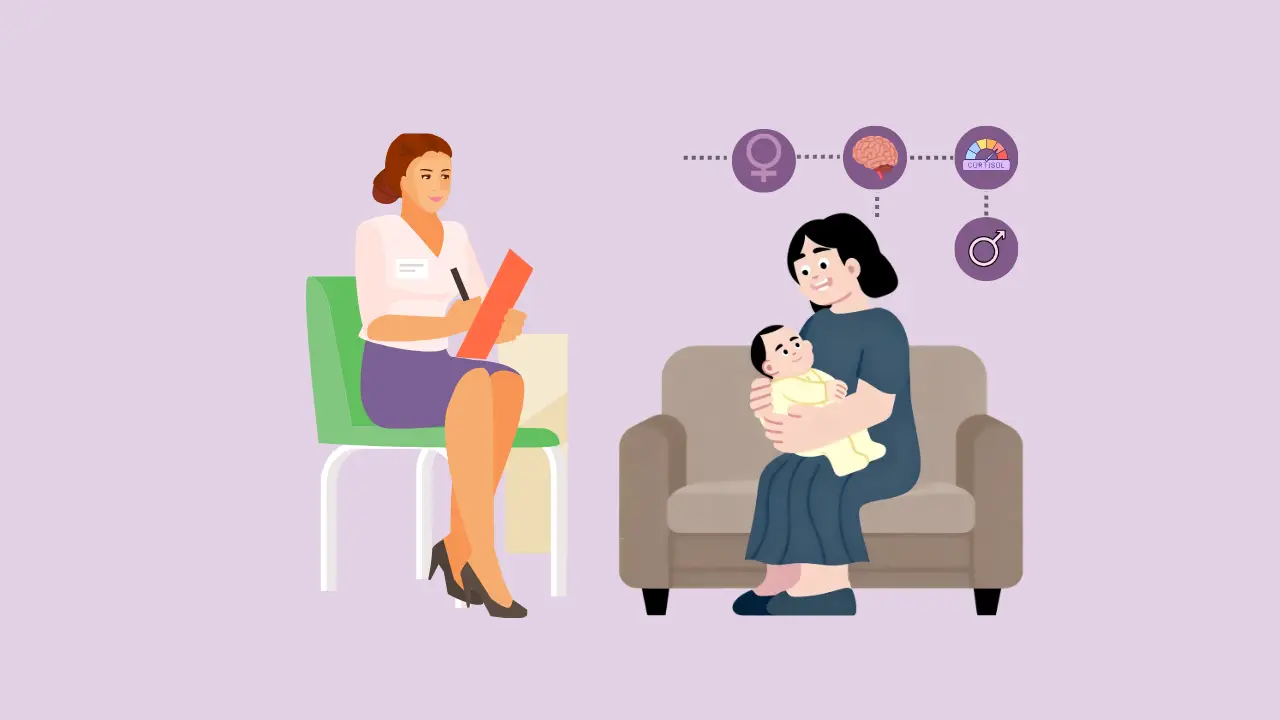
You had a baby. Everyone is waiting for you to grow up.
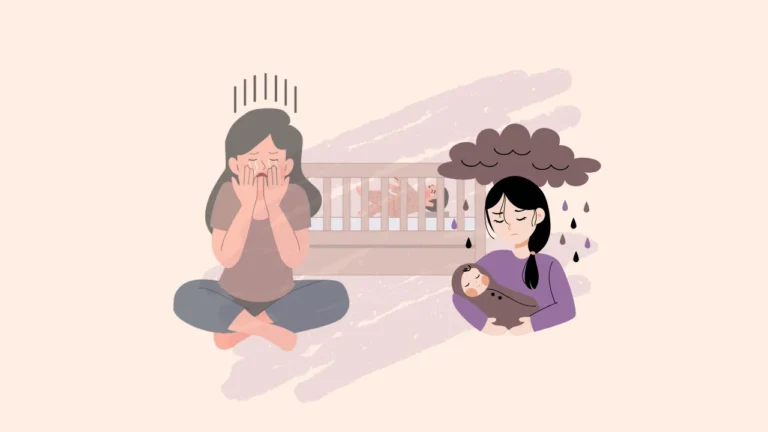
And instead, you are sitting in the bathroom crying and you are not even sure why. Or you are staring at your newborn feeling nothing at all, which somehow feels worse than crying.
You keep asking yourself the same question. Is this normal? Is this just what having a baby feels like? Or is something actually wrong?
That question matters. And the answer is not always obvious from the inside. So let us talk through it honestly.
The Baby Blues Are Real, But They Do Not Last
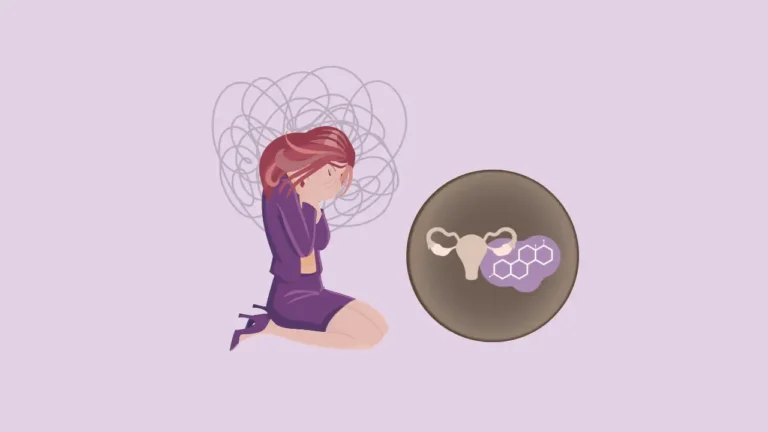
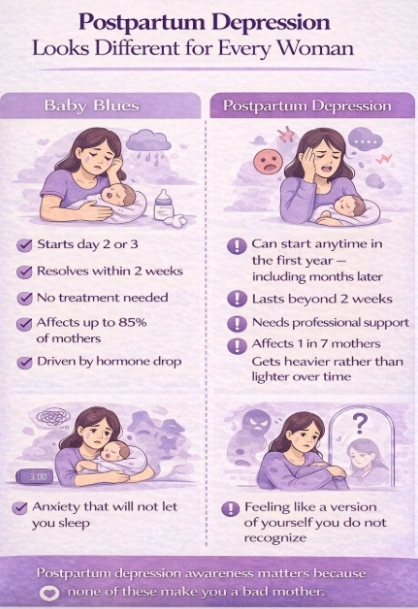
Almost every new mother goes through some version of this. The hormones that carried you through nine months of pregnancy drop sharply right after birth. Estrogen, progesterone, all of them. Your body goes from peak pregnancy hormones to almost nothing in a matter of hours, and your mood often goes with it.
That is baby blues. Postpartum crying that comes out of nowhere. Feeling shaky and overwhelmed. Laughing one minute and dissolving the next. Snapping at your partner over something that would not normally register. It is messy and exhausting, and it feels bigger than it looks from the outside.
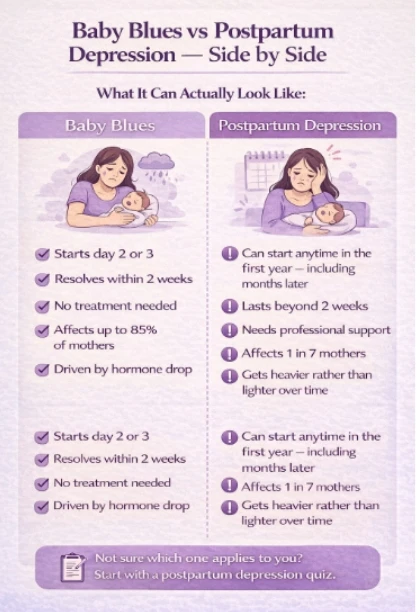
But here is the thing about baby blues. They settle. Usually within the first two weeks they start to lift on their own. You do not need a diagnosis or medication. You need rest, food, water, and people around you who are genuinely helpful rather than just present.
If things are shifting and you are starting to feel a little more like yourself by the end of week two, that is the baby blues doing what the baby blues do.
When Things Do Not Settle
Here is where it gets harder to call.
Because postpartum depression does not always look dramatic. It does not always mean you cannot get out of bed or that you feel nothing for your baby. Sometimes it is quieter than that. A flatness that sits just underneath the surface. A feeling that you are going through the motions without really being there. A version of yourself you do not quite recognize.
The difference between baby blues and postpartum depression is mostly about time and intensity. Baby blues faded. Postpartum depression does not fade on its own. It tends to stay, and in many cases, it gets heavier rather than lighter as the weeks go by.
If you are past the two-week mark and you are still not okay, that is the signal worth paying attention to. Not to panic. Just to stop waiting for it to pass on its own and start thinking about getting some actual support.
According to the National Institute of Mental Health, postpartum depression affects around one in seven new mothers.This happens to a lot of people. Nobody talks about it enough, but the biology behind it is real. And the good news is that treatment actually works.
It Does Not Always Look Like Crying
Postpartum depression awareness matters so much partly because people still picture it as one specific thing, a mother who cannot stop crying, who cannot bond with her baby. And that does happen. But it is one version of something that shows up very differently for different women.
Postpartum crying is part of it for some women. For others, it is the absence of feeling. Total numbness. Going through feeds and nappy changes and being asked if everything is okay and saying yes because the alternative is too hard to explain.
For some women it shows up as rage. Disproportionate, sudden anger that comes from nowhere and leaves you feeling ashamed of yourself afterward. For others it is anxiety so relentless that you cannot sleep even when the baby finally does. For some it is intrusive thoughts that frighten them, not because they want to act on them but because their exhausted, overwhelmed brain is under more stress than it has ever been.
None of these make you a bad mother. All of them deserve attention.
A Simple Way to Check in with Yourself
If you are genuinely unsure where you fall, taking a postpartum depression quiz is a reasonable first step before anything else.
The Edinburgh Postnatal Depression Scale is the most widely used postpartum depression screening tools available, and it takes less than five minutes. It is not a diagnosis. There are ten straightforward questions that give you and your care provider a clearer picture of what might be going on. You can find it through Postpartum Support International and fill it out at home before you even decide who to call.
A lot of women find the quiz helpful simply because it puts language around something they have been struggling to describe. Seeing a score on a page makes it easier to say out loud that they are not okay.
Late Onset Postpartum Depression: The One Nobody Expects
Most people assume postpartum depression happens right after birth, in those first raw weeks. And it often does. But late onset postpartum depression is real, and it catches a lot of women off guard because they thought they had already made it through the hard part.
Some women feel relatively okay in the newborn stage and then find themselves struggling at three months, five months, even eight months after delivery. The hormonal shifts of the postpartum period do not wrap up neatly at six weeks. They continue for months, and for some women the emotional weight shows up later rather than earlier.
If you had your baby a while ago and are only now feeling like something is off, that is still worth taking seriously. Late onset postpartum depression responds to the same treatments as early onset. It does not matter that it did not happen immediately after birth. What matters is that it is happening now.
Things That Actually Help
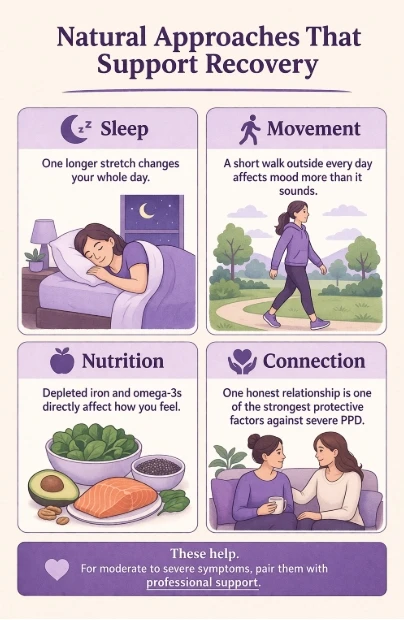
For milder symptoms, natural treatment for postpartum depression can genuinely shift things. Not as a replacement for professional support but as a real part of getting better.
Sleep is not a luxury right now. It is medicine. Even if it means letting your partner or a family member take one feed overnight, so you get a longer stretch, that matters more than most people realize. The difference between five broken hours and one six-hour stretch can feel like a completely different day.
Getting outside and moving your body, even just a short walk, has a measurable effect on mood. Not a gym session. A walk. Fresh air, daylight, and movement. Do it daily if you can.
Eating real food regularly matters more than it sounds. The postpartum body is depleted from pregnancy, birth, and often breastfeeding. Iron, omega-3s, and B vitamins all directly affect mood and are commonly low in new mothers. Skipping meals because you are busy is going to make everything harder.
And the connection matters. One person who knows how you are doing, not the version you are presenting to everyone else, is one of the most protective things you can have right now. According to Postpartum Support International, social support is one of the strongest protective factors against postpartum depression getting severe.
Preventing Postpartum Depression Before It Starts
You cannot prevent it entirely because some of it is biological and outside your control. But there are things that reduce the risk significantly.
If you have a history of depression, anxiety, or PMDD, talk to your doctor or psychiatrist before the baby arrives. Women with a previous mental health history are at higher risk for postpartum depression, and having a plan in place before delivery is far easier than trying to make one in the middle of it.
Think through your support system before the baby comes. Who is helping in the first weeks? Who will you call if you are not okay? Having those answers ready means, you are not trying to figure it out while running on no sleep with a newborn in your arms.
And give yourself permission to not be fine. The pressure to feel grateful and joyful every minute is one of the biggest reasons postpartum depression awareness still matters. That pressure is what keeps women silent when they should be asking for help.
FAQs
Baby blues show up right after birth and clear up within two weeks on their own. Postpartum depression sticks around longer, gets heavier over time, and makes daily functioning genuinely hard. Two weeks with no improvement is the clearest sign something more is going on.
The Edinburgh Postnatal Depression Scale is free, takes five minutes, and lives on the Postpartum Support International website. Taking it gives you something real to bring to your doctor rather than trying to explain a feeling you cannot quite put into words.
Postpartum depression does not have to show up right after birth. Some women do not feel it until three or five months later. Your hormones are still shifting well past the six week mark. If you gave birth months ago and something feels off right now, that is still worth a conversation with a doctor.
Sleep makes the biggest difference, even one longer stretch shared with a partner. A short walk outside every day moves the needle more than people expect. Eating regularly and keeping your iron and omega-3 levels up matters too. One honest relationship where you do not have to perform being okay is genuinely protective.
Not every provider knows how to tell postpartum depression apart from postpartum anxiety or postpartum OCD. A postpartum depression psychiatrist does. They look at your full picture, factor in things like breastfeeding and your personal history, and build a treatment plan around what you actually need. Beautiful Minds Psychiatry in Frisco TX is accepting new patients right now with both in-person visits and telehealth available.
When to Actually Make the Call
Give it two weeks. After that, if nothing has shifted, call a postpartum depression doctor rather than waiting around for your next routine visit. When today feels harder than yesterday did, that is worth a phone call. Not being able to care for yourself is a real reason to ask for help. Thoughts that are frightening you are a reason to call someone right now, not tomorrow.
A postpartum depression psychiatrist is specifically trained to understand the full picture of what can happen in the postpartum period, including late onset postpartum depression, postpartum anxiety, and conditions that can look similar but need different treatment. They can put together a plan suited to exactly where you are, including whether you are breastfeeding and what your history looks like.
If you have been looking for a postpartum depression psychiatrist near me in the Frisco or North Texas area, Beautiful Minds Psychiatry at 8501 Wade Blvd, Suite 110, Frisco TX 75034 is currently seeing new patients. Both in-person and telehealth appointments are available through their psychiatric evaluation page. For women whose symptoms have not responded to initial treatment, TMS therapy is also available at the practice as a non-medication option. Call (972) 668-3109 or visit beautifulmindstx.com.
Disclaimer: This content is for informational and educational purposes only. It is not a substitute for professional mental health advice, diagnosis, or treatment. If you are in crisis, call or text 988 for the Suicide and Crisis Lifeline.