Schizoaffective vs Bipolar: Symptoms, Diagnosis, and Key Differences
Schizoaffective disorder and bipolar disorder with psychotic features can look remarkably similar, making it difficult to understand which condition explains your symptoms. Both can involve mood changes, hallucinations, and delusions.
However, the timing of psychosis makes a key difference. Understanding this distinction can help you know what to discuss during your psychiatric evaluation.
Key Takeaways
- Schizoaffective disorder involves psychosis and major mood episodes, and the psychosis continues for at least two weeks without a mood episode.
- Bipolar disorder with psychotic features involves psychosis only during severe manic or depressive episodes.
- You get a diagnosis when a psychiatrist reviews your symptoms’ history and how your symptoms unfold over time.
- You can manage your symptoms with medication, therapy, and ongoing psychiatric care.
What Is Schizoaffective Disorder?
Schizoaffective disorder is a distinct mental health diagnosis. It combines psychotic symptoms, such as hallucinations and delusions, with major mood episodes of mania or depression. You should not think of it as a milder version of schizophrenia or bipolar disorder. Psychosis changes how you read reality, while mood symptoms push your energy and emotions far up or far down.
You may ask, what is schizoaffective bipolar disorder? That phrase is not a formal name. Most of the time, people mean schizoaffective disorder, bipolar type. You may have received a bipolar or schizophrenia diagnosis first, because psychosis and mood symptoms overlap. Your psychiatrist needs your full history before naming one.
Schizoaffective Disorder Symptoms and Early Signs
The early signs of schizoaffective disorder often build slowly and look different for each person. You or someone you love may notice poor sleep, pulling away from friends, trouble concentrating, unusual beliefs, or mood shifts that seem out of proportion. These signs overlap with many other conditions, so none of them can confirm a diagnosis alone.
Psychotic Symptoms
You may have hallucinations, which means you see or hear things others do not. You may hold delusions, which are strong, fixed beliefs that stay the same even when clear evidence shows they are false. Schizoaffective disorder delusions can feel completely true to you, which makes them hard to spot from the inside.
Mood Symptoms
Mania can bring high energy, less need for sleep, racing thoughts, or impulsive choices. Depression can bring lasting sadness, low energy, or loss of interest in things you used to enjoy. Either one changes your sleep, focus, and routine. Your psychiatrist pays close attention to how long these shifts last compared with your psychotic symptoms.
Types of Schizoaffective Disorder
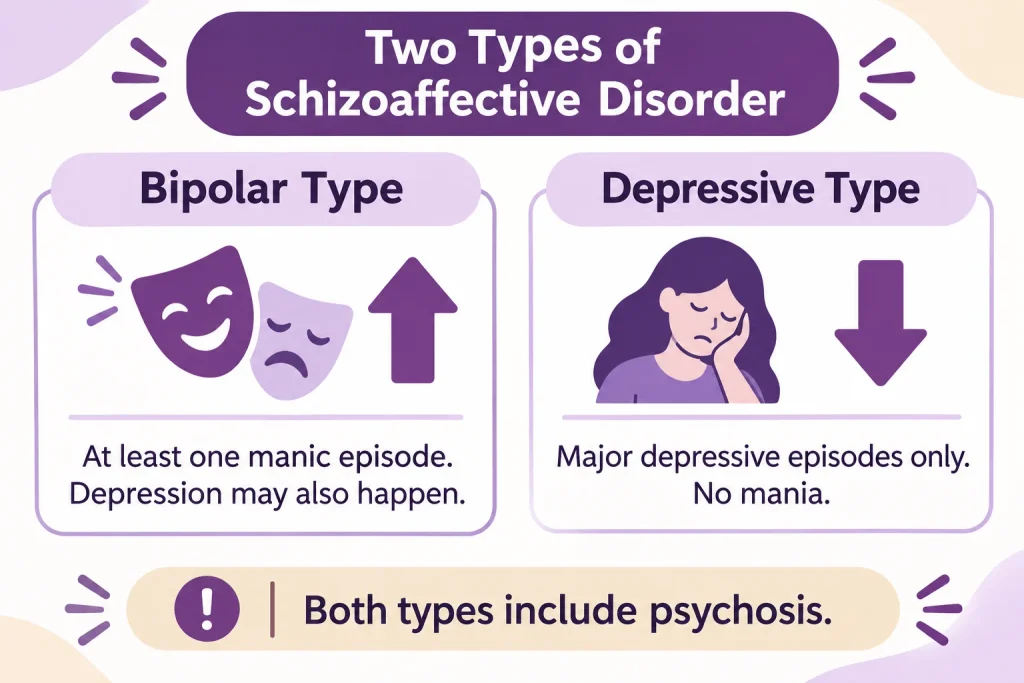
Doctors recognize two types of schizoaffective disorder, and your type depends on the mood episodes you have had. Both types include psychotic symptoms. Bipolar type schizoaffective disorder means you have had at least one manic episode, and you may also have depression. The table below shows the split.
| Type | Main mood symptoms |
| Main mood symptoms | Mania at some point, with or without major depressive episodes |
| Depressive type | Major depressive episodes only, with no mania |
Depressive type of schizoaffective disorder means you have had major depressive episodes but never mania. Your type can guide which medicines your psychiatrist considers, which is one reason the details of your history matter. Share every mood change you remember, even the ones that seemed minor or happy.
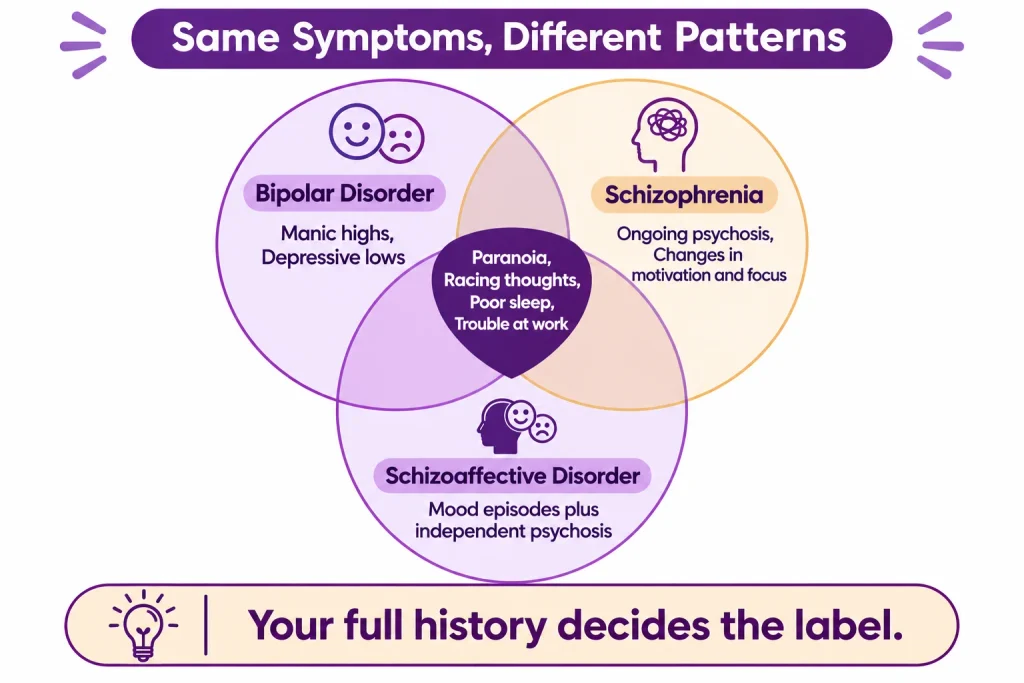
Schizoaffective Disorder vs. Bipolar Disorder and Schizophrenia
These three conditions share many symptoms, so a side-by-side look helps you. The deciding factor is timing: when your psychosis happens compared with your mood episodes. This section shows you how clinicians think about that line. It explains the logic, but it cannot diagnose you or replace an evaluation.
Schizoaffective Disorder vs bipolar disorder
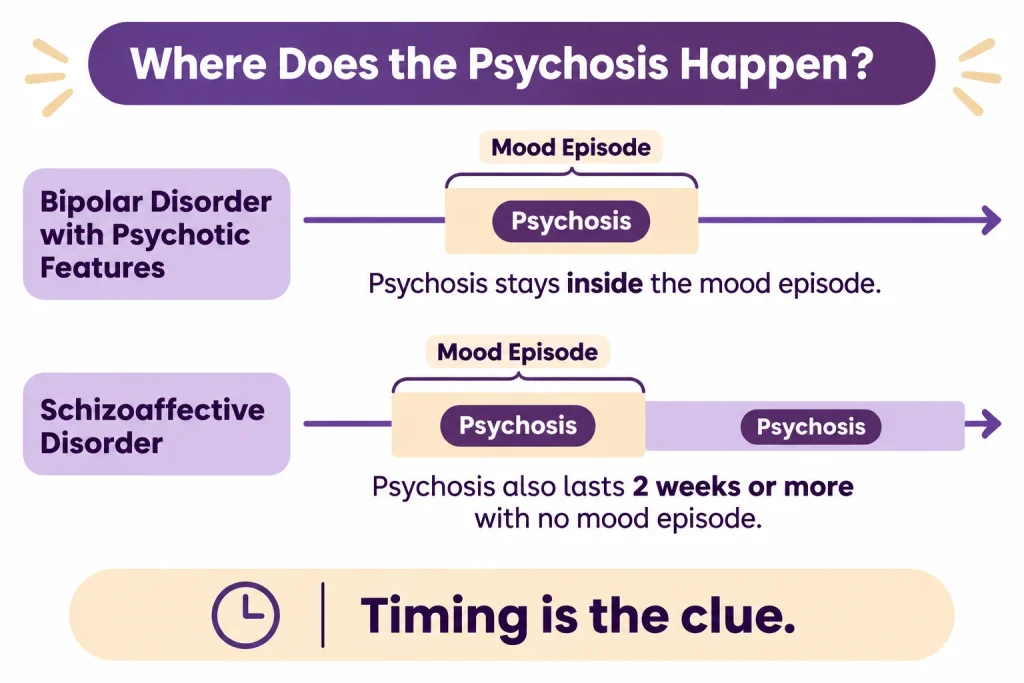
Bipolar disorder involves episodes of mania, depression, or both, and psychosis is not required. When psychosis does appear, it stays tied to a mood episode. In schizoaffective disorder, your psychosis can stand on its own, outside any major mood episode. Bipolar type schizoaffective disorder includes mania too, but it also includes that independent psychosis, which bipolar disorder alone does not.
For a closer look at mood episodes and testing, read our guide to bipolar disorder testing, diagnosis, and treatment in Frisco. The NIMH page on bipolar disorder also lists the symptoms of mania and depression, which helps you see where mood symptoms end.
Schizoaffective vs Bipolar with Psychotic Features
The schizoaffective vs bipolar with psychotic features question comes down to where your psychosis happens. With bipolar disorder and psychotic features, you experience hallucinations or delusions only during a manic or depressive episode. In schizoaffective disorder, you also experience them for at least two weeks without a major mood episode. Mood episodes still fill most of the illness.
Schizophrenia vs schizoaffective disorder
Both conditions can involve hallucinations, delusions, and disorganized thinking. In schizoaffective disorder, major mood episodes fill most of the total active and residual length of your illness. In schizophrenia, mood episodes may occur but do not define the illness. Doctors compare how long each pattern lasts.
Depressive type schizoaffective disorder can look like schizophrenia with depression, so the length of your mood episodes becomes the deciding detail. Your psychiatrist decides based on your whole symptom history, not one appointment.
| Feature | Schizoaffective disorder | Bipolar disorder with psychotic features | Schizophrenia |
| Psychotic symptoms | Yes | Only during mood episodes | Yes |
| Major mood episodes | Required, and present for most of the illness | Required | May occur, but not the defining feature |
| Psychosis outside mood episodes | At least two weeks | No, under this diagnosis | Can occur |
These distinctions follow DSM 5 criteria, as summarized by StatPearls on NCBI.
Schizoaffective Disorder Causes: What Do We Know?
Schizoaffective disorder causes remain unclear, because researchers have not found one exact cause. Genetic factors and differences in brain function may play a role. A close relative with schizoaffective disorder, schizophrenia, or bipolar disorder may raise your risk, but family history does not guarantee you will develop the condition. Many people with no known family history develop it too.
Researchers keep studying how genetic, biological, and environmental factors interact. Our guide on hereditary depression shows you how family history can shape mood conditions and what treatment can do about it.
Schizoaffective Disorder Diagnosis: How Do Psychiatrists Decide?
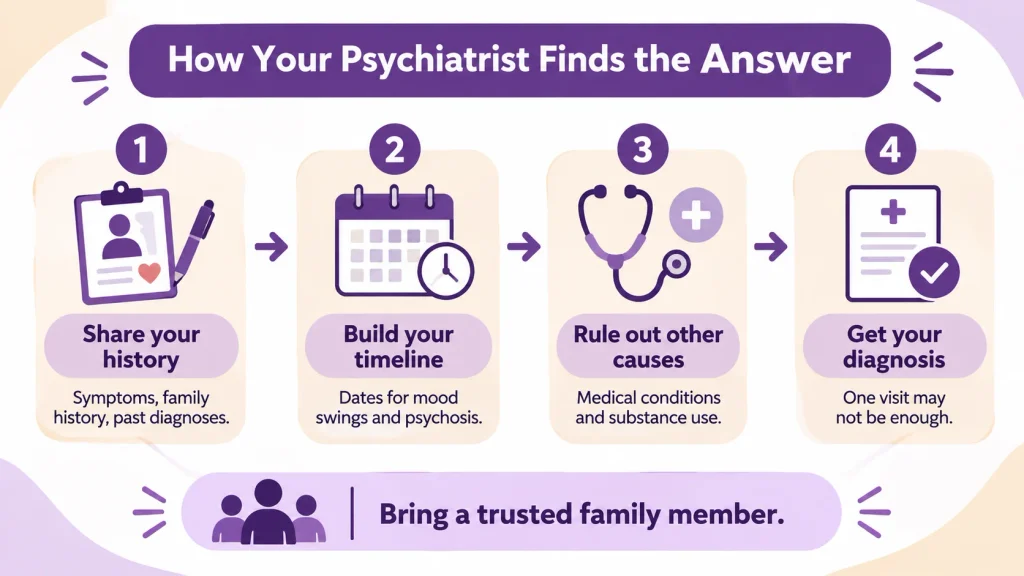
A schizoaffective disorder diagnosis takes time because your psychiatrist needs to understand how your symptoms develop and change over time. During your evaluation, your psychiatrist may:
- Review your health history: Discuss your mental health, medical history, and any substance use.
- Understand your symptoms: Ask about mood changes, hallucinations, and delusions.
- Track symptom timing: Determine how long your mood and psychotic symptoms lasted and whether psychosis occurred without a mood episode.
- Rule out other causes: Use physical exams or medical tests to check for other conditions or substance-related causes.
- Gather additional details: Ask you to bring notes about when symptoms started and how long they lasted. A trusted family member may also help fill in details you do not remember.
No single symptom or screening test can confirm the diagnosis. Your psychiatrist may need more than one visit to understand your symptom history.
Questions about schizoaffective disorder delusions can feel personal, so share what you feel comfortable discussing. Your psychiatrist will go at your pace.
Our guide on how to prepare for a psychiatrist appointment in Frisco explains what to bring and what to expect.
Treatment Options for Schizoaffective Disorder
Your treatment plan is personal, and it can change as your symptoms and needs change. Most people do their best with a mix of medicine, therapy, and steady support. Your psychiatrist builds the plan around your history, your goals, and the way you respond to each step.
Medication Management
Antipsychotic medicine is a core part of your treatment, because it helps reduce hallucinations and delusions. Your psychiatrist may add a mood stabilizer to even out manic highs and depressive lows in bipolar type, or an antidepressant for depressive symptoms. Your psychiatrist also checks side effects and adjusts your plan over time, so tell them what you notice.
Read our patient guide to psychiatric medication management in Texas to learn what to expect. If standard medicines do not control your psychosis, ask about care for treatment resistant psychosis. The NIMH overview of schizophrenia also explains related symptoms and treatments.
Psychotherapy and Ongoing Support
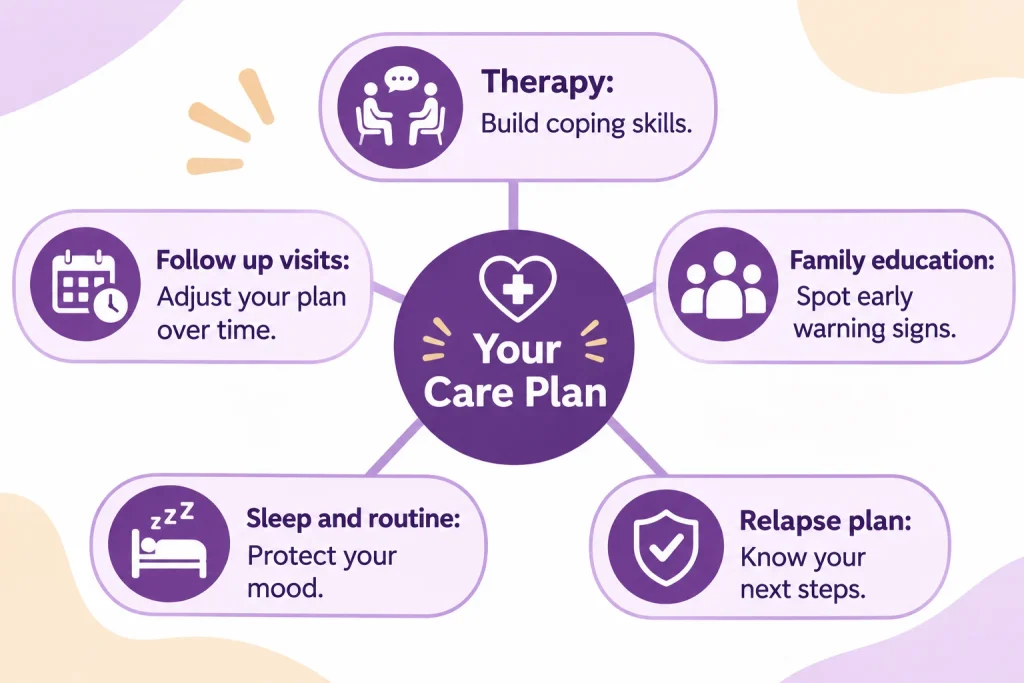
Therapy gives you a place to build coping skills and work on stress, relationships, and daily routines. Family education helps your loved ones understand what you face, and regular follow up visits keep your plan on track. At Beautiful Minds, your psychiatrist guides your medication and works with your therapist. Not sure who does what? See the difference between a psychiatrist and a psychologist.
Living With Schizoaffective Disorder
Living with schizoaffective disorder gets more manageable when you build steady habits. Your symptoms may not disappear completely, but support makes a real difference, and many people build full, steady lives with the right care. Follow your treatment plan, keep your appointments, and keep a consistent sleep routine. Build a support system, and tell your provider about new symptoms or medication concerns.
If you ever have thoughts of suicide or feel in crisis, call or text 988 right away, or visit the 988 Lifeline.
The Timing Clue Your Psychiatrist Looks for First
At Beautiful Minds, your psychiatrist compares when your psychosis and mood symptoms happen, and rules out other causes before naming a diagnosis. That care matters because the right label shapes which medicine and supports you receive, and a wrong one can delay the help you need.
No. Bipolar disorder is a mood disorder. However, some people experience hallucinations or delusions during severe manic or depressive episodes. This is called bipolar disorder with psychotic features.
No. Schizophrenia is a psychotic disorder. It affects thinking, perception, and behavior, although some people also experience mood symptoms.
Schizoaffective disorder involves psychosis that can continue outside mood episodes. In bipolar disorder with psychotic features, psychosis occurs only during mood episodes.
Yes. Hallucinations and delusions can occur during severe manic or depressive episodes in bipolar disorder with psychotic features.
Early signs may include mood changes, unusual beliefs, hallucinations, sleep problems, and difficulty concentrating. These symptoms alone cannot confirm a diagnosis.
The two types are bipolar type, which includes mania, and depressive type, which includes major depressive episodes without mania.
Schizoaffective disorder, bipolar type, involves psychotic symptoms, such as hallucinations or delusions, along with manic episodes. You may also experience major depressive episodes.
Stop Guessing Which Diagnosis Fits Your Symptoms
Schizoaffective disorder and bipolar disorder with psychotic features can share symptoms, but the timing of psychosis helps psychiatrists tell them apart. Your complete symptom history matters when determining the right diagnosis and treatment.
Unsure what your symptoms mean? At Beautiful Minds, our psychiatrists in Frisco take time to understand your symptoms, review your history, and help you find a care plan that fits your needs. We also serve patients in Plano, McKinney, and Dallas.
Disclaimer: This content is for informational and educational purposes only. It is not a substitute for professional mental health advice, diagnosis, or treatment. If you are in crisis, call or text 988 for the Suicide and Crisis Lifeline.