How to Tell If Shortness of Breath Is from Anxiety
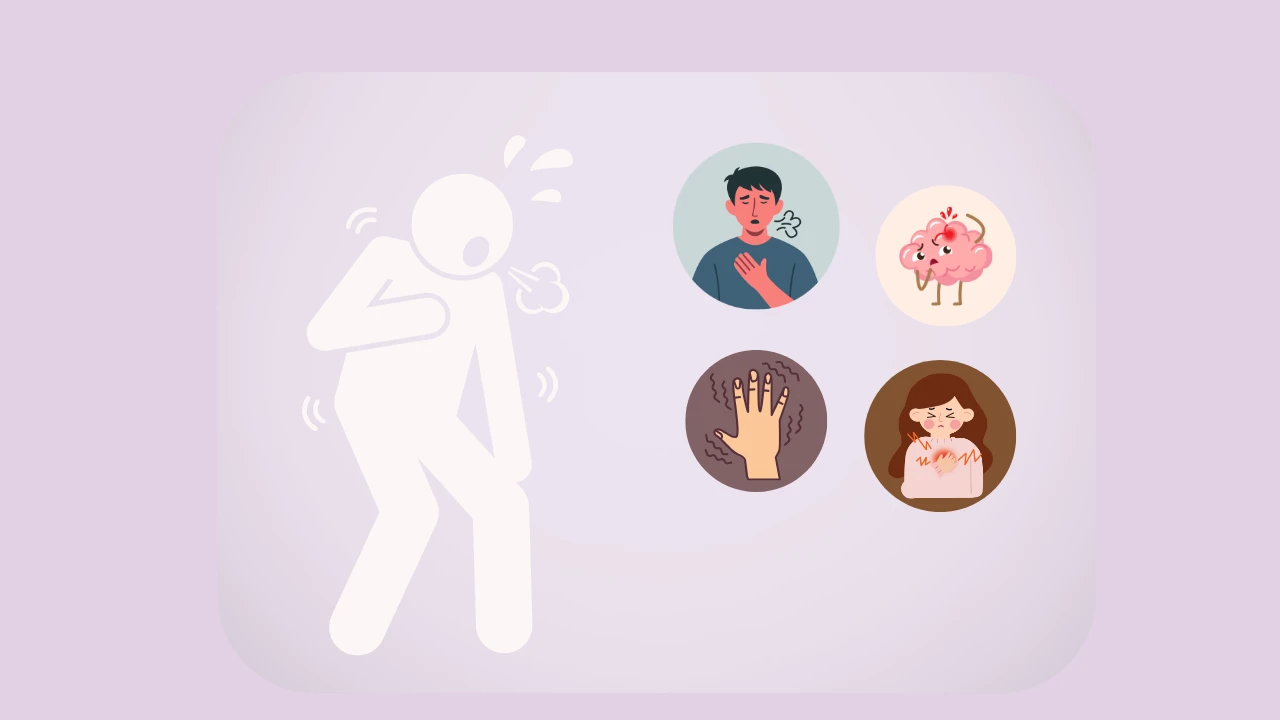
You are sitting at your desk, not doing anything strenuous, and suddenly you cannot get full breath. Your chest feels tight. You try to breathe deeper and it makes it worse. Your mind immediately goes somewhere frightening. Is this my heart? Is something wrong with my lungs? Should I go to the emergency room?
For a lot of people, the answer to all of those questions is no. What is happening is anxiety and knowing how to tell if shortness of breath is from anxiety rather than something physically dangerous is one of the most practically important things you can learn if this keeps happening to you.
Key takeaway:
- Anxiety triggers fight or flight and changes breathing even without a real threat.
- Hyperventilation drops carbon dioxide and makes air hunger worse.
- Shallow breathing and dyspnea are neurological symptoms, not imagined ones.
- Anxiety attacks can mimic heart attacks.
- See a psychiatrist when symptoms become frequent, disruptive, or stop responding to self-help.
Why Anxiety Affects Breathing in the First Place
The connection between anxiety and breathing is not psychological in the dismissive sense of the word. It is neurological and physiological, and understanding it changes how you relate to the symptoms when they arrive.
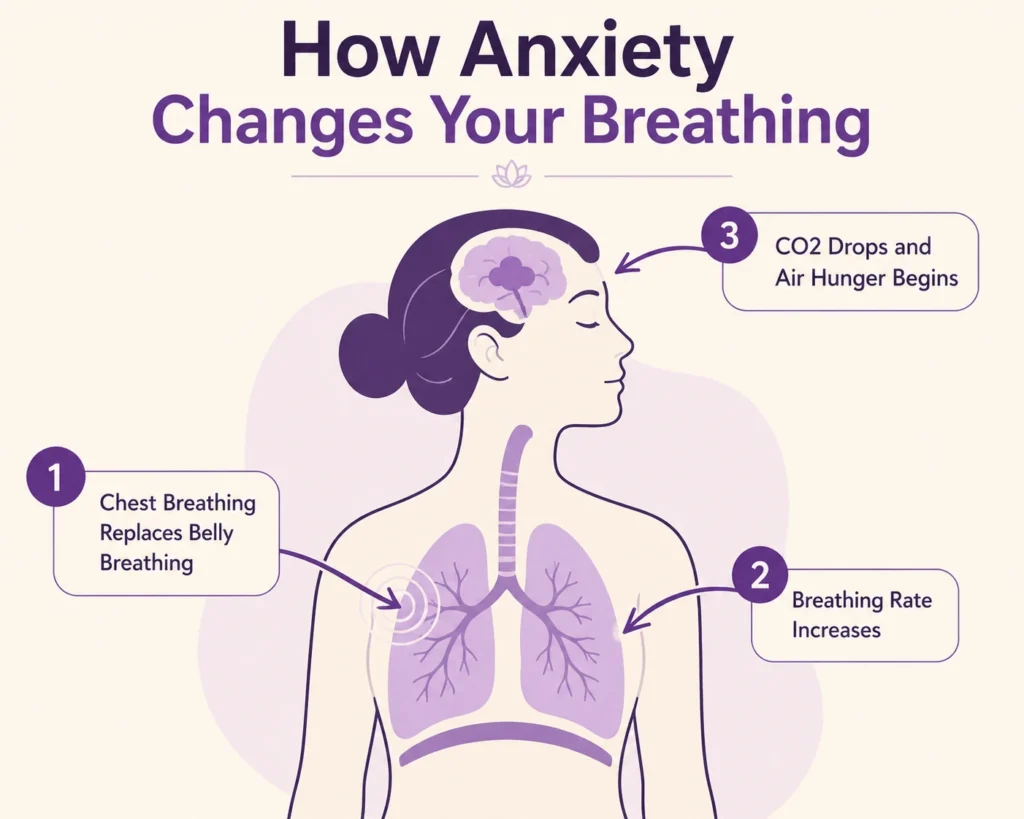
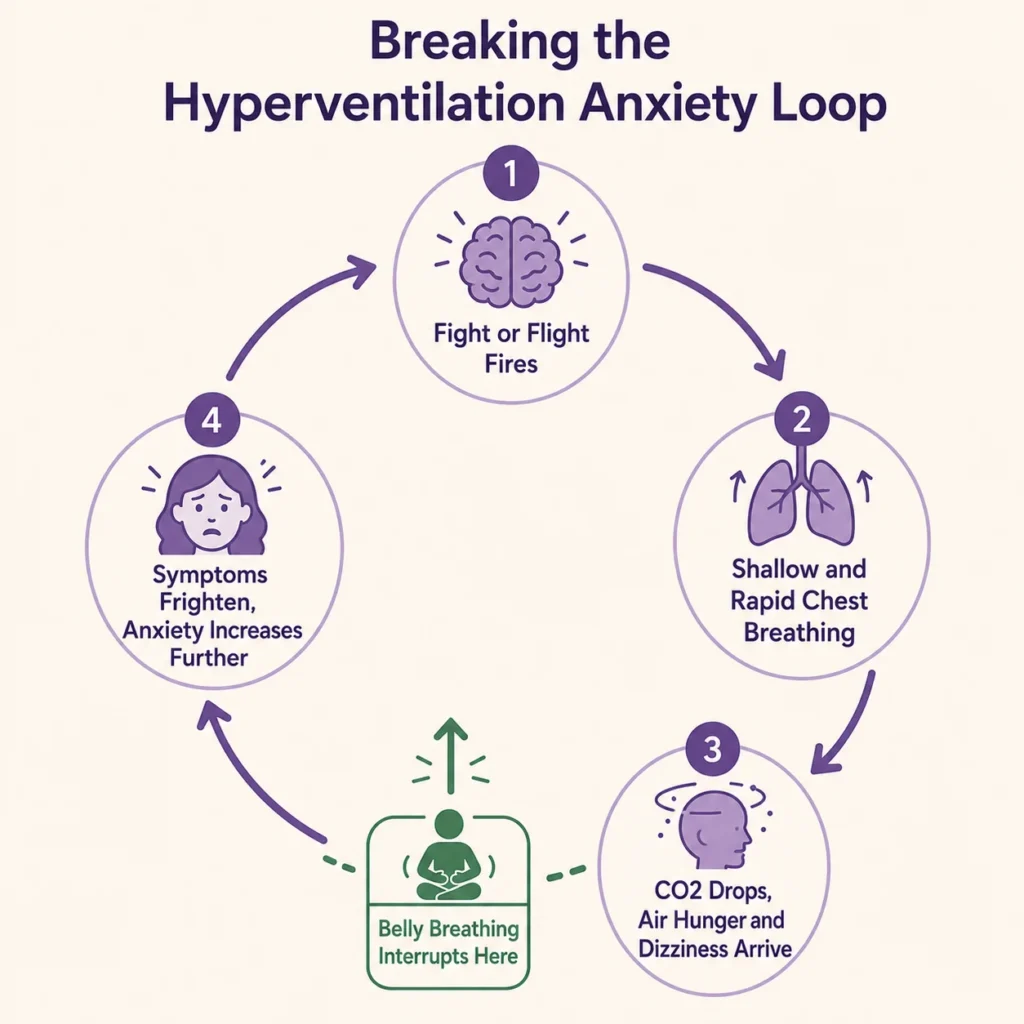
When anxiety activates the fight or flight response, the body prepares for physical threat. The heart rate increases. Muscles tighten. And breathing changes, becoming faster and shallower to get more oxygen into the bloodstream quickly. That response is appropriate when something genuinely threatens is happening. When it fires in response to a stressful thought, an uncomfortable meeting, or nothing obvious at all, the breathing changes persist without any physical exertion to balance them out.
The result is that the body is moving air faster than consuming oxygen. Carbon dioxide levels drop. And ironically, low carbon dioxide is what makes breathing feel harder, not easier. The sensation of not getting enough air intensifies even as oxygen levels remain completely normal. That is the loop that makes anxiety breathing symptoms so confusing and so frightening to people experiencing them for the first time.
Can Anxiety Cause Shortness of Breath at Rest
Can anxiety cause shortness of breath when you are not doing anything? Yes, and this is one of the most misunderstood aspects of anxiety-related breathing symptoms.
Most people expect breathing difficulty to come with physical exertion. Anxiety-related shortness of breath frequently appears at rest, during quiet moments, while trying to fall asleep, or during activities with no physical demand at all. Shortness of breath lying down anxiety is a particularly common presentation were lying flat seems to trigger or worsen the sensation of not being able to breathe fully.
The reason this happens at rest is that the fight or flight system does not require a physical trigger. Anxious thoughts, chronic background stress, anticipatory worry, and even subconscious threat detection can all activate the breathing response without any obvious external cause. A person sitting calmly on a couch can be running a full physiological stress response internally, and the breathing changes reflect that even when nothing externally explains them.
Anxiety and Hyperventilation: The Loop Nobody Warns You About
Anxiety and hyperventilation are closely connected in a circular relationship that makes symptoms significantly worse when you do not understand what is happening.
Hyperventilation anxiety begins when shallow rapid breathing drops carbon dioxide levels in the blood. Low carbon dioxide triggers dizziness, tingling, chest tightness, and a paradoxical feeling of air hunger despite breathing rapidly. Those sensations increase anxiety, which increases breathing rate further, which intensifies symptoms even more.
Shallow breathing anxiety sits at the center of this cycle. Anxious people tend to breathe from their chest rather than diaphragm. Chest breathing is less efficient, so the body compensates by breathing faster, which is the definition of hyperventilation and produces exactly the symptoms that feel most alarming during an episode.
Breaking this cycle means slowing the breath and shifting to diaphragmatic belly breathing. Learning this technique during calm periods matters more than trying to figure it out mid-episode when anxiety is already active.
Dyspnea Anxiety: What the Medical Term Actually Means
Dyspnea anxiety refers to the subjective feeling of breathlessness that occurs in the context of anxiety rather than because of a respiratory or cardiac condition. It simply means difficulty breathing or the perception of breathing difficulty, and when it occurs without an underlying physical cause, anxiety is one of the most common explanations.
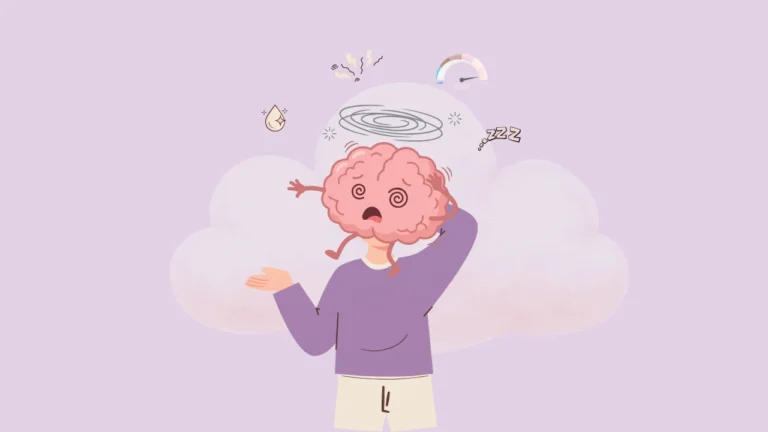
What makes dyspnea anxiety particularly distressing is the air hunger sensation, the feeling that no matter how much you breathe in, you cannot get satisfying breaths. This sensation is directly caused by the low carbon dioxide levels that come from overbreathing and has nothing to do with oxygen, which typically remains at normal levels throughout an anxiety episode.
Chest tightness and shortness of breath anxiety often appear together because the muscle tension that accompanies anxiety affects the muscles of the chest wall and diaphragm directly. The tightness is real and physical. It is muscular tension rather than cardiac pressure and knowing that distinction is part of what helps people respond to the symptoms more effectively rather than escalating into panic.
Can an Anxiety Attack Mimic a Heart Attack
Can an anxiety attack mimic a heart attack is one of the most searched questions by people experiencing anxiety-related chest and breathing symptoms, and the honest answer is yes. Overlap is significant enough that even experienced clinicians take it seriously.
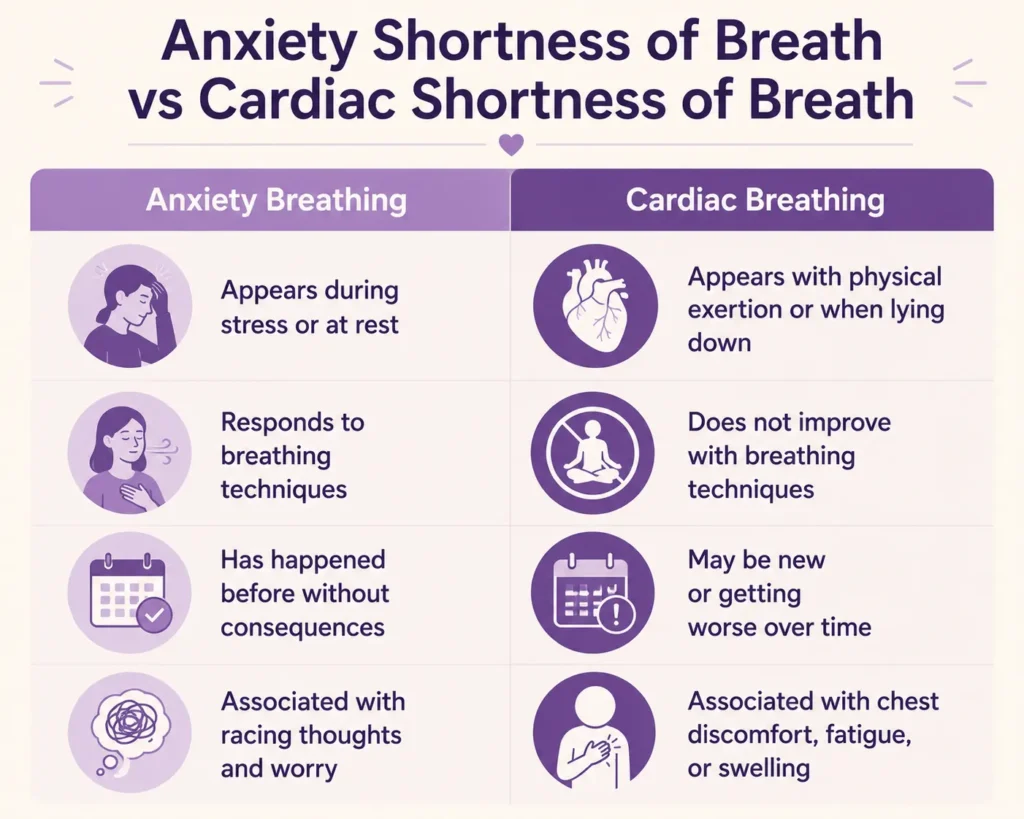
Both anxiety attacks and heart attacks produce chest tightness, shortness of breath, racing heart, dizziness, and a sense of impending doom. Physical experience is genuinely difficult to distinguish without medical evaluation.
Features pointing toward anxiety include symptoms that start during psychological stress, have occurred before without intervention, and respond to controlled breathing or grounding techniques. None of these rules out a cardiac cause definitively, so anyone experiencing these symptoms for the first time should seek medical evaluation rather than self-diagnosing.
When to see a psychiatrist for anxiety is once cardiac causes have been ruled out and symptoms keep coming back.
When Breathing Symptoms Mean It Is Time to See a Professional
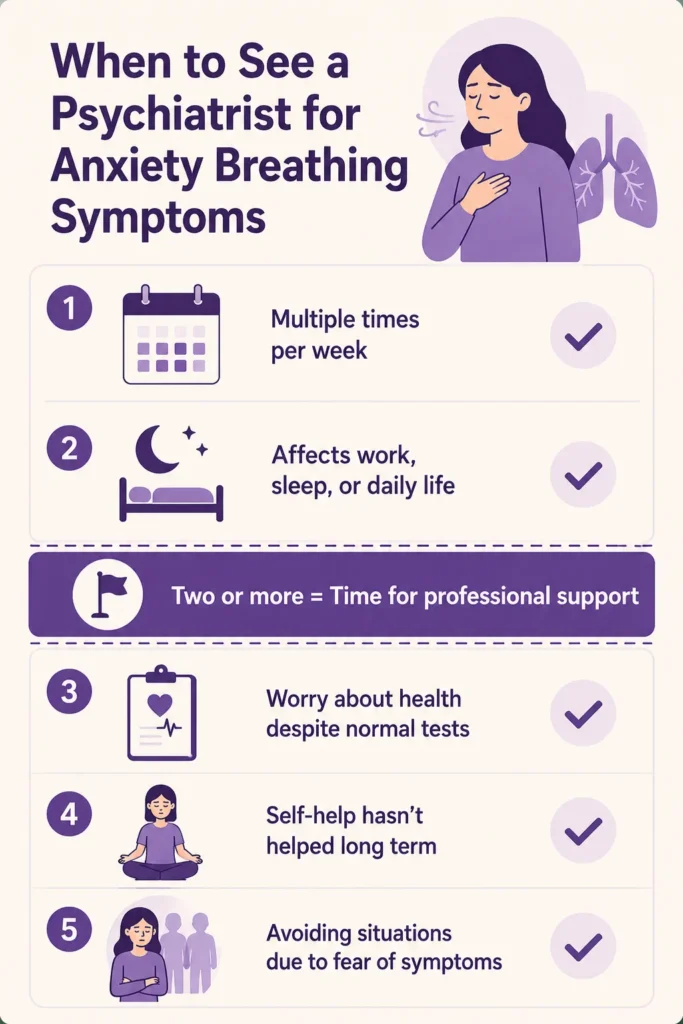
Knowing when to see a psychiatrist for anxiety rather than continuing to manage symptoms alone is an important decision point that a lot of people delay longer than they should.
Anxiety-related breathing symptoms that occur occasionally and resolve quickly are manageable with self-help tools for many people. The threshold shifts when symptoms are occurring frequently enough to affect daily life, when they are causing significant distress or fear about physical health, when they are leading to avoidance of activities or situations, or when self-help strategies have not produced lasting improvement.
When to see a psychiatrist for anxiety specifically, rather than a therapist or primary care doctor, is when medication management is likely to be part of the picture. SSRIs and SNRIs have strong evidence for anxiety disorders and for the breathing symptoms that come with them. Beta blockers can address the physiological component of anxiety that drives rapid heart rate and breathing changes. A psychiatrist evaluates the full picture and determines whether medication alongside therapy is the right approach for your specific situation.
Frequently Asked Questions
Anxiety-related shortness of breath typically appears during stress and resolves with breathing techniques. Cardiac symptoms worsen with exertion and do not respond to breathing exercises.
Yes, which is why first-time chest and breathing symptoms always warrant medical evaluation before attributing them to anxiety.
Yes. Chronic anxiety can produce daily breathing symptoms, particularly when baseline anxiety stays elevated. Daily symptoms affect quality of life signal that professional support is warranted rather than continued self-management.
Shift to belly breathing instead of chest breathing and breathe out longer than you breathe in. This interrupts the hyperventilation anxiety cycle, raises carbon dioxide levels, and reduces air hunger. Grounding techniques that shift attention away from the breath also help break the loop.
Dyspnea anxiety is not dangerous in terms of oxygen levels, which typically stay normal throughout anxiety episodes. The symptoms feel alarming but do not indicate physical harm.
Anxiety Treatment in Frisco TX and Dallas TX
Anxiety treatment in Frisco TX and across the wider DFW area has expanded significantly in terms of availability and quality. Beautiful Minds Mental Health in Frisco offers comprehensive psychiatric evaluations for anxiety, including the breathing and physical symptom presentations that often go unaddressed when anxiety is treated only at the surface level.
The practice serves patients across Frisco, Plano, McKinney, Allen, and the DFW area through telehealth and in-person appointments.
If breathing symptoms are not improving on their own, a proper psychiatric evaluation is the most direct next step. Visit beautifulmindstx.com or call 972 668 3109 to schedule.
Disclaimer: This content is for informational and educational purposes only. It is not a substitute for professional mental health advice, diagnosis, or treatment. If you are in crisis, call or text 988 for the Suicide and Crisis Lifeline.