Hereditary Depression: Can It Be Treated and What Should You Know
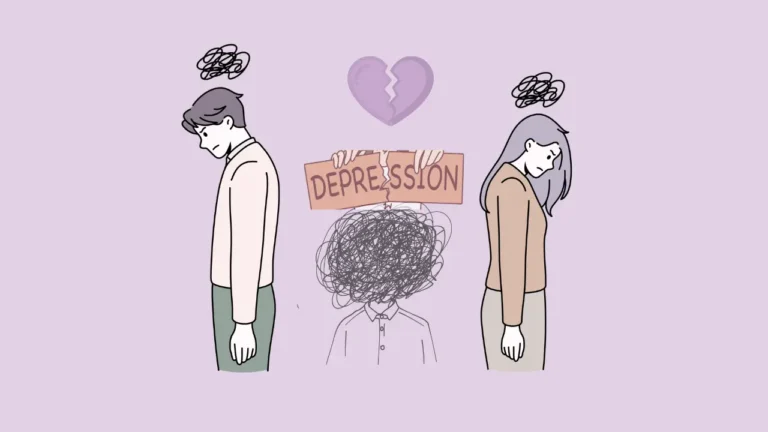
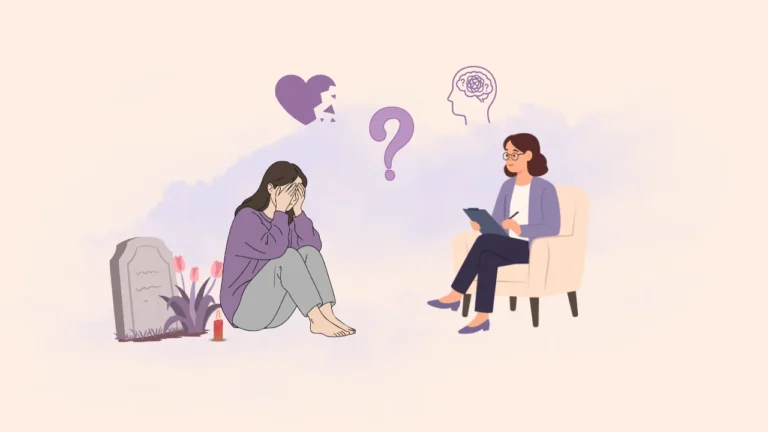
There is a particular weight that comes with watching a parent struggle with depression for years and then recognizing the same patterns showing up in yourself. Not just sadness, the specific kind of heaviness, the loss of motivation, the way the world goes flat in a way that is hard to explain to someone who has never felt it. The thought that follows is often the most discouraging one: if this runs in my family, is there anything I can do about it?
The answer is yes. Understanding hereditary depression means knowing what it actually is, what it is not, and what modern treatment genuinely offers, including options most people never hear about until they have already been struggling for years.
Key takeaway:
- Hereditary depression is a biological predisposition, not a fixed outcome.
- Genetic testing can reduce medication trial and error.
- The dopamine system plays a central role, so treatment targeting both dopamine and serotonin often works better.
- TMS and Spravato offer evidence-based options when standard antidepressants fall short.
- Lifestyle changes support clinical care but do not replace it.
What Hereditary Depression Actually Means
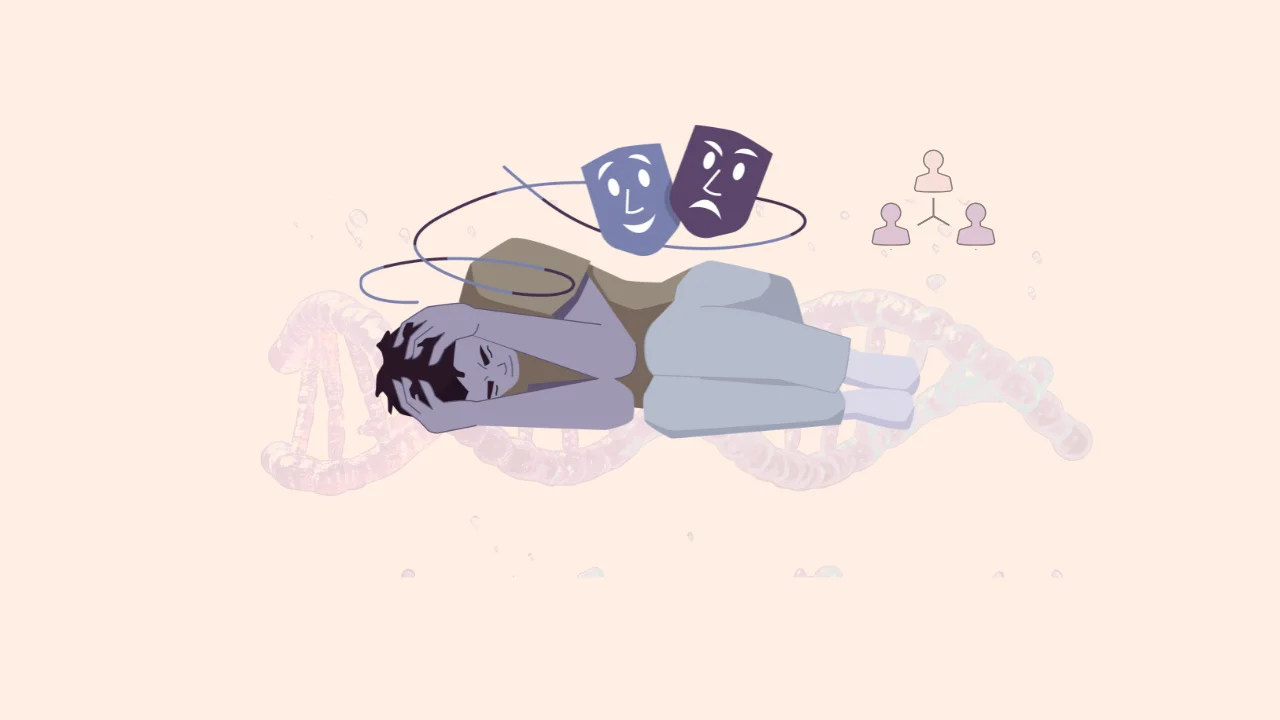
Hereditary depression does not mean depression was handed to you like eye color a fixed trait with no room for variation. What gets inherited is a vulnerability, a predisposition toward the kind of neurological and chemical patterns that make depression more likely under certain conditions.
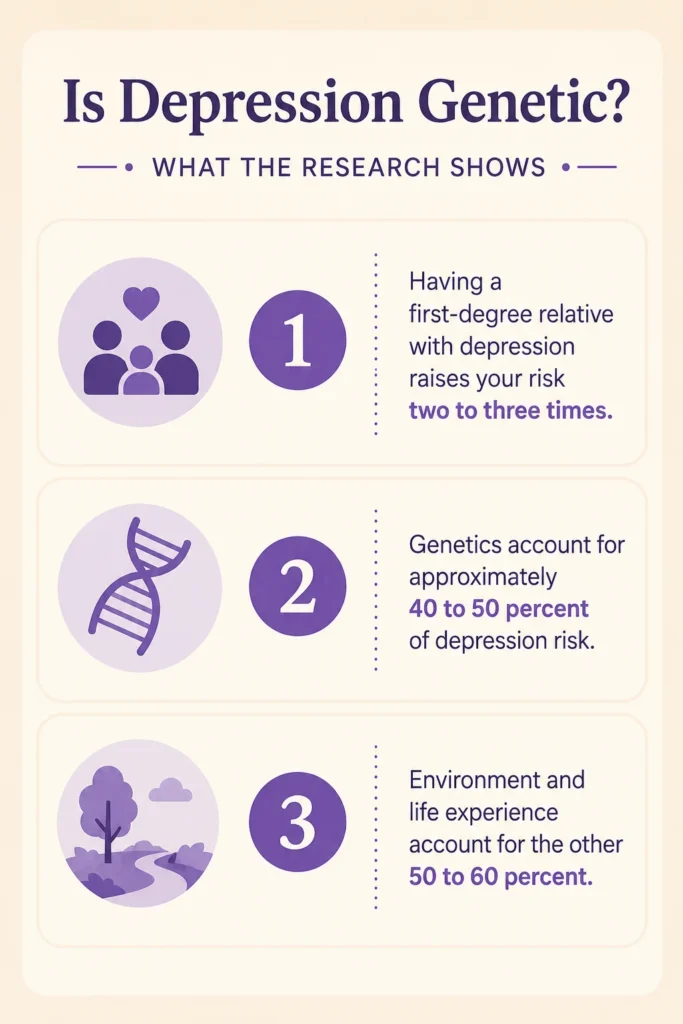
Research consistently shows that if a first-degree relative has experienced major depression, your own risk is two to three times higher than the general population. But having that genetic predisposition does not make depression inevitable, and having depression does not mean treatment will not work. It means your brain is wired in a way that requires specific understanding and specific care.
Depression awareness around the genetic component has grown significantly in recent years, and with it a better understanding of why some people respond to certain treatments and others do not and why that difference is biological rather than personal.
The Role of Dopamine in Hereditary Depression
When most people think about depression and brain chemistry, serotonin comes to mind first. But depression dopamine is equally central to the picture particularly in hereditary presentations.
Dopamine is the brain’s primary motivation and reward chemical. It is what makes things feel worth doing, what drives you toward goals, and what allows you to experience pleasure in ordinary moments. In hereditary depression, disrupted dopamine signaling explains why the loss of motivation and inability to feel pleasure often hit harder and more prominently than sadness itself.
This matters for treatment because not all antidepressants address the dopamine system equally. SSRIs primarily target serotonin. Medications like bupropion and certain augmentation strategies target dopamine more directly. Understanding your specific neurochemical picture including the genetic component is part of why a thorough psychiatric evaluation produces better treatment outcomes than a generic first-line prescription.
Genetic Testing for Depression: Is It Worth It
Genetic testing for depression has become a genuinely useful tool for people who have already cycled through multiple medications without real relief.
Pharmacogenomic testing analyzes specific genes that affect how your body metabolizes psychiatric medications. Results show which medications your profile suggests you will respond to well and which carry a higher risk of side effects for your specific genetic makeup.
Genetic testing for depression does not replace clinical judgment, but it gives your prescriber real biological data that cuts the trial-and-error process significantly, especially hereditary depression.
Depression Stigma and the Genetic Conversation
One of the quietly damaging effects of depression stigma is what it does to people who know their depression has a hereditary component. Instead of the genetic basis being understood as what it is a biological reality that warrants proper medical treatment, it sometimes gets used as evidence that the person is simply wired wrong, fundamentally broken, or permanently limited.
That framing is both inaccurate and harmful. Having a genetic predisposition to depression is not meaningfully different from having a genetic predisposition to high blood pressure or diabetes. It means the condition is real, it has a biological basis, and it requires appropriate medical care, not willpower, not attitude adjustment, and not resignation.
Depression awareness that includes the genetic component honestly is part of what shifts the conversation from shame to treatment-seeking, and that shift matters enormously for outcomes.
Treatment Resistant Depression Options: When the Standard Approach Is Not Enough
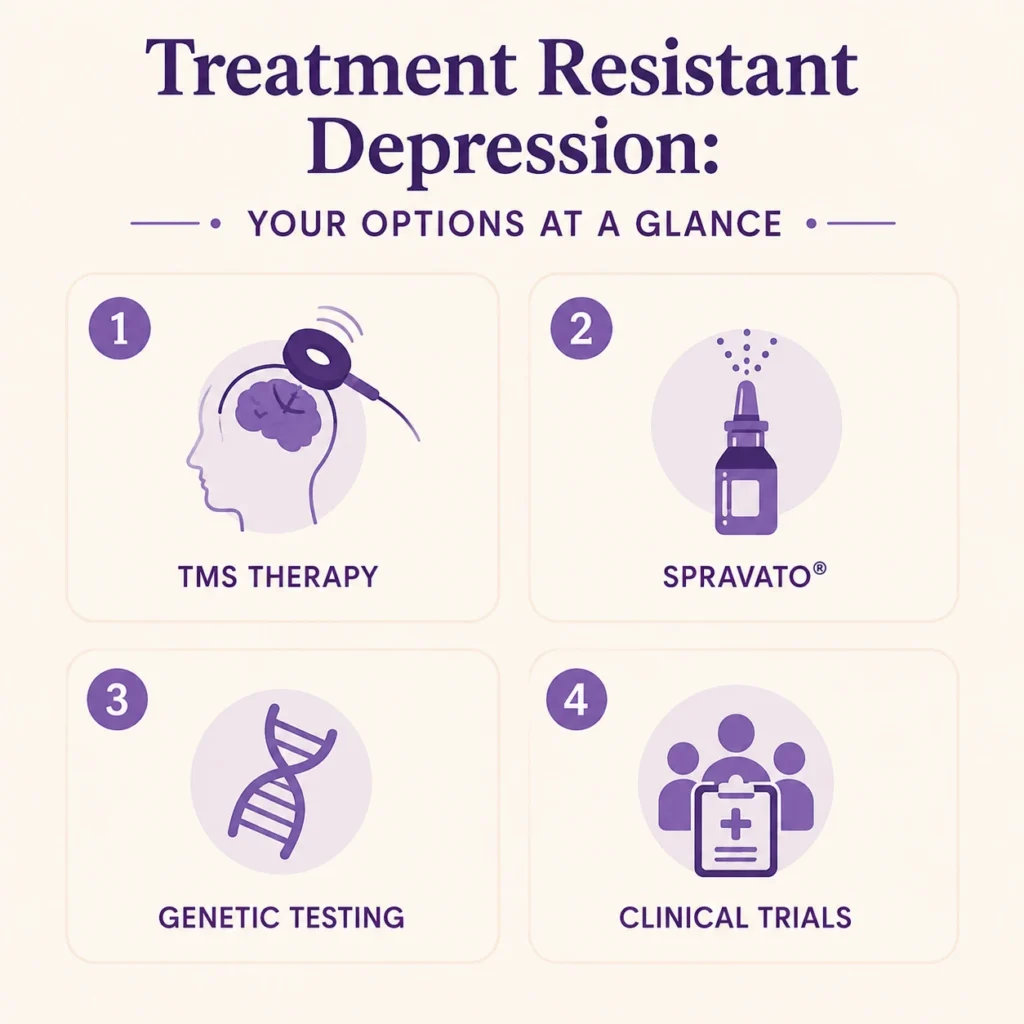
Treatment resistant depression options become relevant when someone has tried two or more antidepressants at adequate doses for adequate periods without achieving meaningful relief. For people with hereditary depression, treatment resistance is more common not because the condition is untreatable but because the neurobiological complexity often requires more targeted approaches than first-line medication alone provides.
TMS Therapy Near Me: A Non-Medication Option
TMS therapy near me has become one of the most searched phrases by people who have exhausted standard antidepressant options and are looking for something that works differently. Transcranial Magnetic Stimulation uses targeted magnetic pulses to stimulate the prefrontal cortex in a brain region that shows consistently reduced activity in depression and recalibrates the neural circuits that depression has disrupted.
TMS is FDA cleared for treatment-resistant depression and has a clinical track record that now spans nearly two decades. Sessions are short, require no sedation, and allow you to return to normal daily activity immediately afterward. For people with hereditary depression who have not found adequate relief through medication, TMS represents a meaningfully different mechanism rather than just another pharmaceutical adjustment.
Spravato and Ketamine Options
For people with severe treatment-resistant depression, Spravato the FDA-approved esketamine nasal spray targets the glutamate system rather than the monoamine pathways that traditional antidepressants work on. This different mechanism is precisely why it sometimes works when multiple standard medications do not. Results can appear within days rather than the weeks that antidepressant trials typically require.
Depression Clinical Trials
Depression clinical trials are worth knowing for people whose hereditary depression has not responded to available treatments. Clinical trials investigate new medications, new therapeutic approaches, and new uses for existing treatments, and participating can provide access to options that are not yet widely available. Your psychiatrist can help you identify relevant trials and evaluate whether participation makes sense for your specific situation.
Depression Holistic Treatment: What Actually Has Evidence Behind It
Depression holistic treatment deserves serious consideration, not as a replacement for clinical care in moderate to severe cases, but as a meaningful addition to a comprehensive plan.
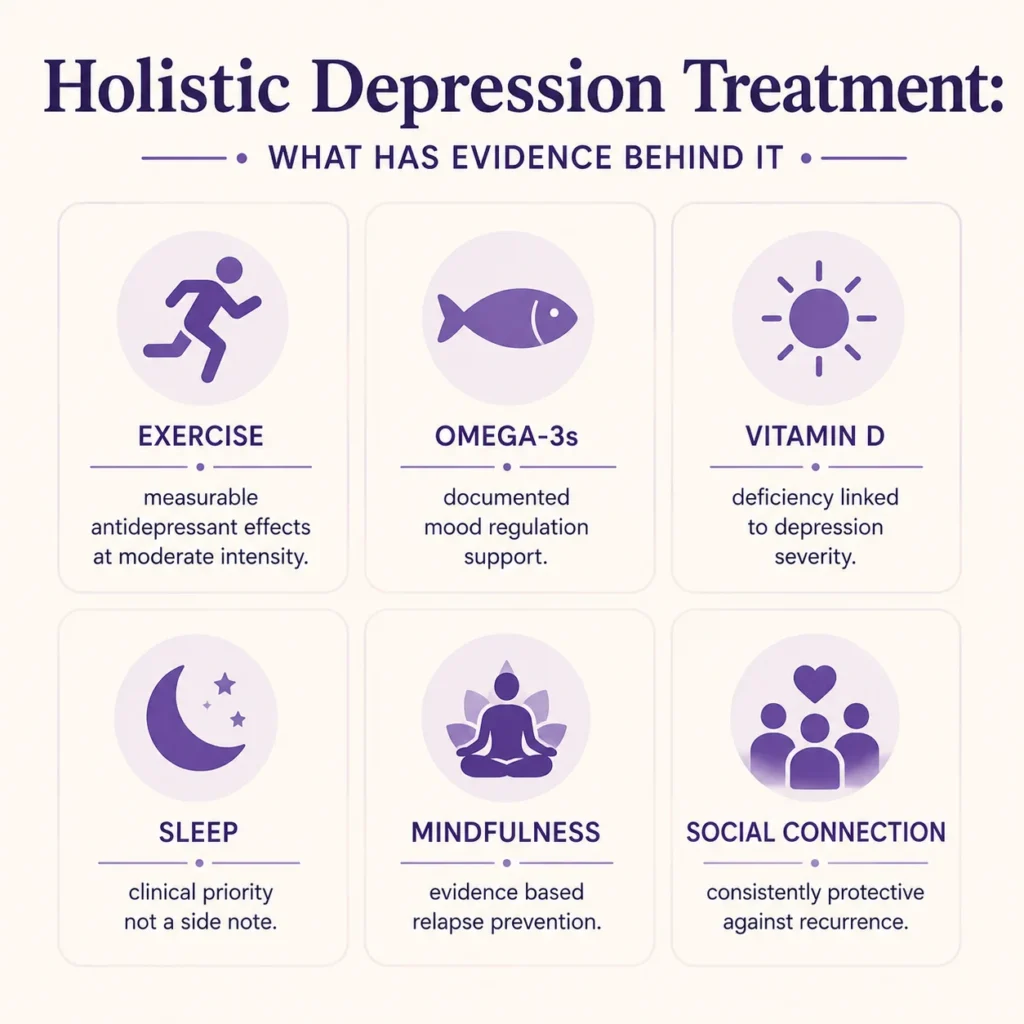
Exercise carries genuine antidepressant effects backed by solid research. Consistent aerobic activity produces measurable changes in the depression dopamine and serotonin systems that hereditary depression disrupts and appears to have a protective effect on the neural circuits that genetic vulnerability affects.
Nutrition matters more than most psychiatric conversations acknowledge. Omega-3 fatty acids, vitamin D, magnesium, and zinc all connect directly to mood regulation and depression severity. Deficiencies in any of these worsen the neurobiological picture and addressing them through diet and supplementation is a legitimate clinical strategy.
Sleep is not optional for depression recovery. Disrupted sleep worsens every aspect of depression neurochemically, emotionally, and cognitively. Treating it as a clinical priority rather than a side note produces real improvements in outcomes.
Mindfulness-based approaches have a growing evidence base for depression, particularly for relapse prevention. For people with hereditary depression prone to recurrence, mindfulness builds awareness of early warning signs and interrupts the thought patterns that spiral into episodes.
Depression Group Therapy: The Underused Option
Depression group therapy tends to be underestimated by people who have not experienced it. The instinct is that individual therapy is more thorough, and group therapy is somehow a lesser version. The clinical reality is more nuanced.
Group therapy provides something individual therapy structurally cannot the experience of being in a room with people who genuinely understand what you are going through without explanation. For people with hereditary depression who have often felt fundamentally different from the people around them, that experience of recognition carries therapeutic weight that is difficult to replicate in one-on-one settings.
Group therapy also builds social connection in a context where depression has typically eroded it, and social connection is one of the most consistently protective factors against depression’s severity and recurrence. It is worth asking specifically rather than defaulting to the assumption that individual therapy is the only meaningful option.
Depression Recovery: What It Realistically Looks Like
Depression recovery for hereditary depression does not always mean the complete and permanent elimination of vulnerability. For many people it means achieving sustained remission periods of stable functioning and genuine wellbeing with the understanding that maintenance treatment, lifestyle management, and early intervention when warning signs appear are ongoing parts of the picture.
That is not a discouraging prognosis. It is an accurate one that allows for realistic planning rather than repeated disappointment from expecting a cure that looks like the absence of any future vulnerability. Many people with hereditary depression live full, productive, genuinely satisfying lives with the right treatment in place not despite having this condition but alongside the management of it.
Recovery also tends to be nonlinear. Setbacks are part of the process rather than evidence of failure. Having a psychiatrist who understands this and adjusts the treatment plan accordingly rather than treating every setback as a treatment failure is part of what makes the long-term picture look better.
Frequently Asked Questions
Not necessarily, but it often needs more targeted treatment than a generic first-line approach. Understanding the genetic component helps guide medication choices and build a smarter long-term plan for depression recovery.
Genetic testing for depression can indicate which medications your profile suggests you will metabolize well and which carry higher risk of poor response. It reduces trial and error but works best as one input in a broader clinical evaluation.
TMS therapy near me is a common search for good reasons. TMS uses magnetic pulses to stimulate the prefrontal cortex, a brain region consistently underactive in depression. It is FDA cleared for treatment resistant depression options, requires no sedation, and works through a completely different mechanism than medication.
No. A genetic predisposition means your vulnerability is real, but depression recovery and sustained remission are achievable goals for most people with the right treatment and depression holistic treatment support in place.
Yes. Depression group therapy provides connection and social support that individual therapy cannot replicate. For hereditary depression, being understood by people with similar experiences carries real therapeutic value and builds the social connection that protects against recurrence.
Depression Treatment in Frisco TX at Beautiful Minds
Depression treatment in Frisco TX at Beautiful Minds is built around the thorough, personalized approach that hereditary depression requires.
The team provides comprehensive psychiatric evaluation covering your full history, family history, prior treatments, and co-occurring conditions. Treatment options include medication management, TMS therapy, and Spravato for cases where standard approaches have not been worked.
Both telehealth and in-person appointments are available.
If you have cycled through treatments without real relief, a proper evaluation at Beautiful Minds is a meaningful next step.
Disclaimer: This content is for informational and educational purposes only. It is not a substitute for professional mental health advice, diagnosis, or treatment. If you are in crisis, call or text 988 for the Suicide and Crisis Lifeline.