Bipolar Disorder Test, Diagnosis & Treatment in Frisco, TX
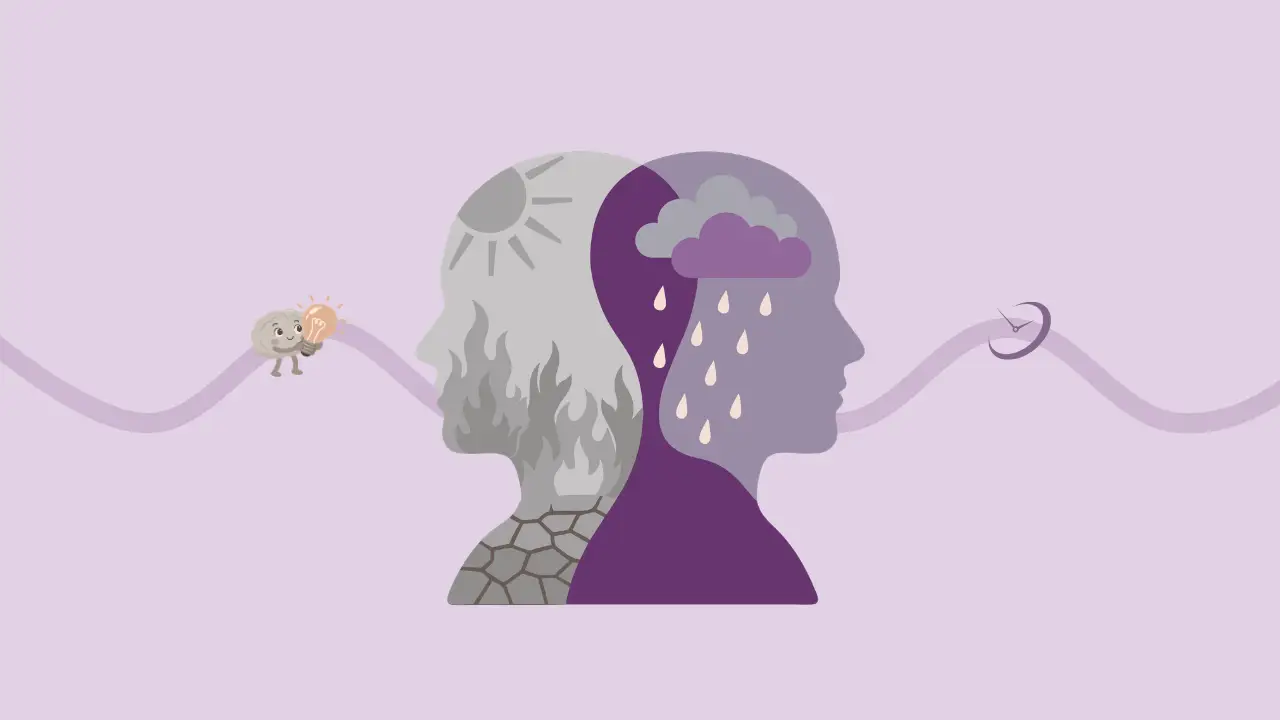
Big mood changes can leave you wondering whether something is wrong, whether it will pass, and where to turn. Bipolar disorder involves episodes of depression and maniac or hypomania, and it affects your energy, sleep, focus, and relationships. A professional evaluation can separate bipolar disorder from other conditions, and ongoing treatment helps many people manage symptoms and reduce future episodes.
This guide explains the signs, tests, diagnosis steps, medications, and therapies. You will also see what to expect from bipolar disorder treatment Frisco, TX patients receive at Beautiful Minds, whether you are asking for yourself or someone you love.
Key Takeaways
- Bipolar disorder involves episodes of depression and mania or hypomania that can affect mood, energy, sleep, and daily functioning.
- No single online quiz, blood test, or brain scan can diagnose bipolar disorder.
- A qualified mental health professional evaluates symptoms, medical history, and mood patterns to determine whether bipolar disorder is present.
- Treatment may include medication, therapy, and ongoing support tailored to the individual.
- Early evaluation and consistent care can help people manage symptoms and recognize warning signs.
What Is Bipolar Disorder?
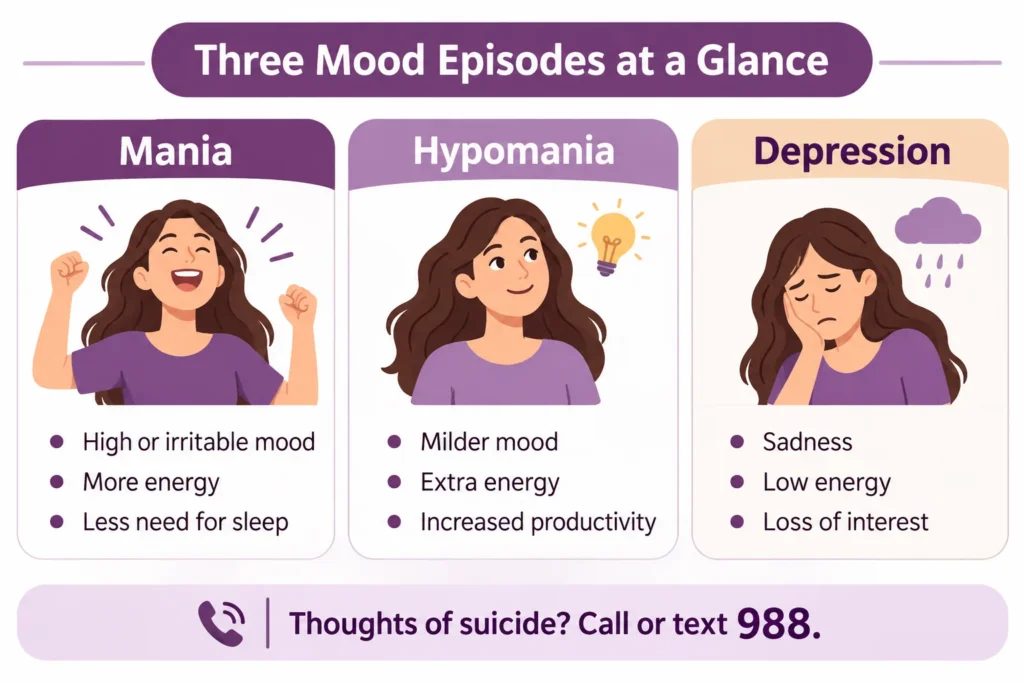
Bipolar disorder is a mental health condition that causes distinct episodes of unusually high or low mood, energy, and activity. These episodes affect your sleep, thinking, and daily activities, and others often notice the change. Manic episodes bring an elevated or irritable mood and a big jump in activity. Hypomanic episodes feel similar but are milder. Depressive episodes bring sadness, low energy, and loss of interest. Many people need ongoing, long-term treatment to manage bipolar disorder and reduce the risk of future episodes, and your treatment needs may change over time. NIMH notes that proper treatment improves functioning and quality of life.
What Are the Signs and Symptoms of Bipolar Disorder?
Episodes look different for everyone, so learn the patterns for both highs and lows.
Signs of a Manic Episode
A manic episode may bring:
- Unusually high, elated, or irritable mood
- More energy and activity than usual
- Less need for sleep
- Racing thoughts and fast speech
- Inflated confidence or feeling unusually important
- Impulsive or risky decisions, such as overspending
These changes can disrupt work, relationships, and safety. Severe mania can include a break from reality or require hospital care.
If someone is in immediate danger, cannot stay safe, or is experiencing a medical or psychiatric emergency, call 911 or go to the nearest emergency department.
Symptoms of Hypomania
Hypomania is milder than mania and interferes less with daily life. You may notice:
- Extra energy
- Less need for sleep
- Surges of productivity
- A noticeable change in mood
Depressive episodes may also occur.
The Mood Swing That Feels Great but Can Signal Bipolar Disorder
Hypomania can feel like your best self, so you may sense nothing is wrong while family and friends notice the change. If highs repeat, especially around low moods, ask a psychiatrist for an evaluation.
Signs of Bipolar Depression
Bipolar depression can bring:
- Persistent sadness or emptiness
- Low energy and fatigue
- Changes in sleep or appetite
- Loss of interest in activities
- Trouble concentrating
- Thoughts of death or suicide
If you are having thoughts of suicide, call or text 988 for support. If you may act on those thoughts or are in immediate danger, call 911 or go to the nearest emergency department.
Is There a Test for Bipolar Disorder?
No single bipolar disorder test, blood test, or brain scan can confirm the condition. A clinician diagnoses it by evaluating the pattern, length, and severity of your symptoms over time, along with your family history.
A mood disorder test, such as a screening questionnaire, can flag symptoms for a specialist to explore, and the VA/DoD guideline uses these tools only to support a specialist’s evaluation. An “am I bipolar” quiz online can start a conversation, but many people have mood changes without the disorder, and a quiz can’t see your history or other causes. Medical tests can still help rule out conditions, such as thyroid disease, that mimic bipolar symptoms, so a clinician may order lab work as part of your evaluation. Take your quiz results to your appointment as notes, not as an answer.
How to Get Diagnosed for Bipolar Disorder
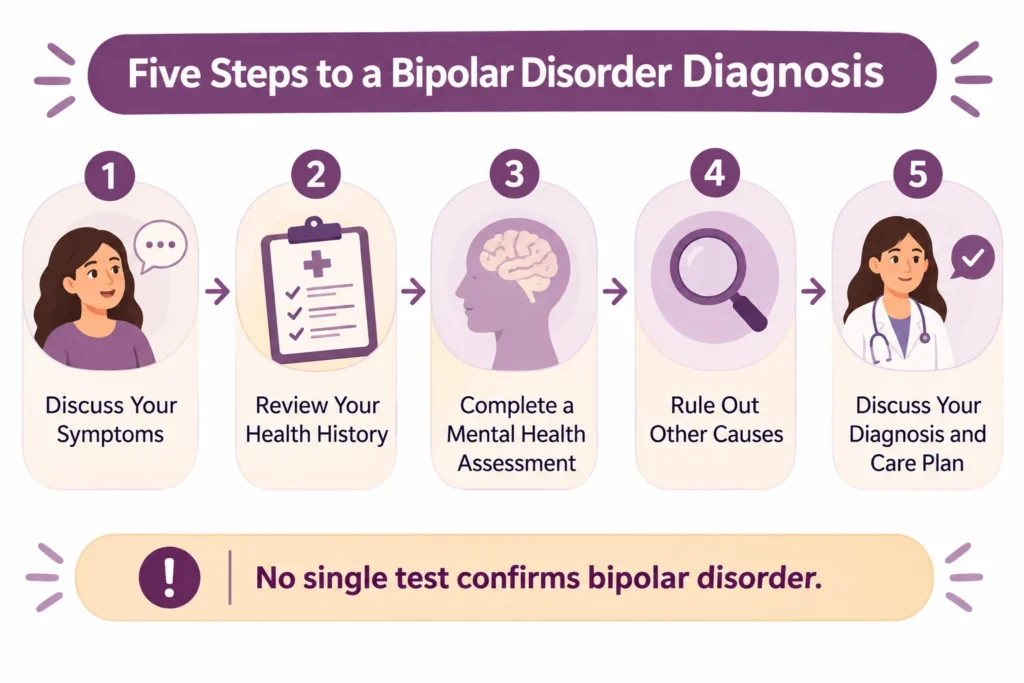
Diagnosing bipolar disorder involves more than identifying individual symptoms or completing a screening questionnaire. Your clinician reviews the timing, duration, severity, and pattern of mood episodes, along with your medical and mental health history. The evaluation may also consider medications, substance use, and other conditions that can cause similar symptoms. Expect these steps:
- Discuss your symptoms. Describe your mood changes, sleep, energy, and behavior.
- Review your health history. Share past episodes, medications, and family history.
- Complete a mental health assessment. A qualified professional completes a bipolar disorder evaluation of your symptoms and their effect on daily life.
- Rule out other causes. Medical conditions, medications, and substance use can cause similar symptoms.
- Discuss your diagnosis and care plan. Your provider explains the findings and recommends next steps.
With your permission, your clinician may also ask for information from a family member or someone who knows you well. This can help clarify changes in mood, sleep, energy, and behavior over time.
At what age is bipolar disorder diagnosed? Symptoms most often start in late adolescence or early adulthood, but some people wait years for a diagnosis.
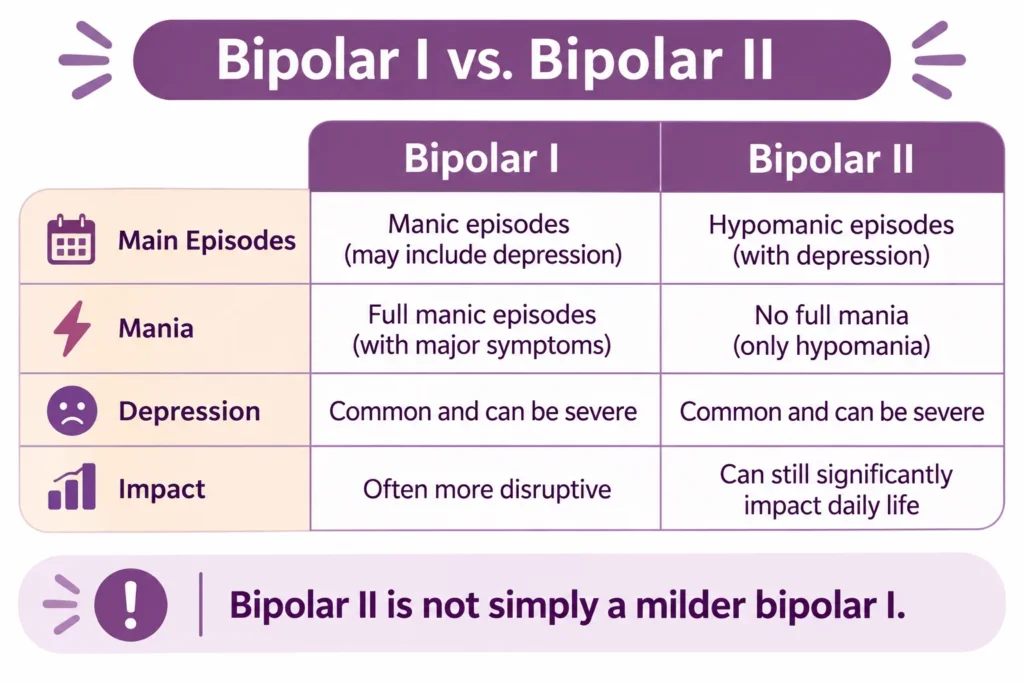
Bipolar I vs. Bipolar II: What’s the Difference?
Bipolar I and Bipolar II Compared
| Feature | Bipolar I | Bipolar II |
| Main mood episodes | At least one manic episode | At least one hypomanic and one major depressive episode |
| Mania | Full manic episodes | No full manic episodes |
| Depression | May occur | Major depressive episodes are part of the diagnosis |
| Impact | Can significantly disrupt daily life | Depression can cause significant difficulties |
Both types deserve professional attention. Bipolar II is a distinct diagnosis, not simply a milder bipolar I, and its depression can be long and disabling.
People often ask about the best medication for bipolar II disorder, but there is no single treatment that is appropriate for everyone. Medication decisions depend on the person’s symptoms, medical history, previous treatment response, and potential side effects. A psychiatrist can explain which treatment options may be appropriate and discuss their potential benefits and risks.
What Are the Recommended Bipolar Disorder Treatment Guidelines?
Bipolar disorder treatment guidelines recommend a plan built around your symptoms, diagnosis, medical history, and response to past care. Treatment combines medication, therapy, and lifestyle support, and your psychiatrist may adjust it over time. Never stop or change a prescribed medication without talking with your provider.
Medications Used to Treat Bipolar Disorder
Medication Overview
| Medication type | Examples | General purpose |
| Mood stabilizers | Lithium, valproate | Help manage mood episodes |
| Anticonvulsant mood stabilizers | Lamotrigine | Often used to help prevent depressive episodes |
| Atypical antipsychotics | Quetiapine and others | Help manage mania, depression, or other symptoms |
Each medication works differently. Lithium can help prevent mood episodes and may lower suicide risk, and it needs regular blood tests. Lamotrigine helps prevent depressive episodes, and prescribers start it slowly to lower the risk of a serious rash. Valproate carries significant risks during pregnancy. Its use requires careful consideration of pregnancy potential, appropriate safety precautions, and current prescribing guidance. Discuss its risks and benefits with your prescriber. Atypical antipsychotics need monitoring of weight, blood sugar, and cholesterol.
If you want mood stabilizer medication in Texas, start with a psychiatric evaluation. Learn how our psychiatrists prescribe and monitor treatment on our medication management page.
Therapy Options for Bipolar Disorder
Bipolar disorder therapy works best alongside medication. Therapists outside our practice provide these approaches, and our psychiatrists coordinate with them:
- Cognitive behavioral therapy (CBT): Builds coping skills and challenges unhelpful thoughts.
- Interpersonal and social rhythm therapy (IPSRT): Steadies your daily and sleep routines.
- Family-focused therapy: Improves communication and support at home.
- Psychoeducation: Teaches you the condition, the treatment, and the warning signs.
Bipolar counseling helps you recognize mood changes early, manage stress, build routines, and follow your treatment plan.
Psychiatrist vs. Psychologist: Who Should You See Bipolar Disorder?
A psychiatrist is a medical doctor who can diagnose mental health conditions and prescribe medication. A psychologist provides psychological assessment and therapy, and in Texas psychologists don’t prescribe medication. If you are seeking help for bipolar disorder, a psychiatrist can provide psychiatric evaluation, diagnosis, and medication management. A psychologist may provide psychological assessment and therapy. Depending on your needs, coordinated care with both professionals may be helpful.
Many people benefit from working with both, and your psychiatrist can coordinate with your therapist so your care stays consistent. Ask each professional about experience with bipolar disorder before you book.
Bipolar Disorder Treatment in Frisco, TX: Meet Your Doctors
At Beautiful Minds, our psychiatrists, Dr. Humera Chowdhary and Dr. Naveed Khokhar, provide psychiatric evaluations and medication management for bipolar disorder, in person or by telehealth. They also work with your therapist and your other doctors, so your care stays connected. Your first visit includes a detailed review of your symptoms, history, and goals. Learn more on our bipolar disorder services page.
We serve patients in Frisco, Plano, McKinney, and Dallas. If you are comparing bipolar treatment centers in Texas, know that we provide outpatient psychiatric care.
What Does Long-Term Bipolar Disorder Management Look Like?
Long-Term Management
| Your care focus | What you can do |
| Medication management | Take medication as prescribed and attend follow-up visits |
| Sleep routine | Keep consistent sleep and wake times |
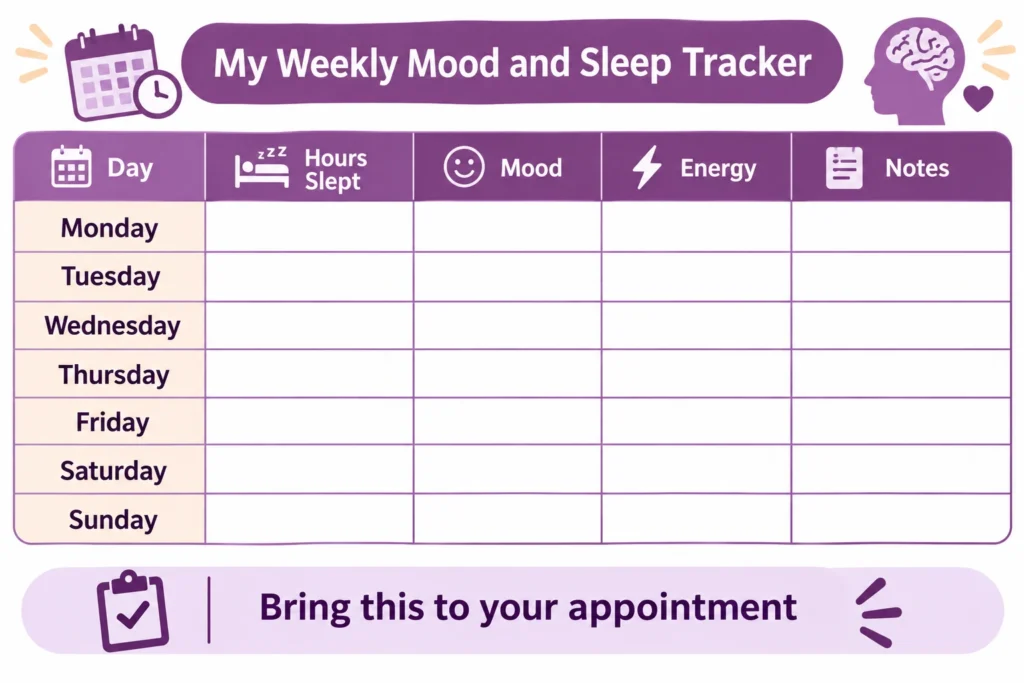
| Mood tracking | Record changes in mood, energy, and sleep |
| Stress management | Use healthy coping strategies and seek support |
| Ongoing appointments | Keep regular appointments with your care team |
Consistent care helps you manage symptoms and reduce the risk of future episodes. Tell your psychiatrist early if you notice warning signs, such as sleeping less or feeling unusually irritable. Hospitalization isn’t necessary for everyone.
Are There Bipolar Disorder Clinical Trials in Frisco?
Clinical trials are research studies that look at ways to prevent, detect, or treat conditions, and they help researchers improve mental health care. Visit our Clinical Research page, and contact our research team to ask whether any current studies accept people with bipolar disorder. Joining a study is voluntary, and you can talk through the risks and benefits with your own psychiatrist first.
The Early Warning Sign Hiding in Your Sleep Log
Sleeping far less without feeling tired can signal a manic episode, and sleep changes can also come with depression. Write down your sleep and mood each day, and bring the log to your psychiatrist. Patterns reveal what a single visit can’t be done.
There’s no single number of sleepless hours that defines an emergency. During mania, people may feel rested after very little sleep, but ongoing sleep loss can worsen mania. Seek urgent help based on symptoms and safety, such as confusion, risky behavior, or thoughts of self-harm.
You can’t tell for sure from the outside. Watch for clear changes in mood, energy, and sleep that last days and differ from their usual self, then encourage a professional evaluation.
Often, yes. Many people manage it with outpatient care, medication, therapy, and steady routines. Severe maniac or safety risks can require hospital care.
Symptoms most often start in late adolescence or early adulthood, but diagnosis can come years later, especially when only depressive episodes bring someone to care.
No. An online test can prompt a conversation and help you describe your symptoms, but only a mental health professional can diagnose bipolar disorder after an evaluation.
Both bring high energy and less sleep. Hypomania is milder and interferes less with daily life, while maniac can cause serious problems and may need hospital care.
Yes. Therapy works best alongside medication, and it builds coping skills, steady routines, and early awareness of warning signs, according to NIMH.
Bipolar Disorder Is Manageable: Get Support in Frisco, TX
You don’t have to manage major mood changes alone. If symptoms affect your daily life, a professional evaluation is the next step, and you don’t need to wait for a crisis. At Beautiful Minds, our psychiatrists evaluate your symptoms, guide your medication decisions, and work with your therapist.
If you are experiencing suicidal thoughts, call or text 988 for support. If you are in immediate danger, call 911 or go to the nearest emergency department.
Disclaimer: This content is for informational and educational purposes only. It is not a substitute for professional mental health advice, diagnosis, or treatment. If you are in crisis, call or text 988 for the Suicide and Crisis Lifeline.