
What Causes Mental Fog and Why Your Mind Feels Stuck

You are in the middle of a sentence and the word disappears, you walk into a room with no idea why you went there, and you read the same paragraph three times without anything landing. Your brain feels heavy in a way that sleep does not fix, and coffee only briefly masks. You are not being dramatic. Something is genuinely off, and figuring out what causes mental fog is the first step toward clearing it.
This blog covers what brain fog is, what drives it, and what helps when you’re thinking has been unreliable long enough to start affecting your daily life.
key takeaway:
- Brain fog causes range from depression and anxiety to thyroid dysfunction and nutritional deficiency.
- Depression and anxiety are among the most common and treatable drivers.
- Low thyroid and vitamin D deficiency show up on routine blood testing.
- Fibromyalgia brain fog requires comprehensive treatment.
- A real brain fog fix starts with identifying the specific cause.
What Does Brain Fog Mean
What does brain fog mean is worth defining clearly because the term gets used loosely in ways that make it harder to take seriously.
Brain fog is not a clinical diagnosis. Brain fog describes a cluster of cognitive symptoms including difficulty concentrating, memory problems, slowed thinking, word-finding difficulty, and a general sense of mental cloudiness that makes focused tasks feel disproportionately hard. It is not the same as being tired. It is the sense that your brain is not processing the way it should, even after sleep and even when the task in front of you is simple.
Why Do I Feel Foggy
Why do I feel foggy is one of the most common things people search when their brain stops working the way it should, and the honest answer is that brain fog is a symptom, not a diagnosis. That means finding the right solution starts with figuring out what is actually causing it.
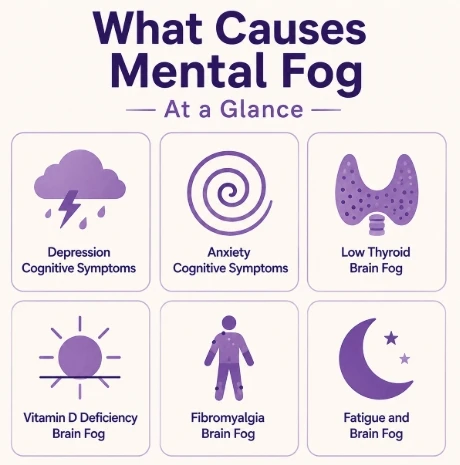
The most common drivers include mood disorders, hormonal imbalances, nutritional deficiencies, chronic illness, poor sleep, and chronic stress.
More often than not, several of these causes operate at the same time, which is exactly why brain fog stays so persistent and why single-solution approaches rarely fix it.
Depression Cognitive Symptoms
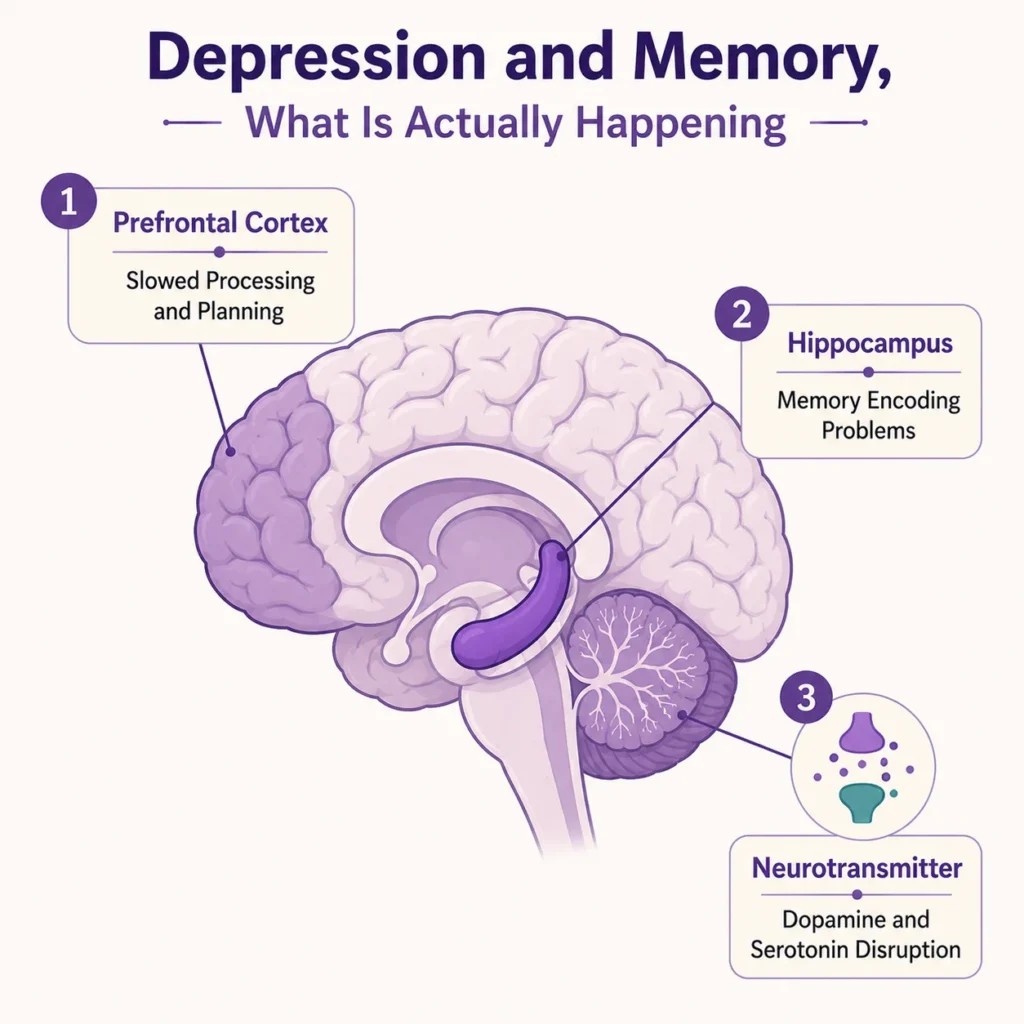
Depression cognitive symptoms are one of the most underrecognized aspects of depression, and they are also one of the reasons people with depression often doubt their own intelligence rather than recognizing what is happening.
It directly affects the prefrontal cortex, the part of the brain responsible for working memory, attention, planning, and decision-making. When depression is present, these functions slowdown in measurable ways. Depression and memory problems connect directly because encoding and retrieving information requires the same neurochemical systems that depression disrupts.
The result is that people with depression often describe feeling stupid, slow, or like they have lost something cognitively. Depression and memory issues feel personal in a way other depression symptoms do not, because cognition feels like something you should control, and realizing you cannot is genuinely disorienting.
Anxiety Cognitive Symptoms
Anxiety cognitive symptoms operate through a different mechanism but produce a similar result. When the brain locks into threat-detection mode, it pulls attentional resources toward monitoring danger instead of making them available for focused thinking.
Brain fog forgetfulness tied to anxiety often shows difficulty retaining information during high-stress periods, losing track of conversations, and the sense that your mind is simultaneously overactive and unable to focus on anything useful. The anxiety brain is not sluggish the way the depressed brain is. It feels scattered, pulled in multiple directions at once, unable to settle on anything long enough to process it properly.
Depression cognitive symptoms and anxiety cognitive symptoms both improve significantly once the underlying condition gets properly treated and mood stabilizes through appropriate psychiatric care.
Fatigue and Brain Fog
Fatigue and brain fog travel together so consistently that it can be hard to tell which is driving which. Chronic fatigue affects cognitive function directly by reducing the brain’s ability to sustain attention and process information efficiently.
The brain feels heavy when it is running on inadequate energy, whether that energy deficit comes from poor sleep, a medical condition, a mood disorder, or a nutritional problem. What makes this frustrating is that the fatigue driving brain fog is often not the kind that rest fixes. Sleeping more does not always resolve fatigue and brain fog when the underlying cause is a physiological or psychiatric one rather than simple sleep deprivation.
Low Thyroid Brain Fog
Low thyroid brain fog is one of the most common and most frequently overlooked causes of cognitive symptoms in adults, particularly women.
The thyroid regulates metabolism across every system including brain function. When thyroid hormone levels drop, everything slows down including processing speed, memory, and mental clarity. Low thyroid brain fog often accompanies fatigue, weight changes, cold sensitivity, and low mood, but cognitive symptoms are sometimes the most prominent complaint.
What makes low thyroid brain fog particularly relevant in psychiatric settings is that hypothyroidism can mimic or worsen depression. Someone treating depression while carrying an unaddressed thyroid problem may only ever get partial relief from antidepressants. A simple blood test identifies this, which is why a thorough psychiatric evaluation includes thyroid function in the workup.
Vitamin D Deficiency Brain Fog
Vitamin D deficiency of brain fog is another common and frequently missed contributor. It plays a direct role in brain function and mood regulation, and deficiency is widespread, particularly in people who spend most of their time indoors or live in low-sunlight regions.
Research has linked low vitamin D levels to cognitive symptoms, fatigue, low mood, and reduced concentration. Vitamin D deficiency brain fog tends to be less dramatic than thyroid-related fog but contributes to the baseline cognitive sluggishness that makes everything feel harder than it should.
Checking vitamin D levels alongside other routine labs is a practical first step when brain fog has been present for an extended period.
Fibromyalgia Brain Fog
Fibromyalgia brain fog, sometimes called fibro fog, is a recognized feature of fibromyalgia that significantly affects quality of life for people living with the condition.
It involves memory problems, word-finding difficulty, slowed processing, and trouble concentrating alongside the chronic pain and fatigue. Nobody fully understands why, but it likely involves the same central sensitization that drives fibromyalgia pain, where the nervous system processes both physical and cognitive signals in a dysregulated way.
For fibromyalgia brain fog, treating the condition comprehensively rather than separating pain and cognitive symptoms produces better outcomes. Sleep quality improvement, mood disorder treatment, and gentle exercise carry the strongest evidence for reducing it.
Brain Fog Affecting Work
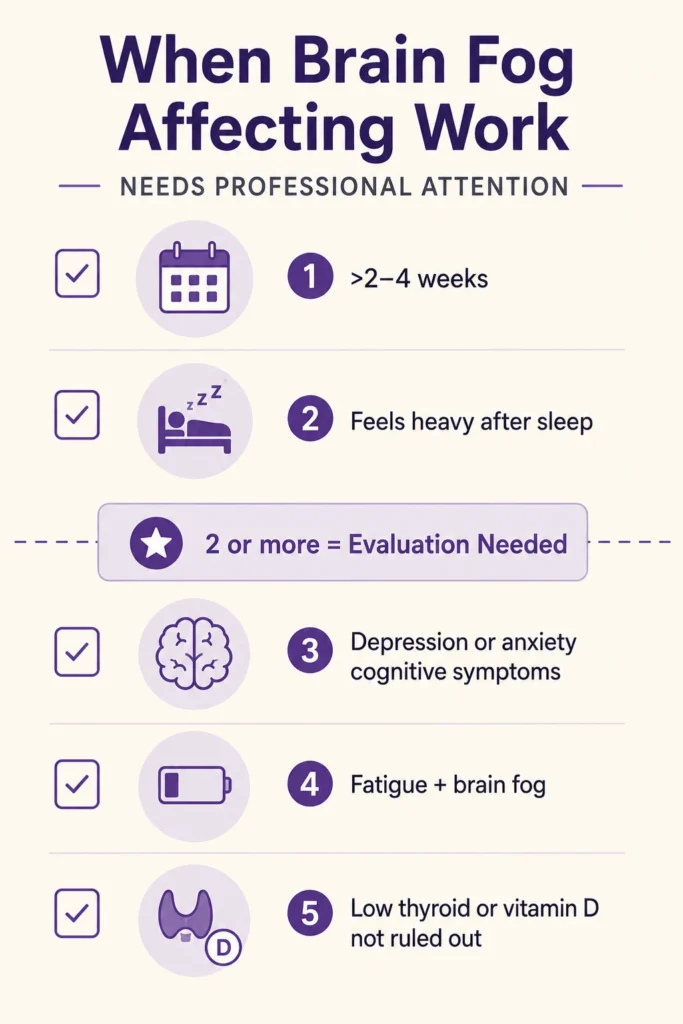
Brain fog affecting work is often what finally pushes people to seek help. Functioning adequately at home is one thing. Missing deadlines, struggling to follow conversations in meetings, losing track of tasks, and feeling cognitively unreliable in a professional setting is harder to rationalize.
Brain fog affecting work that has been present for more than a few weeks, and that is not explained by temporary stress or sleep disruption warrants proper evaluation rather than continued self-management.
Thyroid dysfunction, nutritional deficiency, mood disorders, and sleep disorders are all identifiable and treatable causes worth ruling out with the right clinical approach.
Brain Fog Fix: What Actually Helps
A real brain fog fix depends on identifying what is driving the fog in the first place rather than applying the same solution to every presentation.
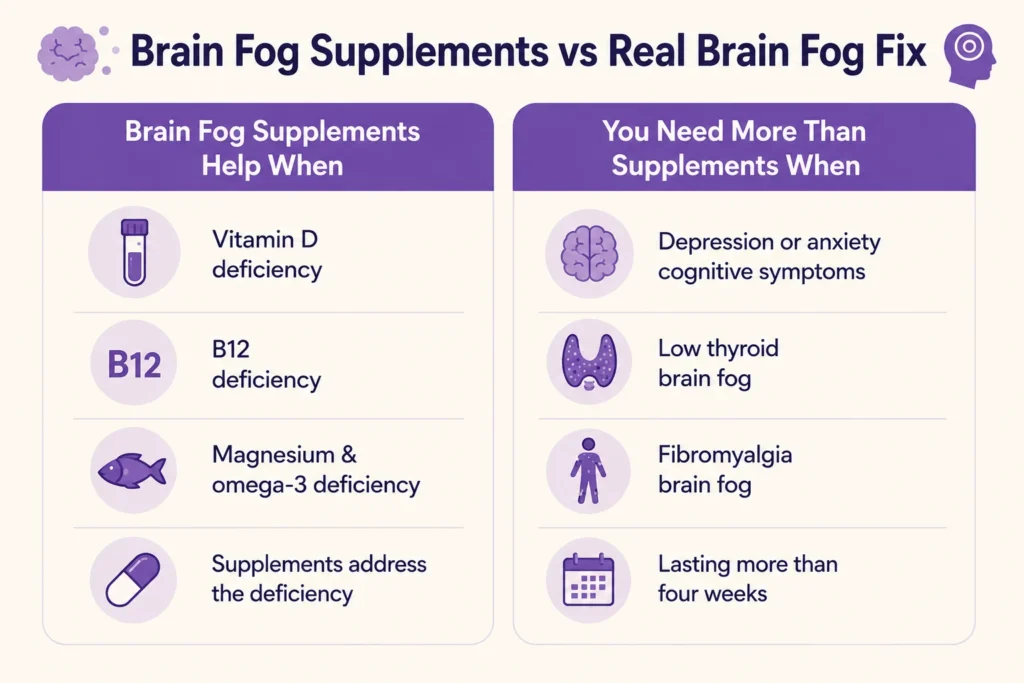
Brain fog supplements are a starting point for some people, particularly when nutritional deficiency is part of the picture. Vitamin D, B12, omega-3 fatty acids, and magnesium are the most evidence-supported options for cognitive symptom support.
Brain fog supplements are useful when deficiency is confirmed but are not a substitute for addressing underlying psychiatric or medical conditions when those are present.
When depression, cognitive symptoms or anxiety, cognitive symptoms are driving the fog. Treating the mood disorder is the most direct and effective brain fog fix available. Mood-stabilizing medication allows the prefrontal cortex to function more reliably, and most people notice significant cognitive improvement alongside mood improvement.
Sleep quality, physical activity, alcohol reduction, and stress management all support cognitive clarity without replacing clinical treatment.
Frequently Asked Questions
Brain fog is not a standalone diagnosis but a real cluster of cognitive symptoms including memory problems, difficulty concentrating. Why do I feel foggy is a question worth bringing to a psychiatrist because the cause is identifiable in most cases.
Depression cognitive symptoms including memory and concentration problems are treatable. Depression and memory issues typically improve significantly when the depression itself is properly addressed through medication, therapy, or both.
Low thyroid brain fog and depression cognitive symptoms can look very similar and often occur together. When both are present, treating only the mood disorder without addressing the thyroid typically produces incomplete improvement.
Brain fog supplements help when a specific nutritional deficiency is driving the symptoms. Vitamin D deficiency brain fog and B12 deficiency both respond to supplementation. When the cause is psychiatric or medical rather than nutritional, supplements alone are not sufficient.
Brain fog affecting work that has been present consistently for more than two to four weeks, that is not explained by temporary stress or sleep disruption, and that is not improving its own warrant evaluation. Fatigue and brain fog together with mood changes, sleep problems, or physical symptoms make professional assessment the right next step.
Getting Evaluated at Beautiful Minds Mental Health
If brain fog has been affecting your work, your memory, or your daily functioning for long enough that you are searching for answers, a proper evaluation is the right next step.
Beautiful Minds Mental Health in Frisco evaluates the full picture including mood, thyroid function, sleep, and lifestyle factors that contribute to cognitive symptoms. Whether what causes mental fog in your situation turns out to be depression, anxiety, a hormonal issue, or a combination of several things, the practice builds a treatment plan around the actual cause rather than a generic approach.
Both telehealth and in-person appointments are available across the DFW area. Visit beautifulmindstx.com or call 972 668 3109 to schedule your evaluation.
Disclaimer: This content is for informational and educational purposes only. It is not a substitute for professional mental health advice, diagnosis, or treatment. If you are in crisis, call or text 988 for the Suicide and Crisis Lifeline.