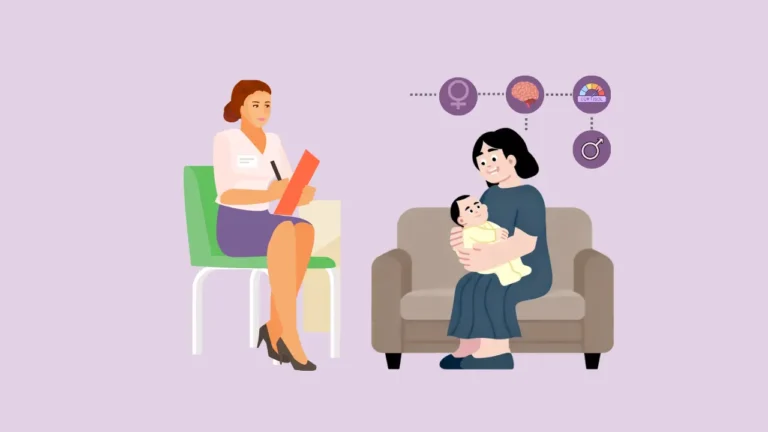
Perimenopause and Anxiety: Why Frisco Women in Their 40s Are Seeking Psychiatric Help
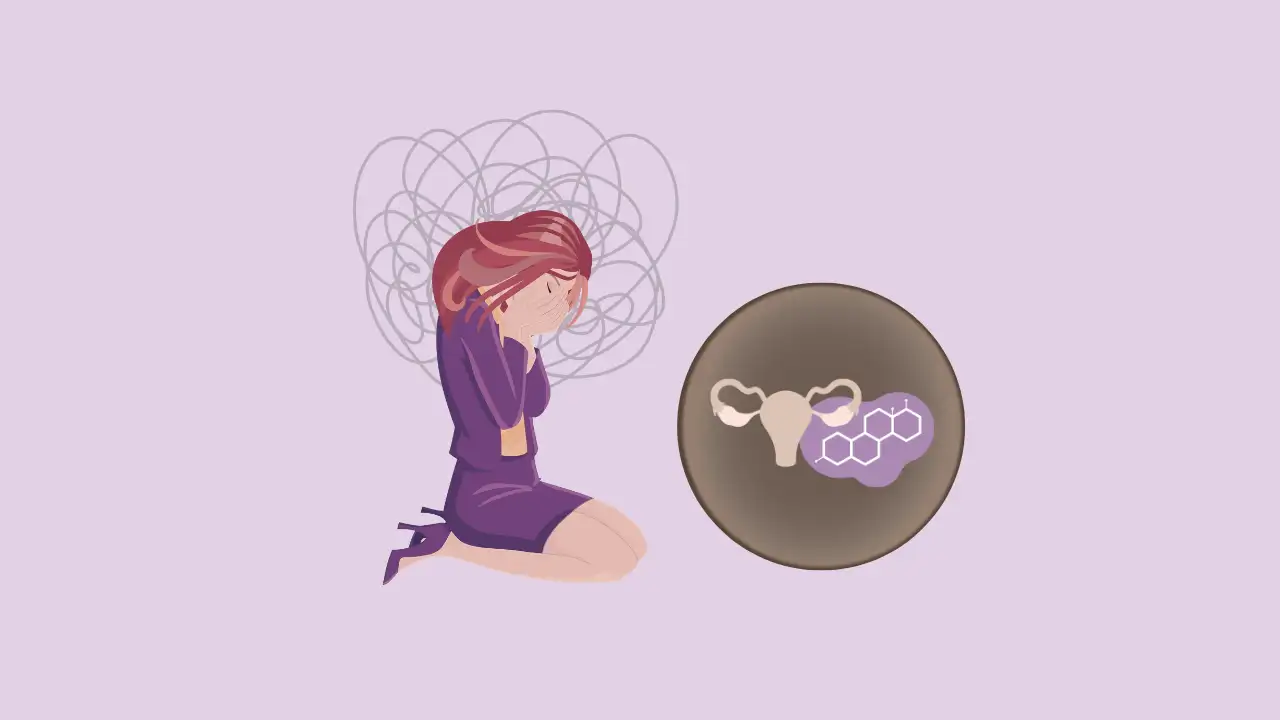
Most women in their 40s do not connect what they are feeling to hormones. The anxiety that shows up out of nowhere, the sleep that stops working, the irritability that feels out of proportion, and the low mood that will not lift. These are not signs of falling apart. They are signs of perimenopause and anxiety showing up together, and most women never get told that.
Across Frisco and North Texas, women are quietly pushing through symptoms that have names, causes, and real treatment paths. This blog breaks it all down.
Key Takeaway:
- Why hormone shifts during perimenopause directly trigger anxiety and depression
- What perimenopause anxiety looks and feels like day to day
- How brain fog and memory problems connect to dropping estrogen levels
- Why do so many women get misdiagnosed or receive the wrong treatment
- When it is time to see a psychiatrist, what to ask for
What Is Actually Going on Inside Your Body During Perimenopause
Most people picture menopause as something that happens once, suddenly, in your early 50s. The reality is that the transition starts years earlier and moves slowly. Perimenopause can begin as early as your mid-30s. For most women, it arrives somewhere in the 40s, and it does not announce itself politely.
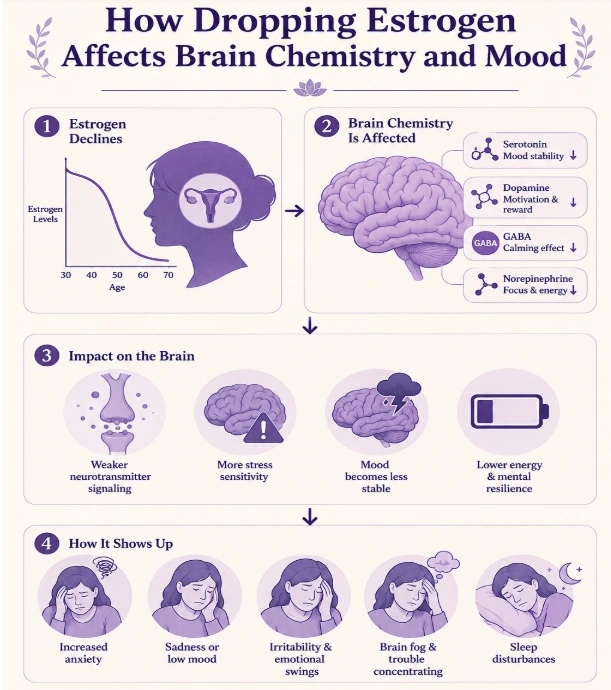
Estrogen is not just a reproductive hormone. It has a direct hand in how your brain manages mood, sleep quality, and your body’s response to stress. When perimenopause estradiol levels start falling and fluctuating without a predictable pattern, your entire nervous system picks up on it.
Low estrogen anxiety is not a figure of speech. The part of your brain that registers fear becomes more reactive when estrogen drops. Serotonin and GABA, the two chemicals most responsible for keeping anxiety in check, both need estrogen to work the way they should. Take that foundation away, and those systems lose their footing.
None of this is a character flaw. It is not you becoming someone else or falling apart. It is your brain chemistry responding to a real, measurable change in your body. The fact that it still gets dismissed as stress or aging or attitude is a problem with how it gets talked about, not with you.
What Perimenopause Anxiety Actually Feels Like Day to Day
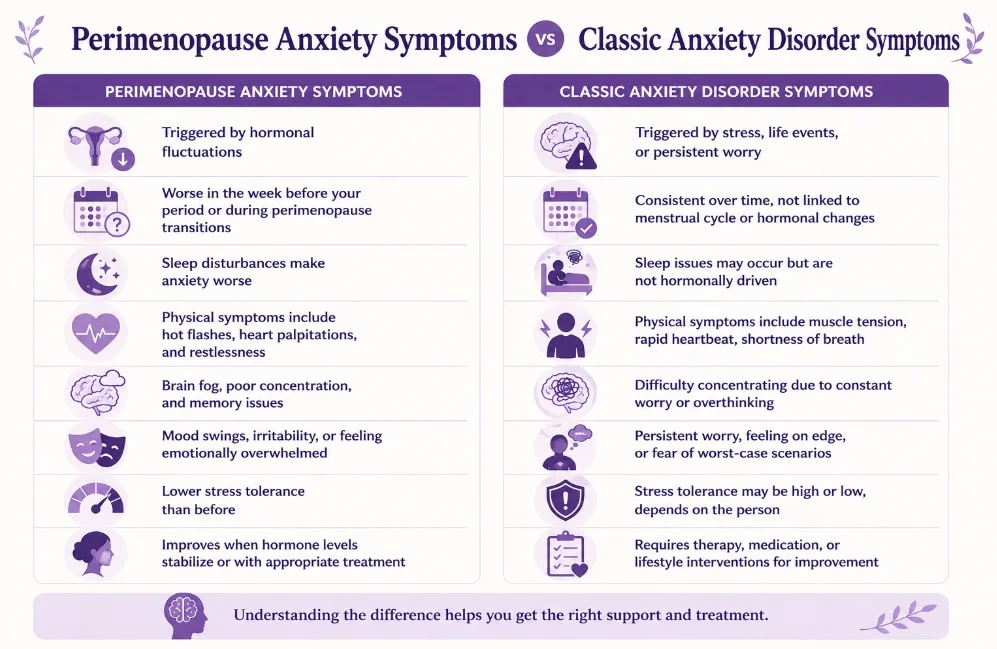
When most people think about anxiety, they picture someone who worries constantly. Perimenopause anxiety symptoms do not always work that way. Sometimes they do not look anxious, at least not from the outside.
Some women describe a low, inexplicable sense of dread that shows up in the evening for no reason they can point to. Others say they feel overstimulated in situations that used to feel completely normal, a crowded school pickup line, a team meeting at work, a busy weekend at home.
Perimenopause and panic attacks show up more often than most people realize. Heart hammering, chest tight, suddenly short of breath, with nothing obvious to explain it. A significant number of women end up in emergency rooms convinced that something is seriously wrong with their hearts. Tests come back to normal. Nobody mentions hormones.
Perimenopause irritability is one of the most quietly damaging symptoms because it tends to be turned inward. Women describe reactions that feel out of proportion to what triggered them, not because they are irrational but because their nervous system is genuinely working harder than it should be to regulate. That creates a cycle of shame that makes everything harder.
Menopause anxiety symptoms can also show up as insomnia, racing heart at night, hot flashes that jolt you awake, and a chronic inability to settle rest. Sleep loss makes every other symptom worse. The sleep disruption itself is almost always hormonal.
The Brain Fog That Nobody Warned You About
Perimenopause memory problems are one of the symptoms that catch women most off guard. You walk into a room and the reason you went in there is just gone. A word you use every day disappears mid-sentence. You read the same email three times and still cannot tell someone what it said.
For a lot of women, the fear that jumps in immediately is dementia. That fear is real and worth taking seriously, but in most cases during perimenopause, what is happening is hormonal. Estrogen supports memory consolidation and mental processing speed. When it fluctuates, clarity fluctuates with it.
For a woman already managing hormone imbalance and anxiety, brain fog sitting on top of that is a particular kind of exhausting. You are already living with a nervous system that will not quiet down. Now your thinking feels muddy on top of everything else. Explaining that combination to someone who has not felt it is genuinely difficult.
The important thing to understand is that these symptoms are treatable. They are not permanent. They are not the beginning of cognitive decline. Getting proper support often brings meaningful improvement faster than most women expect.
When Depression Shows Up and Gets Mistaken for Something Else
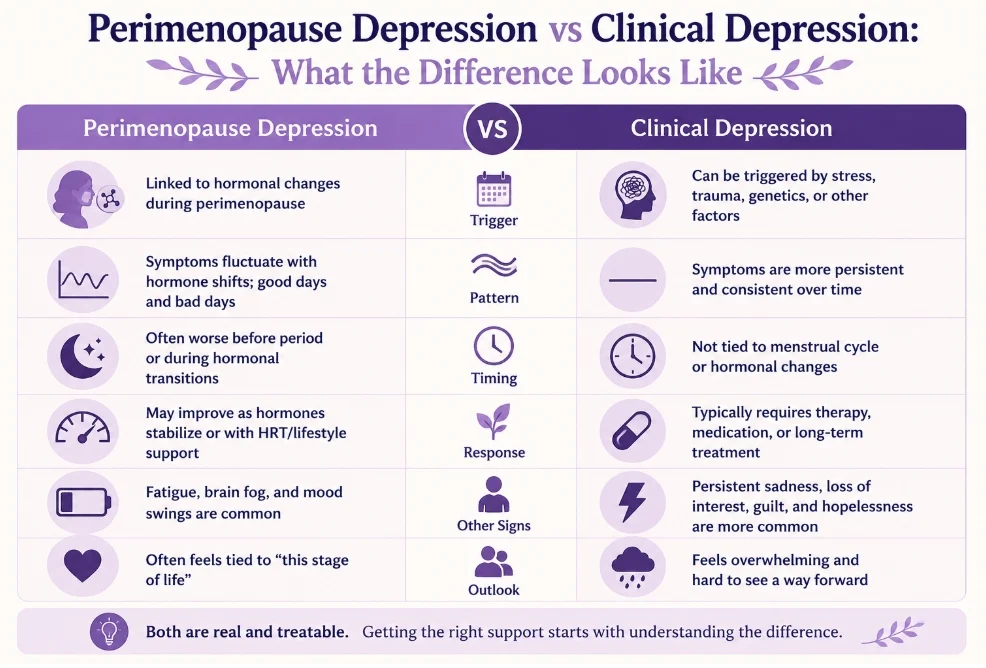
Hormone imbalance depression during perimenopause can look almost identical to a standard depressive episode. The flatness, the inability to feel motivated, and the crying without a clear reason. Doctors who are not thinking hormonally will often prescribe antidepressants and move on, sometimes without ever identifying that the hormonal piece is driving the whole thing.
The women hit hardest by these are often the ones who have never dealt with depression before in their lives. That is disorienting. You are not someone who struggles with this, and then suddenly you are, and no one has explained why.
Women and anxiety disorders are already a population that gets undertreated and underdiagnosed in general healthcare. Add the complexity of perimenopause into that picture, and the gap gets wider. Treating midlife mood symptoms well requires a provider who understands both the psychiatric side and the physiology of what this stage of life does to the brain.
That is not the same as a quick appointment and a prescription. It takes a different kind of attention.
Small Daily Choices That Actually Move the Needle
The connection between perimenopause and caffeine is something a lot of women discover the hard way. Caffeine pushes cortisol up and keeps the nervous system active. For a woman whose nervous system is already running hotter than it should because of hormonal fluctuation, that morning coffee can make anxiety, heart palpitations, and broken sleep noticeably worse without it being obvious that caffeine is the link.
This does not mean giving it up entirely. It means paying honest attention to how your body responds and being willing to adjust. Moving caffeine earlier in the day or switching to a lower-caffeine option makes a real difference for a lot of women within a week or two.
Sleep is the other big piece. Perimenopausal sleep disruption feeds anxiety directly, and anxiety feeds sleep disruption right back. Breaking that loop usually needs both the hormonal piece addressed and some deliberate attention to behavioral patterns around sleep at the same time.
Exercise, steady mealtimes, and pulling back on alcohol all support hormonal balance and mood in ways that genuinely matter. None of these replaces real treatment. They work best when treatment is already in place, and these habits are supporting it.
Knowing When It Is Time to Actually Reach Out
One of the harder parts of perimenopause when to see a doctor, is that most women spend a long time convincing themselves they are overreacting. They second-guess what they are feeling. They wait for it to pass on its own. By the time they reach out, things have usually been hard for a while.
If anxiety, panic, mood swings, or low mood are getting in the way of your daily life, your work, or the relationships that matter to you, that is a good enough reason to talk to someone. You do not need to wait until you are at your worst.
Telepsychiatry Texas options have genuinely changed the access picture for a lot of women. A thorough psychiatric evaluation does not require driving across town or taking a full day off work. It can happen from your home. For working mothers and professionals in Frisco, that flexibility is often the difference between getting help and putting it off for another six months.
When you do connect with a provider, ask them directly about the hormonal side of what you are experiencing. A psychiatrist worth seeing will want to understand your cycle patterns, how your symptoms shift throughout the month, and whether hormonal evaluation belongs in the picture.
Women’s health advocacy is partly about knowing you are allowed to expect that kind of thoroughness. You are not asking for too much when you want a provider who takes the full picture seriously.
Frequently Asked Questions
Yes, directly. When estrogen and progesterone shift, the brain chemicals that keep your mood stable go with them. It is not in your head. It is your body chemistry changing.
The moment it starts affecting your daily life. Most women wait way too long because they think they are overreacting. You are not. Reach out before things get harder.
Earlier than most people expected. It can begin in your mid-30s, though most women start noticing real changes in their 40s. Every woman’s timeline looks different.
Because estrogen controls how reactive your brain’s fear response is. When it drops, that system becomes harder to regulate. Women who never had an anxious day in their lives suddenly find themselves overwhelmed, and it makes complete sense biologically.
Yes. Estrogen supports both serotonin and GABA, the two chemicals your brain leans on most for mood stability. When estrogen falls, both take a hit together. That is why perimenopause depression and anxiety so often show up at the same time.
Getting Real Support at Beautiful Minds TX in Frisco
If you are in the Frisco or greater Dallas area and this has sounded like your life, you have options. You do not have to keep pushing through it and hoping it eventually sorts itself out.
Beautiful Minds TX works with women navigating perimenopause, anxiety, depression, and the hormonal undercurrent that runs through all of it. Care is built around your specific history, your symptoms, and what your actual life looks like, not a generic protocol.
Telehealth and in-person appointments are both available. Getting evaluated does not mean turning your schedule upside down.
You have been managing this long enough. The team at Beautiful Minds TX is ready to sit with you, understand what you are dealing with, and build a plan that fits your real life.
Call (972) 668-3109 or visit beautifulmindstx.com to schedule your evaluation today.
Disclaimer: This content is for informational and educational purposes only. It is not a substitute for professional mental health advice, diagnosis, or treatment. If you are in crisis, call or text 988 for the Suicide and Crisis Lifeline.