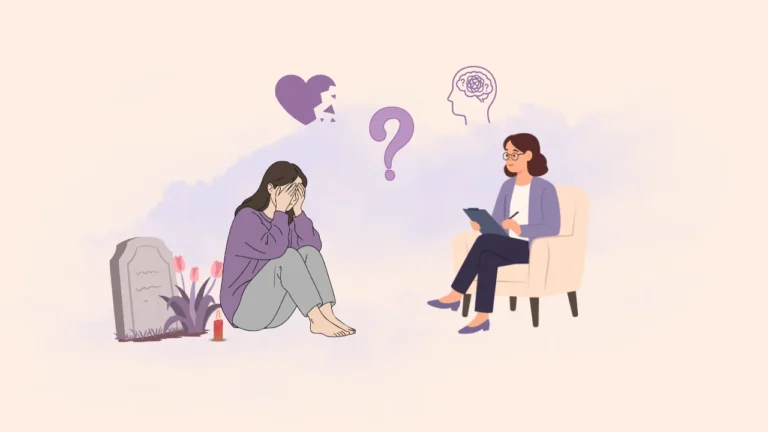
How Does Depression Affect a Relationship?
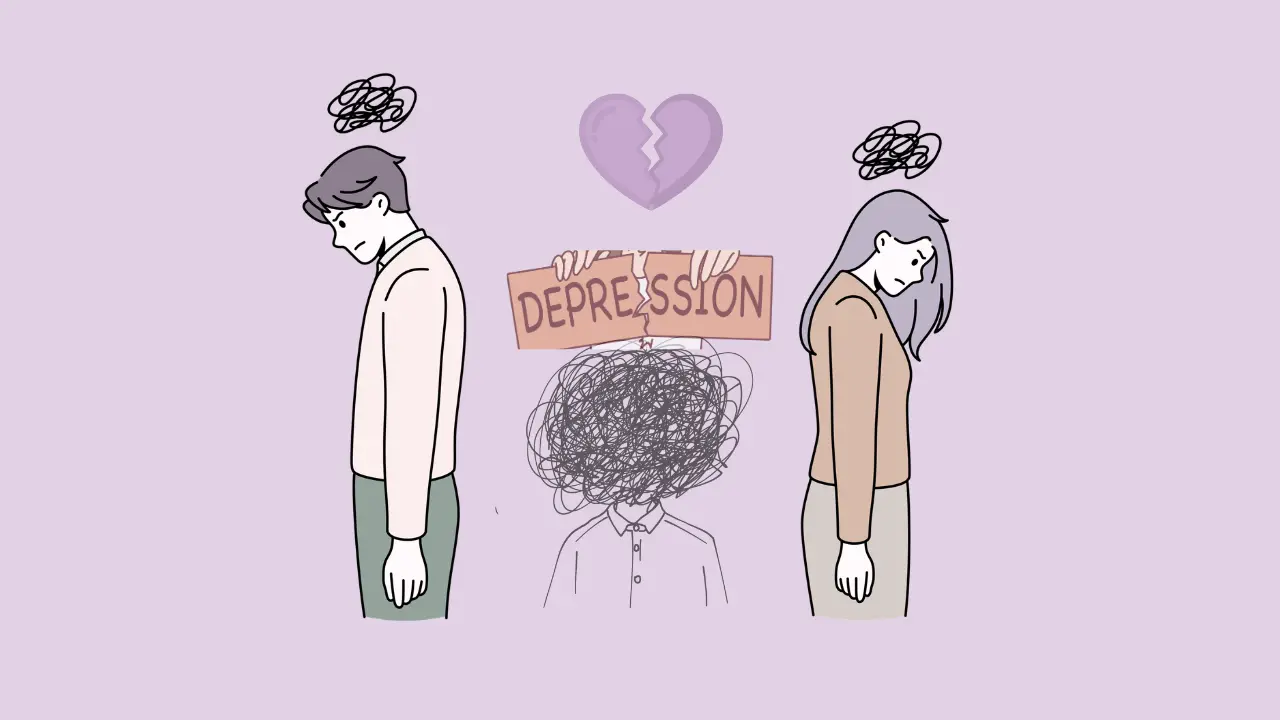
There is a particular kind of loneliness that comes from feeling distant from the person sleeping next to you. Not because anything dramatic happened. Not because everyone did anything wrong. Just a slow, quiet pulling apart that neither of you fully understands, and neither of you quite knows how to name.
That is often what depression affects relationships looks like from the inside, not a single breaking point, but a gradual erosion of the connection that used to feel effortless.
Depression does not just live in the person who has it. It moves into the relationship, sits at the dinner table, shows up in the silences, and changes the emotional temperature of the entire household. Understanding how that happens and what to do about it is what this blog is for.
Key takeaway:
- Depression does not just affect the person who has it.
- It moves into the relationship and changes everything.
- Withdrawal feels like rejection but it is clinical, not personal.
- Proper individual treatment often changes the entire relationship dynamic.
- Couples therapy works best alongside individual psychiatric care, not instead of it.
What Depression Actually Does Inside a Relationship
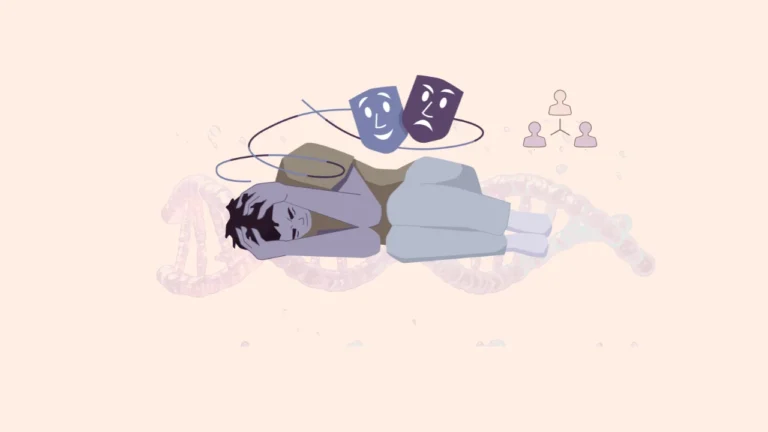
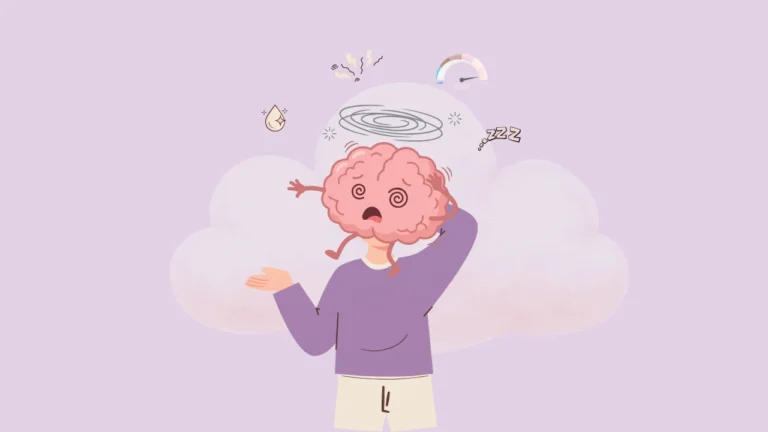
The most important thing to understand about depression and marriage or any long-term partnership is that depression is not a choice, a mood, or a character flaw. It is a clinical condition that affects the brain’s ability to regulate emotion, sustain motivation, experience pleasure, and maintain connection. When you understand that, the behaviors that feel like rejection start to make more sense even when they are still hurt.
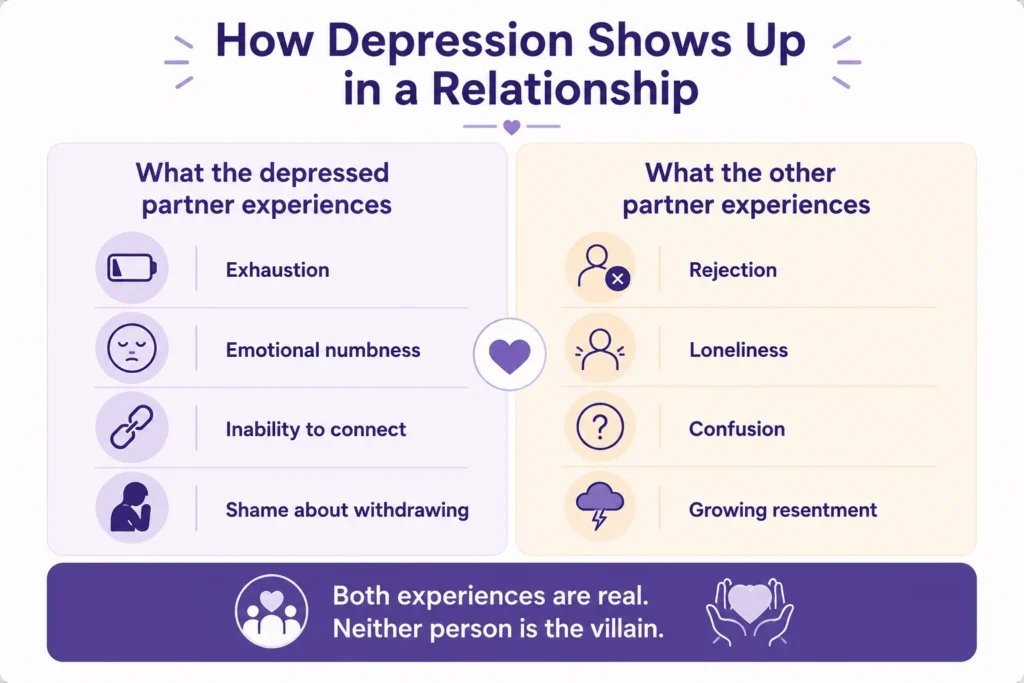
A partner with depression often withdraws not because they want distance but because depression makes connection feel impossible. Reaching out, initiating conversation, showing affection, all of it requires energy that depression has quietly depleted. The person on the receiving end of that withdrawal experiences it as rejection, indifference, or falling out of love, when the reality is something much more clinical and much less personal.
This is the central misread that causes so much damage in relationships affected by depression. One person is struggling to stay afloat. The other person is interpreting the struggle as abandonment. And neither of them is wrong in what they are experiencing, but without understanding what is actually happening, both of them suffer in isolation.
The Signs Depression Is Affecting Your Relationship
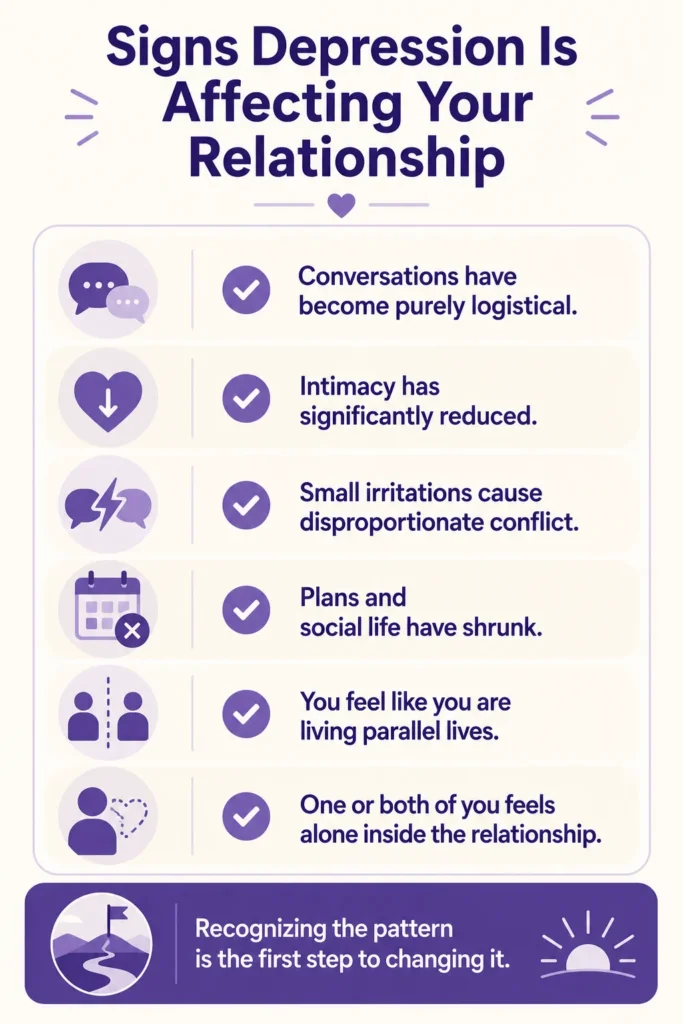
My depression is killing my relationship is one of the most searched phrases by people trying to put language to something they have been feeling for a long time. If that sentence landed for you, here is what it might actually look like day to day.
Conversations shrink down to logistics. Who is picking up the kids, what needs to happen this week, and nothing more. The real conversations have quietly disappeared. Depression kills the desire for closeness in ways nobody can control, so intimacy slows down or stops, and attraction has nothing to do with it. Small things land harder than they should, one partner snaps and the other walks on eggshells trying not to trigger something they do not fully understand.
Plans are canceled. Social life shrinks. The things you used to do together the dinners, the weekend trips, the simple ritual of sitting together and watching something you both liked start disappearing one by one, and at some point, you look up and realize you have been living parallel lives inside the same house.
What It Feels Like to Love Someone with Depression
Loving someone with depression is genuinely one of the hardest things a person can go through in a relationship, and it deserves to be taken seriously instead of brushed off or minimized. You did not sign up to be a caregiver. You signed up to be a partner. When those two things start to feel the same role, the weight becomes significant.
Caregiver fatigue is real. Watching someone you love suffer while feeling completely unable to fix it is exhausting in a way most people cannot explain. Managing your own feelings, theirs, the household, and the relationship all at once while trying not to say the wrong thing is a full time job nobody signed up for.
The resentment that builds this dynamic is not a sign of being a bad partner. It is a sign of being a human being carrying more than one person who should carry it alone. Naming that without shame is part of what makes it possible to address.
Men, Depression, and the Relationship Problem Nobody Talks About
Men depression and relationships deserves specific attention because male depression frequently goes unrecognized. It rarely shows up as sadness. Instead it looks like irritability, emotional shutdown, increased alcohol use, and a flat disengagement that everyone around him mistakes for not caring.
A man who has quietly been depressed for months or years can look to his partner like someone who checked out of the relationship. The partner reasonably, given what they are seeing, starts to wonder whether the relationship is over. The man who genuinely does not recognize what is happening as depression doubles down on the withdrawal because connection feels impossible and he does not have the language to explain why.
This pattern ends relationships that did not need to end. Getting the right name for what is happening is the first step to changing it.
Dating a Depressed Person: What Nobody Prepares You For
Dating a depressed person brings its own specific challenges that are different from navigating depression inside a long-term marriage. In early relationships, depression can be particularly confusing because you do not have a baseline. You do not know who this person is without depression. You cannot tell whether the withdrawal is about you, about the relationship, or about something happening inside them that has nothing to do with either.
The push-pull dynamic where connection appears and then vanishes creates real anxiety in the non-depressed partner. Understanding that depression drives the pattern rather than ambivalence makes it navigable in a way that confusion never does.
Couples Therapy for Depression: Why It Helps Both People
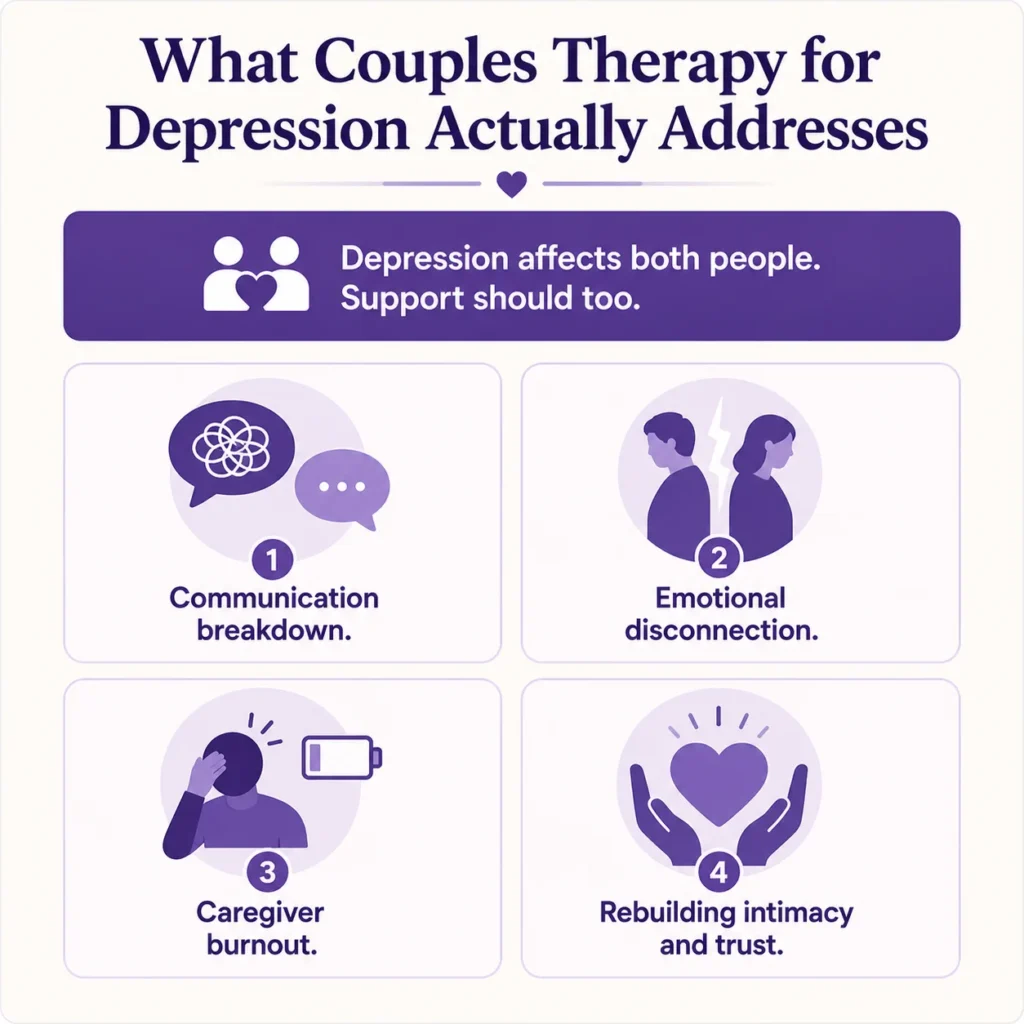
Couples therapy for depression is not about fixing the depressed partner in front of the other. It gives both people a space to name what is happening and work through it together instead of in isolation.
A good therapist who understands depression will:
- Help the non-depressed partner understand what their partner is experiencing without minimizing how hard the situation is for them too
- Help the depressed partner put into words what they need and what they are going through in ways depression itself makes difficult
- Help both people rebuild the communication patterns and emotional connection that depression has quietly taken apart
Helping a spouse with depression does not mean absorbing everything. Couples therapy for depression is about understanding what is happening, setting sustainable boundaries around your own wellbeing, and making sure both of you get the right support.
When Individual Treatment Changes Everything
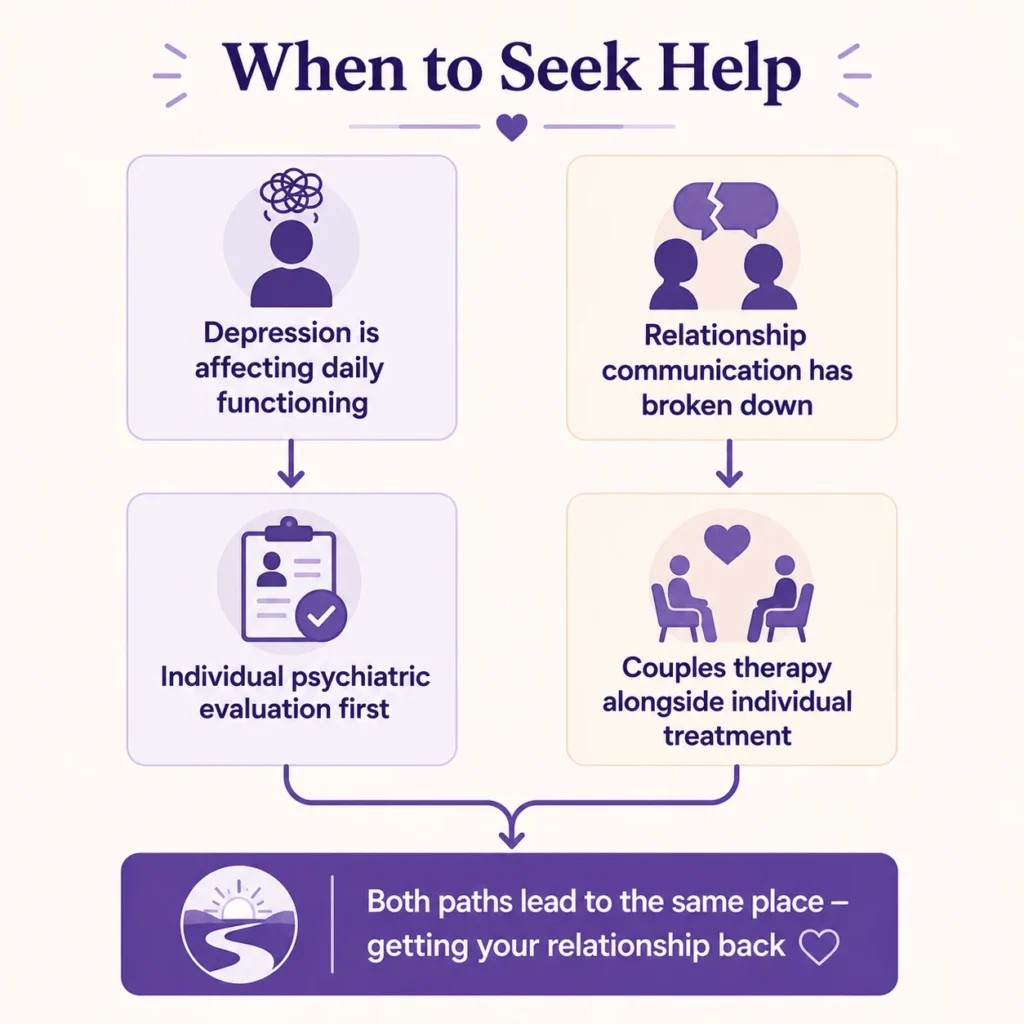
Sometimes the most important thing that can happen for a relationship affected by depression is for the depressed partner to get proper individual treatment. Not couples therapy first. Individual psychiatric evaluation, proper diagnosis, and a treatment plan that addresses what is happening in the brain.
Depression that is properly treated whether through medication, therapy, TMS, or a combination changes the dynamic of the entire relationship. The withdrawal is reduced. The irritability settles. The capacity for connection comes back. Partners who were genuinely considering whether the relationship was salvageable have described the experience of watching treatment work as getting their person back.
Beautiful Minds Frisco provides psychiatric evaluation, medication management, TMS therapy, and Spravato through telehealth and in-person appointments so you can get started without adding more disruption to an already strained life.
Frequently Asked Questions
Depression does not just live in the person who has it. It moves into the relationship through withdrawal, lost intimacy, shorter conversations, and a slow emotional distance that neither partner fully understands until the gap feels too wide to cross.
Conversations shrink to logistics, intimacy slows down, small irritations land harder than they should and plans quietly disappear. If that sounds familiar, the first step is naming what is actually happening. Individual psychiatric care for the depressed partner combined with couples therapy for both produces the best outcomes.
Beautiful Minds Frisco offers telehealth appointments that make it easier to get started without adding more disruption to an already strained schedule.
Beautiful Minds Frisco accepts several insurance plans. Calling the office directly at 972 668 3109 is the fastest way to confirm your specific coverage before scheduling.
Come from care rather than frustration. Choose a calm moment rather than the middle of conflict. Frame it around what you have noticed and how much you want things to feel better for both of you not as an accusation or an ultimatum. If the first conversation does not land, it does not mean the door is closed.
A Final Word from Beautiful Minds Frisco
Depression does not have to be the end of a relationship. But leaving it unaddressed and hoping it passes usually is. If you or your partner are living with depression that is affecting your relationship, your family, and your daily life, the team at Beautiful Minds Frisco is here to help with real psychiatric evaluation, proper diagnosis, and treatment that goes beyond the standard options when the standard options have not been enough. Reach out today and take the first step toward getting both of you back.
Disclaimer: This content is for informational and educational purposes only. It is not a substitute for professional mental health advice, diagnosis, or treatment. If you are in crisis, call or text 988 for the Suicide and Crisis Lifeline.