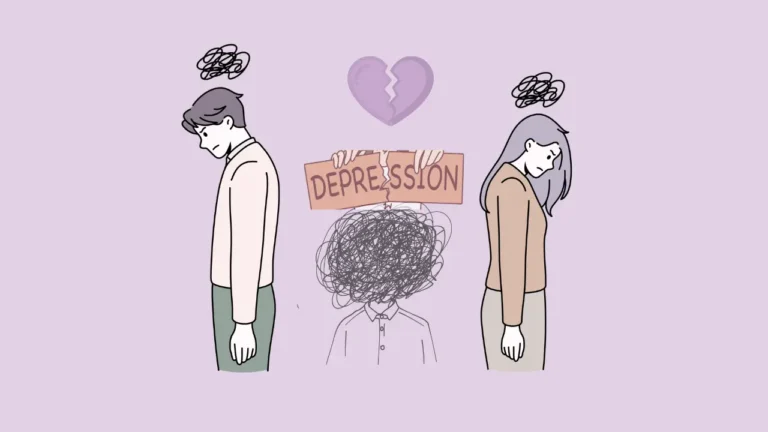
Burnout or Depression? How to Tell the Difference
Difference between burnout and depression: these four words sum up a question that thousands of people quietly type into Google every single day. You feel worn down, have no energy and You dread getting out of bed. But is it burnout? Or is something deeper going on? Getting the answer right matters more than most people realize, because the wrong path forward can make things worse instead of better.
Some mornings, the hardest part of the day has nothing to do with the workload. Walking through the door is a problem. It starts quietly. You sit in your car a little longer than usual. Exhaustion hits before the day even begins. You tell yourself you are just tired, just stressed, just overdue for a break. Weeks pass. Then months. Fatigue never lifts. Motivation disappears. Even the things you once loved start to feel far away.
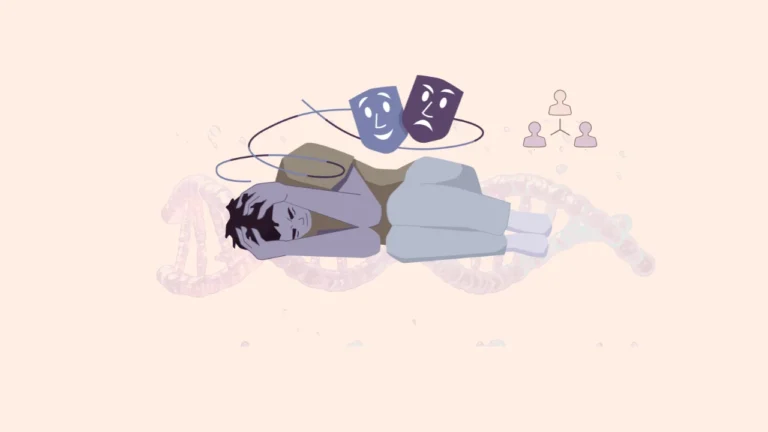
What looks like burnout can slowly cross into something deeper, clinical depression. The line between the two is not always obvious, and most people miss it entirely until things have gone further than they should.
Key takeaway:
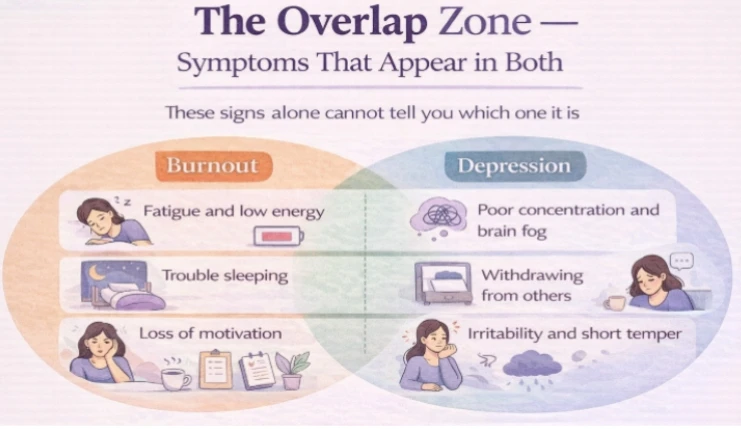
- Burnout and depression overlap in ways that make them genuinely hard to tell apart. Both drain your energy, disconnect you from life, and make ordinary tasks feel impossible.
- Burnt out meaning goes beyond tiredness. Real burnout changes your personality, flattens your emotions, and follows your home long after work ends.
- Depression without sadness is far more common than most people know. Numbness, irritability, and anhedonia symptoms can all point to depression even when crying never enters the picture.
- Burnout that goes untreated long enough can turn into clinical depression. The stages of burnout do not stay in one place if nobody addresses them.
Knowing the difference between burnout and depression is the first step toward getting the right kind of help, whether that is depression counseling, situational depression treatment, or simply talking to a doctor about depression near me who listens to.
What Burnt Out Meaning Actually Looks Like Day to Day
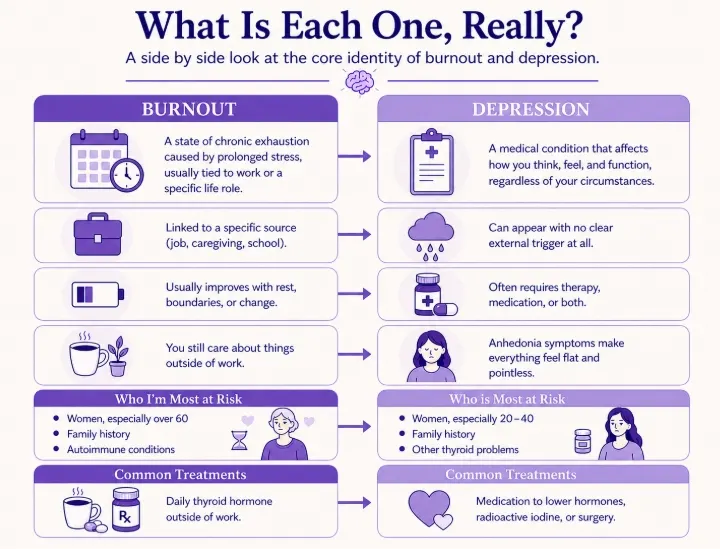
The burnt out meaning that most people know is simple exhaustion. But real burnout goes much further than just being tired. It shows up in your personality. You stop finding humor in things you once laughed at, become sharp with the people you love, and feel completely empty no matter how much sleep you get.
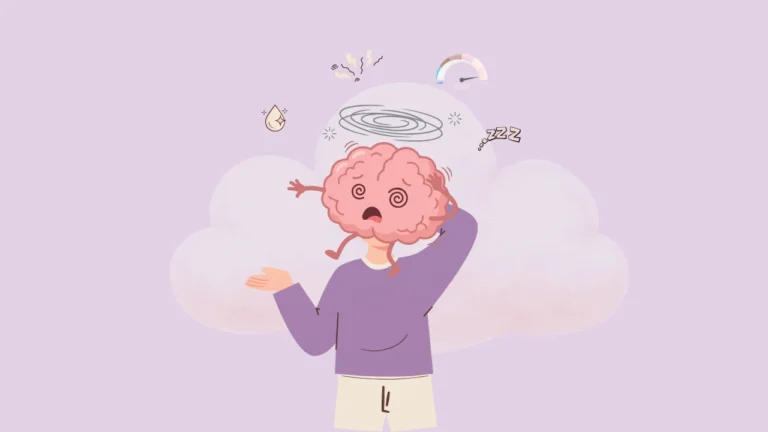
What are the symptoms of burnout that show up most often? Emotional exhaustion is a big one. You feel completely drained by the time you reach midday. Then comes depersonalization, where you start treating your work or the people around you like they are objects instead of things you care about. The third piece is a reduced sense of accomplishment. Even when you do something well, it feels hollow.
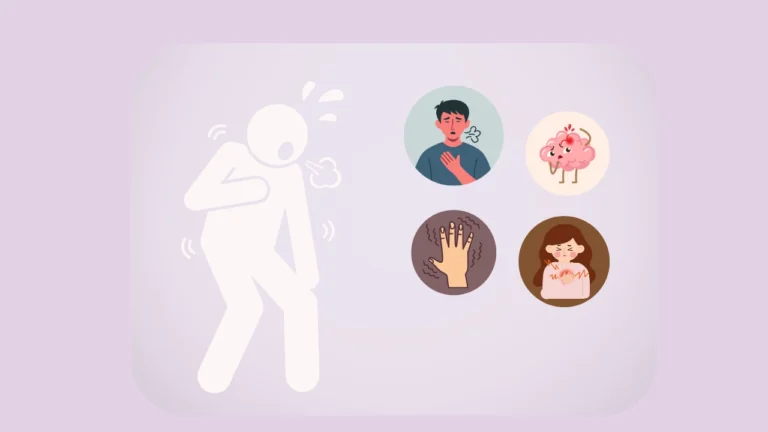
Physical signs matter, too. Headaches, stomach problems, and getting sick more often than usual. Your body keeps your score even when your mind is denial.
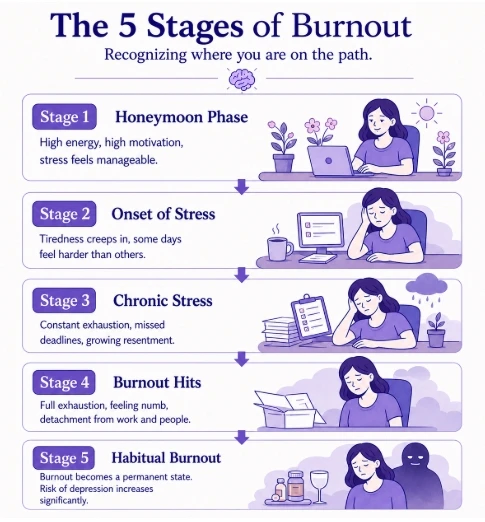
The stages of burnout typically move from early warning signs like mild irritability and fatigue, through chronic stress, toward full collapse where you cannot function in your normal role. Catching it early makes a real difference.
When It Becomes Something More: Depression Without Sadness
Here is something that trips a lot of people up. Depression does not always look sad. Depression without sadness is very real, and it is one of the main reasons people go years without getting the right help. Instead of crying or feeling down, some people feel nothing at all. Numb. Flat. Like the color drained out of life.
Anhedonia symptoms are a key part of this picture. Anhedonia is when you stop enjoying things you used to love. Not just work, but everything. Your favorite food tastes bland. A night out with friends feels like a chore. You watch a movie you used to love and feel nothing. This is not laziness. It is a hallmark sign of clinical depression.
Another thing people miss is the feeling of depression and worthlessness. You might not even realize how much you have started running down in your own head. Thoughts like “I am a burden” or “nothing I do matter” start to feel like facts instead of symptoms. This is also something that comes up in autism burnout symptoms, which has its own unique profile worth understanding.
Can I be depressed without feeling sad? The answer is yes, and research backs up. Some people experience depression primarily through fatigue, brain fog, irritability, and the inability to feel pleasure. If that sounds familiar, it may be worth speaking with a professional about what is actually going on.
Can Burnout Actually Cause Depression?
Yes. And this is where conversation is really important. Burnout and depression are not always separate things. Burnout that goes untreated for a long time can cross the line into clinical depression. The nervous system stays in a state of chronic overload for so long that it fundamentally changes how you feel and function.
Situational depression treatment is sometimes what people need after a period of severe burnout. Situational depression is triggered by a specific event or period in life, like a career crisis or extended overwork, rather than being tied to brain chemistry alone. It can respond very well to therapy and targeted support.
The key thing to understand is that neither burnout nor depression is a sign that you are weak. They are not character flaws. They are signals from your body and mind that something has been pushed past its limit for too long.
How to Stop a Mental Breakdown Before It Happens
When people search for how to stop a mental breakdown, they are usually already deep in the red zone. They are asking because they can feel themselves unraveling. The most important thing to know is that there are real, practical steps you can take right now, not just ideas, but actual tools that work.
The first step is to stop pretending you are doing fine. That sounds simple, but most people in burnout or depression are burning enormous energy trying to hold it together for everyone else. Letting one person to know that you are struggling is often the hardest and most important thing.
The second step is to find, depression counseling or mental health support sooner than it feels necessary. Most people wait over two years before seeking help. Getting in early means better outcomes and a faster road back to yourself.
If you are looking for a doctor for depression near me or a therapist who understands both burnout and clinical depression, Beautiful Minds TX works with people in this space. We use a personal, story-based approach to help you understand what is happening before jumping to solutions.
You Do Not Have to Keep Guessing
The difference between burnout and depression is real, but both of them deserve real attention. Whether you are in the early stages of burnout or you have been carrying something heavier for a long time, you do not have to figure it out alone.
If you are ready to talk to someone who understands both, reach out to Beautiful Minds TX today. We are here for people in Frisco, McKinney, Allen, and across North Texas who are ready to stop just surviving and start actually feeling like themselves again.
According to the American Psychological Association, burnout is not recognized as a standalone medical diagnosis in the US, but the impact on mental and physical health is real and measurable. Understanding the difference between burnout and depression helps you get the right kind of support from the start.
FAQs
They are not the same, but they overlap enough to confuse people regularly. Burnout is tied to a specific role or environment and tends to ease when that stressor changes. Depression follows you everywhere regardless of circumstances and affects your whole sense of self, not just your work life.
Burnout hits emotionally, physically, and mentally at the same time. Constant exhaustion, cynicism, detachment from work, and a nagging feeling that nothing matters are the core signs. Headaches, frequent illness, disrupted sleep, and becoming sharper with the people you love tend to follow right behind.
Burnout builds in five stages. It starts with the honeymoon phase where energy is high but overcommitting is already happening. Stress kicks in next, then becomes chronic until exhaustion feels normal. Stage four is full burnout where daily functioning breaks down. The fifth and most serious stage is habitual burnout, where the symptoms stop feeling temporary and start feeling permanent. Catching it before stage three is where the real difference gets made.
This is one to take seriously. Trying to manage depression alone often keeps it going longer than necessary. Speaking with a mental health professional at Beautiful Minds TX is genuinely the most effective first step, not a last resort.
Recognizing the warning signs early and reaching out before things collapse completely. Talking to someone, setting real limits on your time and energy, and getting professional support before you hit the wall rather than after.
What Getting Help Actually Looks Like
A lot of people imagine depression counseling as lying on a couch and talking about your childhood for years. Reality is much more grounded than that. Good therapy starts with understanding your specific situation, what has been building up, what patterns show up, and what your life actually needs to look like to support your wellbeing.
At Beautiful Minds TX, our therapists for burnout and depression take a warm, conversational approach. We look at your whole picture, not just the checklist of symptoms. If you are sitting in your car every morning like Sarah did, unable to walk through the door, that is information. It tells us something important about where you are and what needs to change.
Disclaimer: This content is for informational and educational purposes only. It is not a substitute for professional mental health advice, diagnosis, or treatment. If you are in crisis, call or text 988 for the Suicide and Crisis Lifeline.