Best Medication for Anxiety and Depression: What Psychiatrists Actually Prescribe
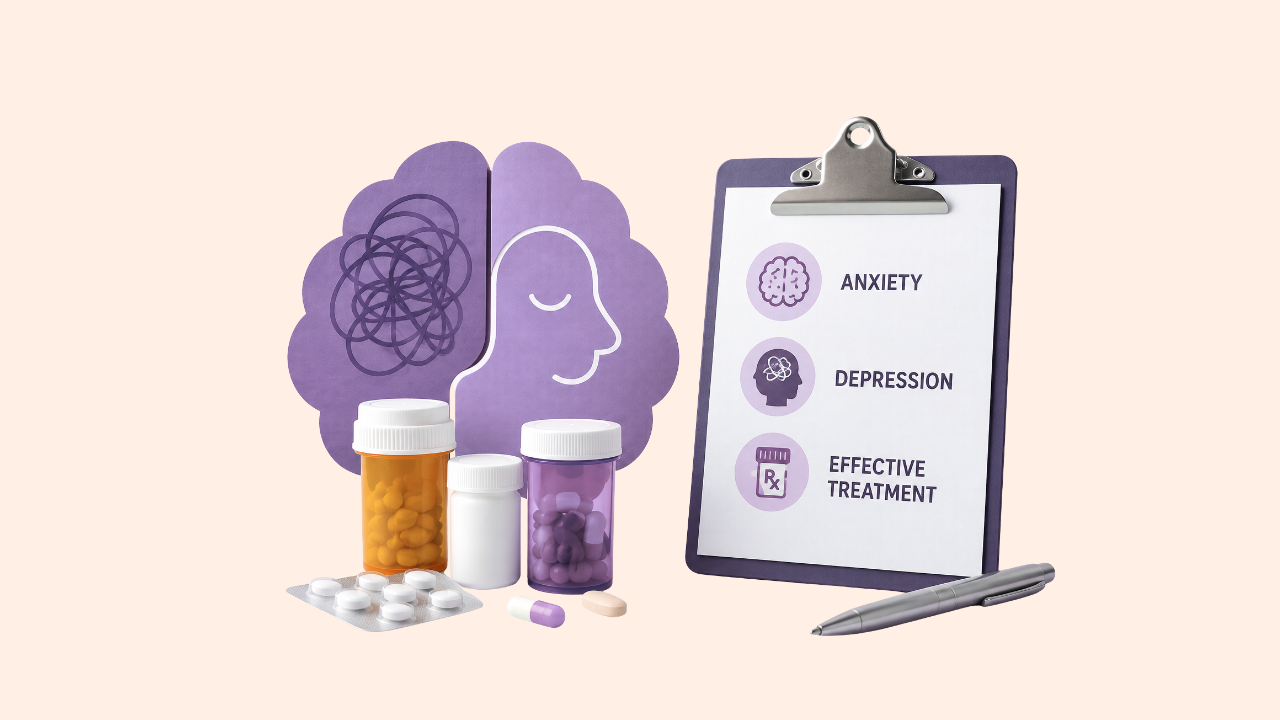
The best medication for anxiety and depression is usually an SSRI or an SNRI. Both classes treat the two conditions together and have the strongest safety record. No single drug works best for everyone, so your psychiatrist matches the choice to your symptoms and history.
If a psychiatrist has ever handed you a prescription with little explanation, you know how disorienting that feels. This guide explains what psychiatrists prescribe, why they choose it, and what you can expect when you start.
Key takeaways
- Starting point: SSRIs and SNRIs treat both depression and anxiety, so most psychiatrists start there.
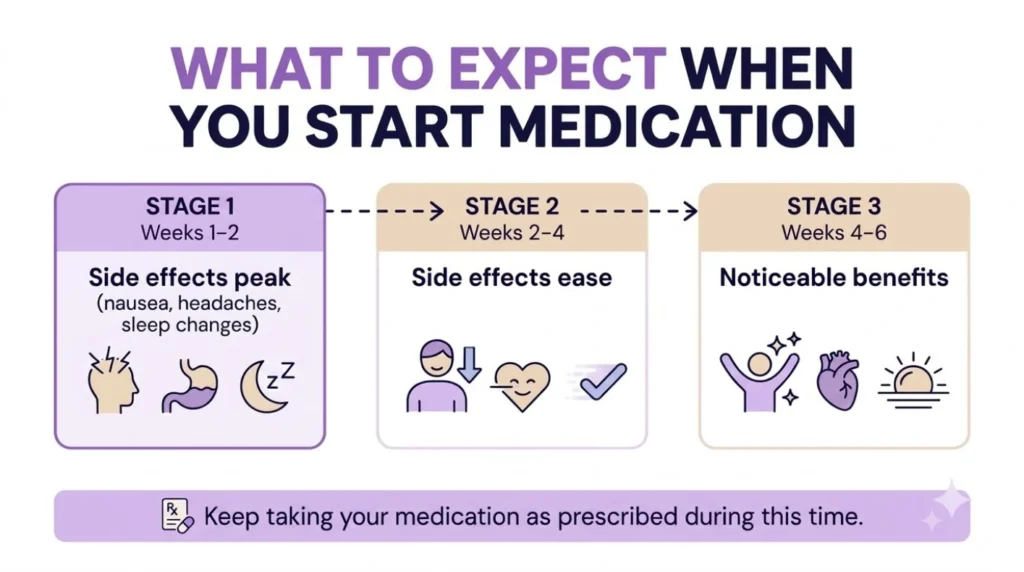
- Side effects: Nausea, headaches, and sleep changes usually ease within two to four weeks.
- Timeline: Most people notice benefit after four to six weeks, not days.
- Next steps: If a first medication falls short, tricyclics, MAOIs, or lithium augmentation remain options.
- Cost: Generic medications and telehealth visits make treatment affordable without insurance.
What Is the Best Medication for Anxiety and Depression?
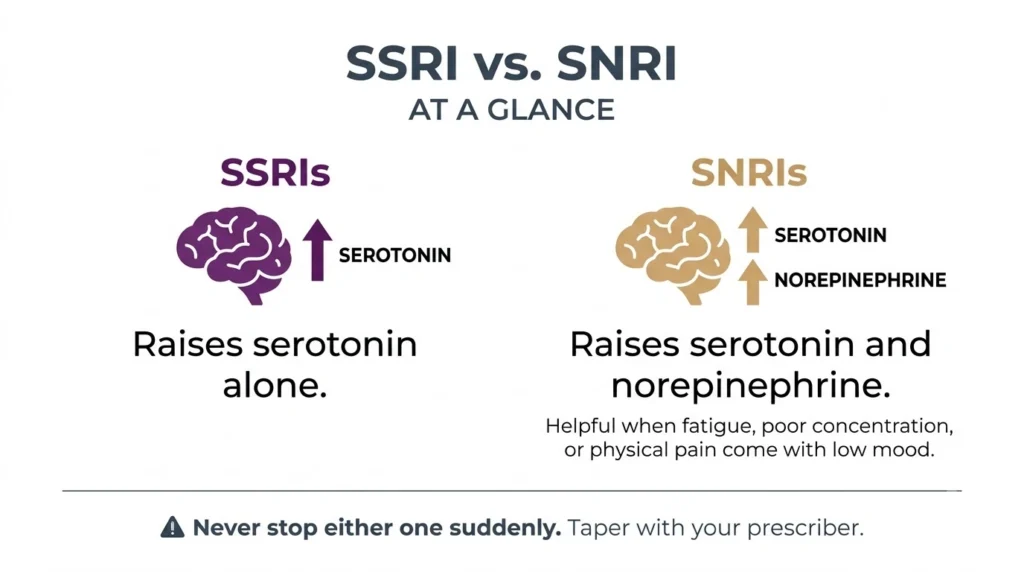
SSRIs are the most prescribed medications for anxiety and depression. They raise serotonin availability, which steadies mood, fear response, and emotional reactivity.
Your psychiatrist weighs four factors: your symptom pattern, your past medication history, any other health conditions, and practical details like cost.
Newer antidepressants take the lead because they work well and cause fewer side effects than older classes. Your response to the first medication then shapes every decision that follows.
How Do SSRIs Work?
SSRIs block the reabsorption of serotonin, so more of it stays active between nerve cells. That change helps calm fear circuits and lift mood.
Citalopram, escitalopram, sertraline, and fluoxetine are common examples. Psychiatrists prescribe citalopram for anxiety and depression often because it causes relatively few side effects, although its anxiety use is off-label.
Sexual side effects tend to last longest. Tell your prescriber early if they appear, because adjusting the dose or switching drugs usually solves the problem.
Which Anxiety Medications Are FDA Approved?
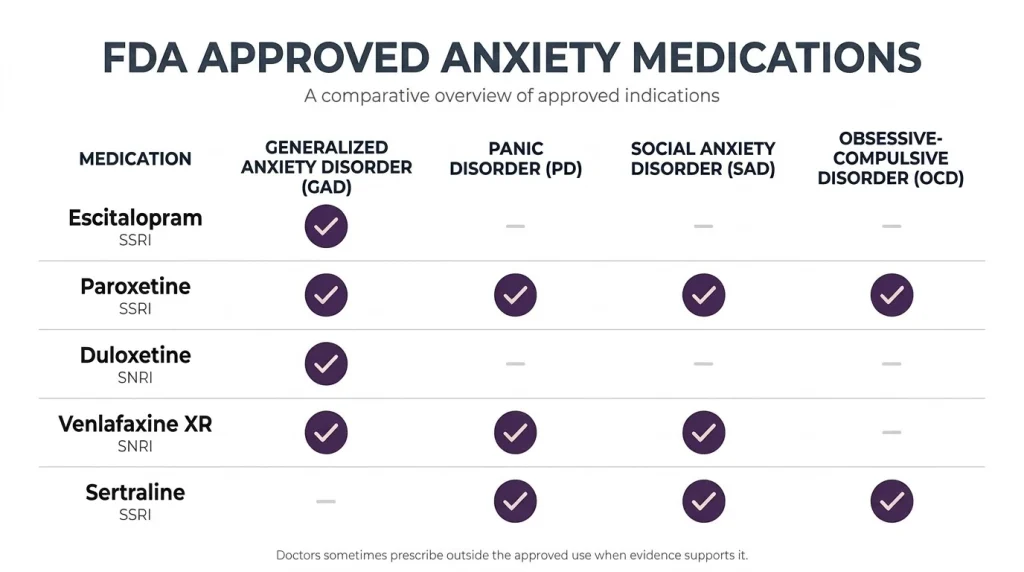
Several antidepressants carry FDA approval for specific anxiety conditions. Approvals differ by drug, so no single medication covers every diagnosis.
- Escitalopram, paroxetine, duloxetine, and venlafaxine XR: approved for generalized anxiety disorder.
- Sertraline and paroxetine: approved for panic disorder, social anxiety disorder, and OCD.
- Venlafaxine XR: also approved for panic and social anxiety disorder.
Doctors sometimes prescribe a medication outside its approved use when evidence supports it. Ask your psychiatrist which category your prescription falls into.
How Do SNRIs Work, and How Do They Differ From SSRIs?
SNRIs raise two chemicals, serotonin and norepinephrine, while SSRIs raise serotonin alone. That second target helps when fatigue, poor concentration, or physical pain accompany your low mood.
Psychiatrists often switch to an SNRI when an SSRI helps only partly. They also use SNRIs for generalized anxiety disorder.
SNRIs can raise blood pressure at higher doses. Stopping them suddenly causes withdrawal symptoms, so you should always taper under your prescriber’s guidance.
Are There New Medications for Depression and Anxiety in 2026?
Yes, but newer does not mean first choice. Recent options include esketamine nasal spray for treatment-resistant depression, zuranolone for postpartum depression, and a few newer oral antidepressants.
These medications fill specific gaps. Most people still start with an SSRI or SNRI because decades of evidence support them.
Ask your psychiatrist whether a newer option fits your situation. Insurance coverage, administration requirements, and side effects all affect that decision.
What Are the Most Common Side Effects of Antidepressants?
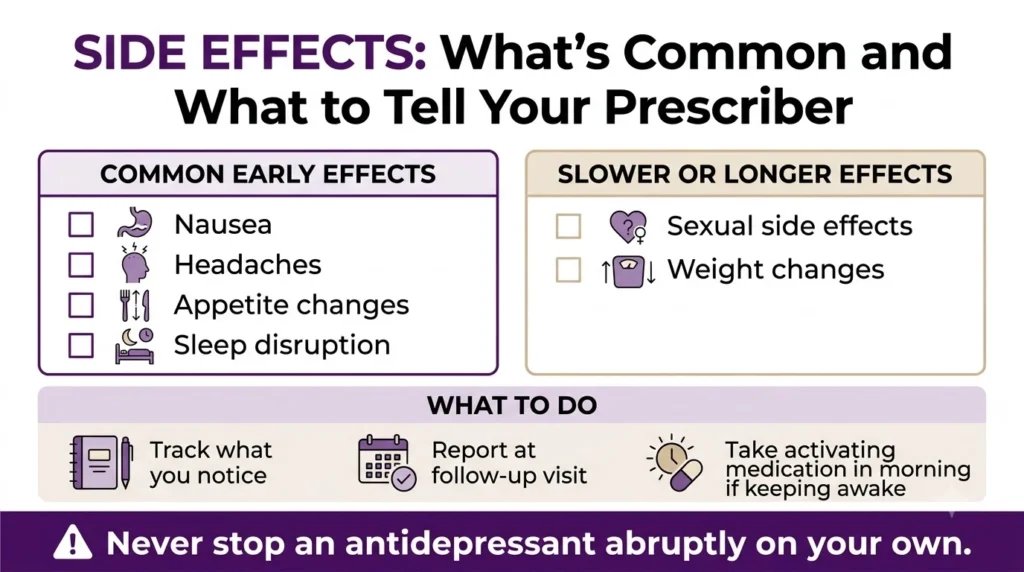
The most common side effects are nausea, headaches, appetite changes, and sleep disruption. They usually peak in the first two weeks and fade as your body adjusts.
Sexual side effects, such as lower desire or delayed orgasm, are the most persistent. Weight changes can also appear over months.
Track what you notice and report it at your follow-up visit. Never stop an antidepressant abruptly on your own, because that can trigger withdrawal symptoms and a return of your symptoms.
What Causes Antidepressant Insomnia, and How Do You Fix It?
Some antidepressants are activating, so they can keep you awake when you first start or raise your dose. Sleep disruption is one of the most common early complaints.
Take an activating medication in the morning instead of at night. That single change often restores normal sleep within days.
If insomnia lasts beyond a few weeks, call your prescriber. A dose change, a different medication, or targeted sleep strategies can help.
When Do Psychiatrists Prescribe Tricyclic Antidepressants for Anxiety?
Psychiatrists prescribe tricyclics when SSRIs and SNRIs have not worked. They are not a first-line choice in 2026, but they still help some people.
Tricyclics act on several brain chemicals at once. That broad action brings more side effects, including dry mouth, constipation, drowsiness, and heart effects at higher doses.
Your psychiatrist may monitor you more closely on a tricyclic. Doctors also choose them when your past response was strong or when their sedating effect helps you sleep.
When Do Psychiatrists Prescribe MAOIs for Depression?
Psychiatrists prescribe MAOIs for atypical depression and for cases that have not responded to other medications. MAOIs are the oldest antidepressant class, and the evidence for them is strong.
They block the enzyme that breaks down serotonin, dopamine, and norepinephrine. Doctors use them less often because tyramine-rich foods, such as aged cheese and cured meats, can cause dangerous blood pressure spikes.
MAOIs also interact with many other drugs. If you try one, you need a prescriber with MAOI experience and a commitment to the diet.
How Does Lithium Help With Depression?
Lithium works as an add-on. Your psychiatrist adds it to an antidepressant that has helped partially but not enough.
For many people, that combination improves response meaningfully. Research also links lithium to a lower risk of suicide, which matters in severe depression.
You will need regular blood tests to keep your level in a safe range. Your psychiatrist also monitors your kidney and thyroid function.
What Is the Safest Postpartum Anxiety Medication?
Sertraline is generally the first choice for postpartum anxiety, because it has the strongest safety record during breastfeeding. Your psychiatrist still tailors the decision to you.
The conversation covers four points: whether you are breastfeeding, how severe your symptoms are, your past treatment, and the risks of leaving anxiety untreated.
Untreated postpartum anxiety affects both you and your baby. If symptoms interfere with sleep, bonding, or daily life, seek care promptly.
What Medication Helps With Health Anxiety?
SSRIs help with health anxiety, and cognitive behavioral therapy (CBT) works alongside them. Together, they treat the worry cycle and the physical symptoms.
Your psychiatrist usually starts with an SSRI and builds a CBT plan with a therapist. Results are strongest when you commit to both.
Medication calms the constant alarm. Therapy teaches you to respond differently when the worry returns.
How Can You Get Anxiety Medication Without Insurance?
You can get anxiety medication without insurance by choosing generics and using pharmacy discount cards. Sertraline, escitalopram, fluoxetine, and venlafaxine all have low-cost generic versions.
Discount programs often bring a monthly supply under twenty dollars. Compare prices across pharmacies, because the same prescription can vary widely.
Telehealth psychiatric medication management also costs less than many in-person visits. Ask any clinic about self-pay rates before you book.
How Do You Find Psychiatric Medication Management Near You?
Look for a practice that reviews your full history before it prescribes. Quick intakes and standard prescriptions often miss important details.
Beautiful Minds Behavioral Health in Frisco, Texas, offers psychiatric medication management in person and by telehealth. It serves patients across Frisco, Plano, McKinney, and the wider Dallas-Fort Worth area.
Whether you are starting medication, seeking a second opinion, or managing a complex case, the team evaluates you thoroughly first. Ongoing monitoring follows every prescribing decision.
SSRIs and SNRIs are the most common first choices because they treat both conditions. Your psychiatrist picks the specific drug based on your symptoms, history, and side-effect tolerance.
Most people notice improvement after four to six weeks. Some benefits appear earlier, but full effect takes longer. Keep taking your medication as prescribed during that time.
Nausea, headaches, appetite changes, and sleep disruption lead to the list. They usually fade within two to four weeks. Sexual side effects can last longer.
SNRIs raise serotonin and norepinephrine, while SSRIs raise serotonin alone. That makes SNRIs useful when fatigue, pain, and poor concentration appear alongside low mood.
Yes. Many antidepressants carry FDA approval for anxiety disorders, and doctors prescribe others for anxiety based on evidence. You do not need a depression diagnosis.
Yes. Generic medications cost far less than brand names, and pharmacy discount cards lower the price further. Telehealth visits also reduce your total cost.
Start Treatment That Fits You
Finding the right medication takes time, honest feedback, and a provider who pays attention. At Beautiful Minds Behavioral Health in Frisco, your plan reflects your history, not a standard protocol.
Visit beautifulmindstx.com or call 972 668 3109 to book your visit.
Disclaimer: This content is for informational and educational purposes only. It is not a substitute for professional mental health advice, diagnosis, or treatment. If you are in crisis, call or text 988 for the Suicide and Crisis Lifeline.