Spravato (Esketamine) Treatment for Depression: What Patients Need to Know
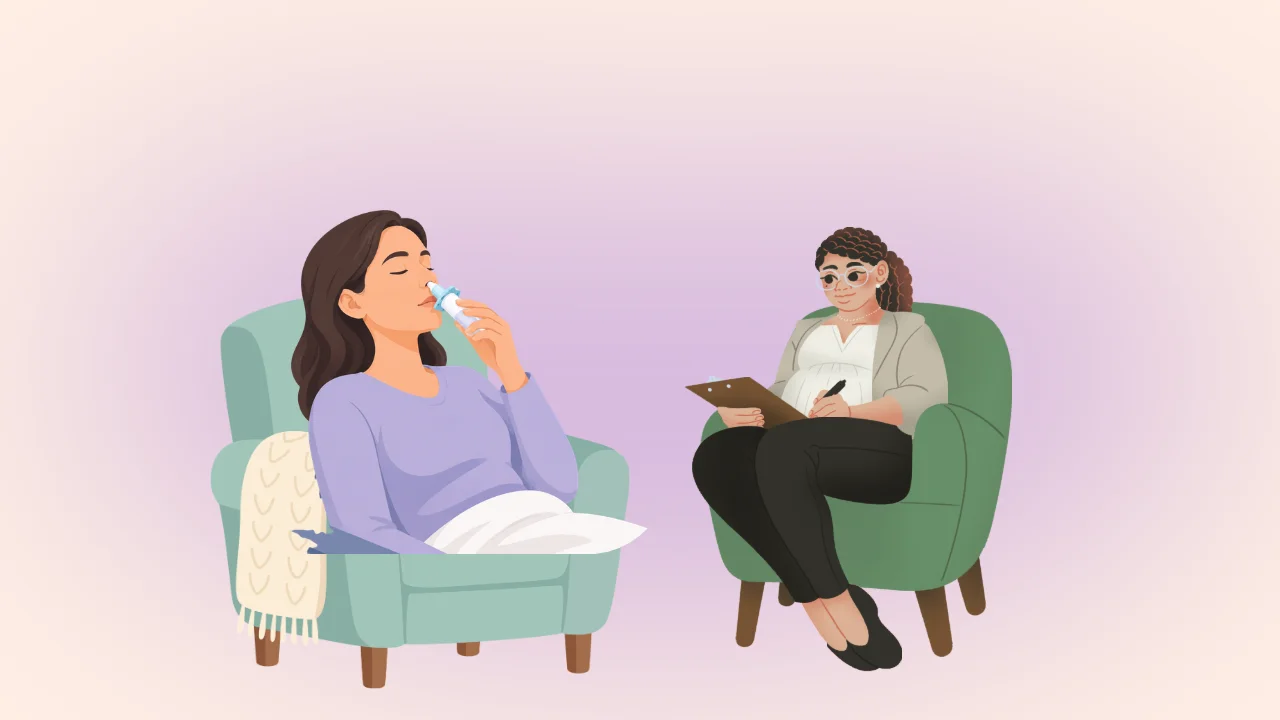
There is a specific kind of exhaustion that comes from trying medication after medication and still not feeling like yourself. Not dramatic exhaustion. The quiet, grinding kind where you keep showing up, keep adjusting doses, keep waiting, and keep being disappointed in a way that starts to feel personal rather than clinical.
If that is where you are, spravato ketamine is worth understanding properly. Not as a last resort and not as a miracle, but as a clinically backed FDA approved option that works through a completely different mechanism than anything you have likely tried before.
Key takeaway:
- Spravato ketamine targets the glutamate system, not serotonin, which is why it works when standard antidepressants have not.
- Many patients notice improvement within the first one to two sessions.
- Sessions run twice weekly for the first four weeks.
- Most major insurance plans now cover Spravato for treatment-resistant depression.
- Spravato side effects stay largely contained to the session itself.
What Spravato Actually Is and How It Differs From Regular Ketamine
Spravato is the brand name for esketamine, a nasal spray derived from ketamine that received FDA approval in 2019 specifically for treatment-resistant depression and major depressive disorder with active suicidal ideation. It is not the same as the ketamine infusions you may have read about or heard discussed in mental health circles, though the two are related.
Standard ketamine infusions use racemic ketamine administered intravenously in off-label applications for depression. Spravato ketamine uses esketamine a more targeted molecule derived from ketamine delivered as a nasal spray in a certified clinical setting under a structured monitoring program.
The FDA approval, the delivery method, the monitoring requirements, and the clinical evidence base are all different, and those differences matter when you are making a treatment decision.
The bottom line is that Spravato is the more regulated, more studied, and more insurance-accessible version of ketamine-based treatment for depression, which is a meaningful distinction for most patients.
Spravato Mechanism of Action: Why It Works When Other Things Haven’t
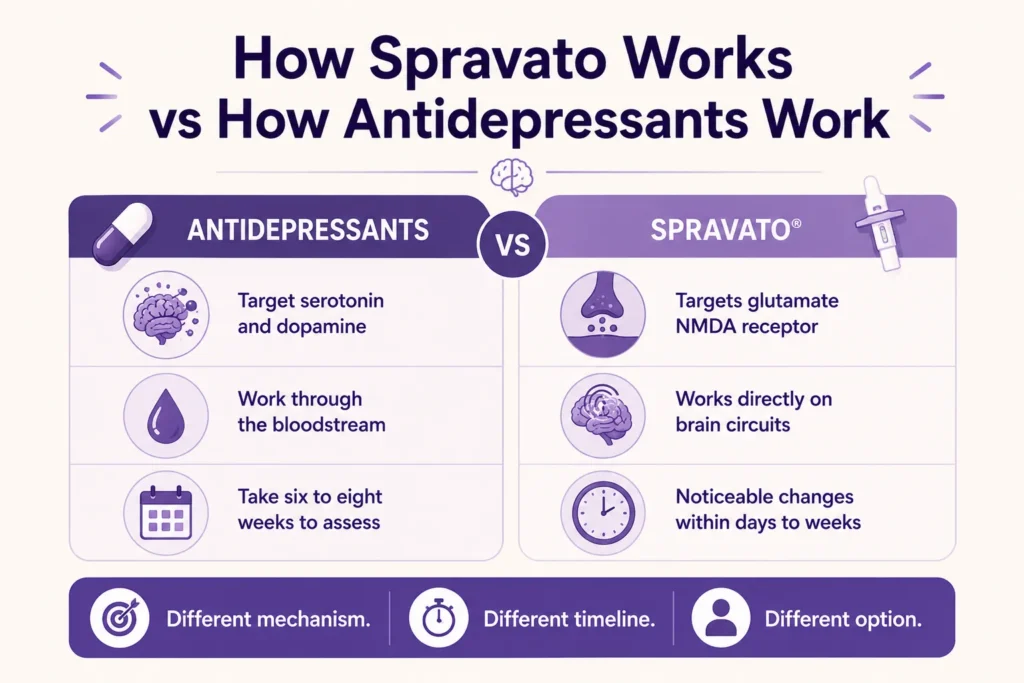
The spravato mechanism of action is what sets it apart from every antidepressant most people have tried. Standard antidepressants like SSRIs, SNRIs, and tricyclics target serotonin, norepinephrine, and dopamine. They work for many people, but for those with treatment-resistant depression, that pathway alone is not enough.
Spravato targets the glutamate system instead, specifically the NMDA receptor. Blocking this receptor triggers a rapid surge in synaptic plasticity, prompting the brain to rebuild neural connections that chronic depression has degraded over time. Many patients begin noticing changes within the first week or two rather than waiting six to eight weeks.
The brain does not receive a chemical adjustment through the bloodstream. Spravato directly prompts it to reconnect in ways that depression has prevented. That is why alternatives to antidepressants like Spravato exist for people the standard pathway has not helped.
Treatment Resistant Depression Options: Where Spravato Fits
Understanding treatment resistant depression options means understanding what treatment resistance is. Most clinicians define it as trying at least two antidepressants at adequate doses without sufficient relief. A significant portion of people with depression qualify by that definition, and most still receive another antidepressant rather than something fundamentally different.
Spravato exists specifically for this population. It is not a first-line treatment and does not replace antidepressants entirely. Most providers use it alongside an oral antidepressant as part of a coordinated treatment plan. But for people who have cycled through multiple medications without the relief they need, it represents a pathway that works differently enough to produce results where the standard options have not.
Other options in this space include TMS therapy, ECT, and ketamine infusions. Each has its own profile of evidence, practicality, and accessibility. A thorough psychiatric evaluation will help clarify which fits your specific situation best rather than applying a one-size approach to a problem that is inherently individual.
What Does Ketamine Nasal Spray Actually Feels Like
What does ketamine nasal spray feel like is the question most people are quietly most curious about and least likely to ask directly. The honest answer is that it produces a dissociative experience unlike anything most people have encountered in a standard medical setting and knowing that in advance makes it significantly less disorienting.
Within the first 10 to 20 minutes, most patients notice a shift in perception. Things feel slightly dreamlike, sound different, and your sense of time feels altered. Some describe a floating sensation. Others describe an unfamiliar mental quietness that is not unpleasant.
The experience peaks during the session and resolves before you leave. Trained staff monitor you throughout. By the second or third session most patients feel significantly more comfortable, and having something calming to listen to during the session makes a real difference.
What to Do During Spravato Treatment
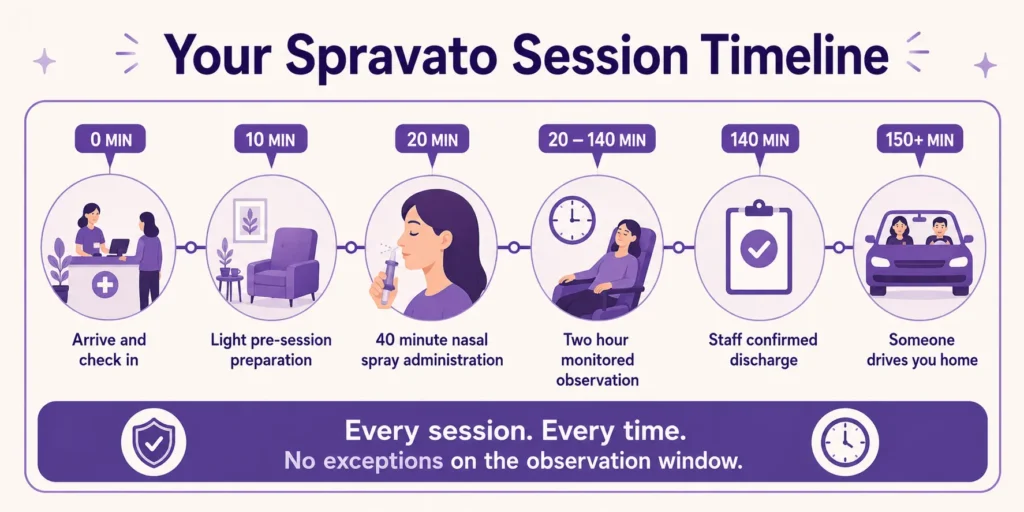
What to do during spravato treatment is practical advice most clinical descriptions skip over, and how you spend those 40 minutes and the two hours after can meaningfully affect how comfortable the experience is.
Bring headphones with a calm playlist or podcast. Wear comfortable clothing since you will be sitting or reclining for close to three hours. Eat a light meal at least two hours before your session since arriving on an empty stomach or right after a heavy meal can worsen nausea.
During the observation window, rest instead of trying to be productive. Avoid screens and anything requiring concentration while the effects are resolved. You will need someone to drive you home after every session without exception, so build that into your planning from the start.
How Often Is Spravato Administered
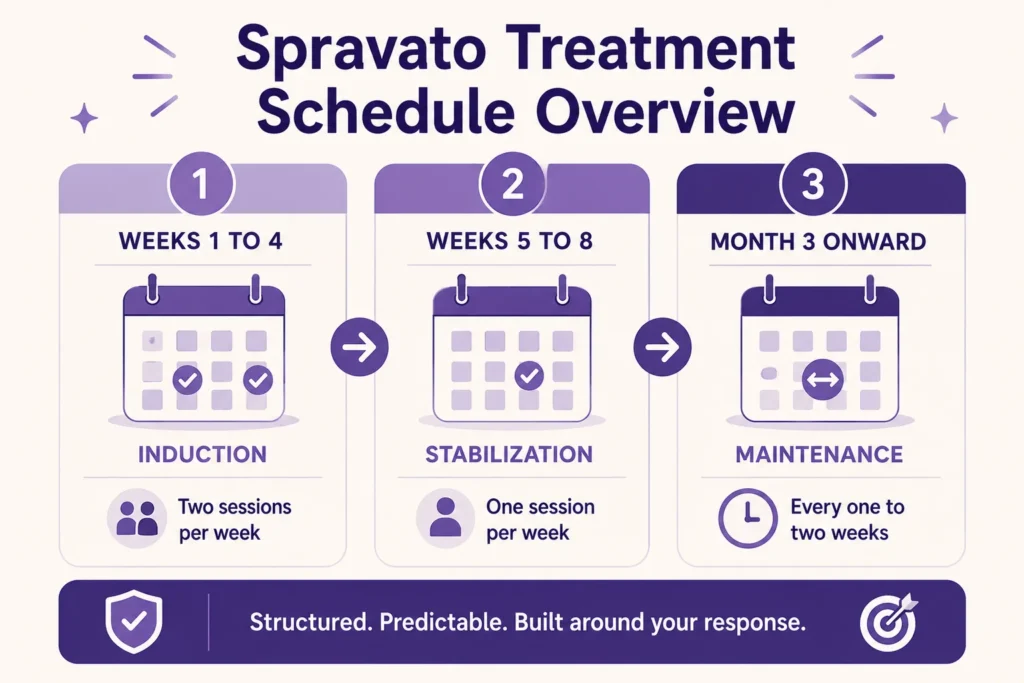
How often is spravato administered follows a structured schedule that becomes predictable once you are in it. The induction phase covers the first four weeks with two sessions per week. This is the most intensive stretch where the brain is actively recalibrated.
From weeks five through eight, sessions reduce once per week as symptoms stabilize. From month three onward, maintenance sessions happen every one to two weeks depending on individual response.
The total time commitment is significant and worth planning for before you start. Sessions are approximately 40 minutes of active treatment followed by a mandatory two-hour observation period, meaning each appointment takes the better part of a half day. Scheduling this around work and family responsibilities is one of the most practical considerations and worth discussing with your provider before beginning.
How Long Does It Take for Spravato to Work
How long does it take for spravato to work is the question that carries the most weight for people who have already been waiting a long time for something to help. The answer is genuinely more encouraging than what most antidepressant timelines look like.
Some patients notice changes within the first one to two sessions. A lifting of the heaviness. A slight return of the ability to feel things. A reduction in the intensity of suicidal thoughts for patients dealing with active ideation. For others, the improvement is more gradual, building across the first two to three weeks of the induction phase before becoming clearly noticeable.
The important distinction is that Spravato works on a timeline measured in days and weeks rather than the months that antidepressant trials typically require. That faster feedback loop matters practically it means you know relatively quickly whether the treatment is moving in the right direction, rather than committing months of waiting before reassessing.
Spravato Success Rate
The spravato success rate in clinical trials was sufficient to earn FDA approval, which is a meaningful threshold, and the real-world data that has accumulated since 2019 has generally supported the trial findings. In the pivotal TRANSFORM studies, approximately 50 to 70 percent of patients with treatment-resistant depression showed significant symptom reduction compared to placebo, with a meaningful portion achieving remission.
For patients with active suicidal ideation, the ASPIRE studies showed measurable reduction in suicidal thoughts within 24 hours of the first administration as a result that no oral antidepressant has been able to replicate in clinical trials.
Real-world outcomes vary by individual, and the patients who tend to see the best sustained results are those who complete the full induction phase, maintain complementary treatments alongside Spravato, and attend maintenance sessions as recommended rather than stopping treatment at the first sign of improvement.
Understanding Spravato Side Effects Before You Start
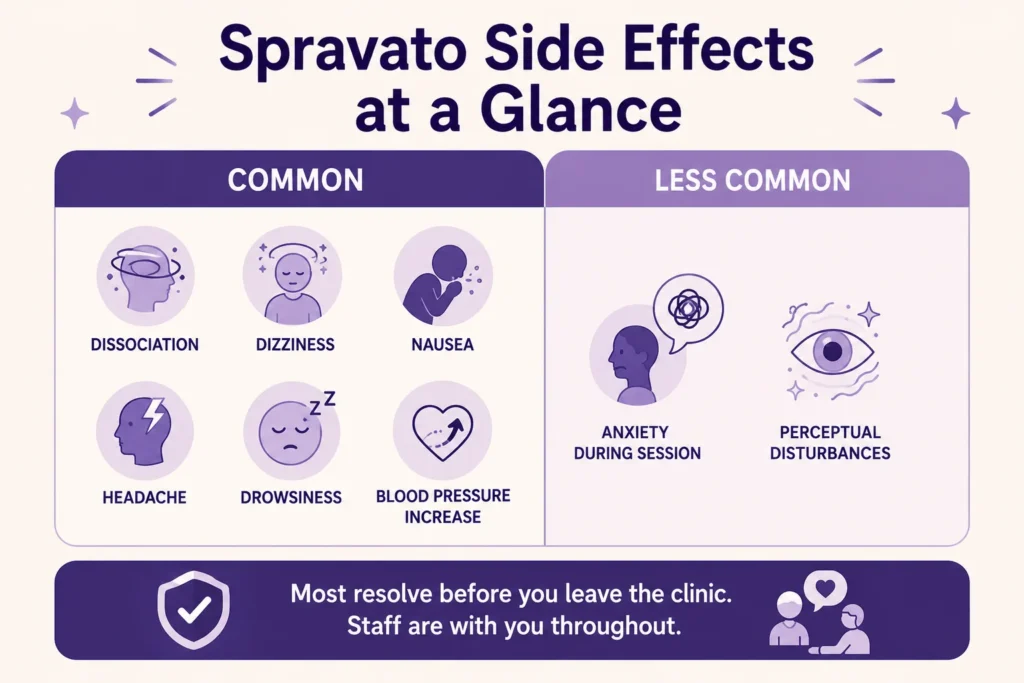
Common side effects during the session:
- Dissociation, which is an expected part of how the medication works, not a sign something went wrong
- Dizziness, nausea, and headache
- Sedation and temporary increases in blood pressure
Less common side effects:
- Anxiety or perceptual disturbances during the observation window
- Severe blood pressure changes in rare cases
Why every session happens in a supervised clinical setting:
- Potential for misuse given the ketamine relationship
- The REMS monitoring program exists specifically to manage these risks safely
What Spravato does not cause
Spravato does not cause weight change, sexual dysfunction, or emotional blunting. The spravato side effects picture compares favorably to most antidepressants, with effects staying largely contained to the session and the period immediately following it.
Frequently Asked Questions
You can drive yourself to the clinic but not home. The dissociative effects of Spravato mean you are required to have someone drive you after every session without exception. Plan this before your first appointment.
Yes. Spravato is typically administered alongside an oral antidepressant rather than replacing it. Your provider will review your current medications during the evaluation to check for any interactions.
Not everyone responds, and a good provider will monitor your progress throughout and reassess the plan if meaningful improvement is not occurring by the expected point in the induction phase. Other options, including TMS therapy, remain on the table.
There is a monitored abuse potential given the ketamine relationship, which is part of why the REMS program exists and why it cannot be taken home. Administered in a certified clinic under supervision, the risk is managed as part of the program structure.
The standard criteria are a formal diagnosis of treatment-resistant depression and documented failure of at least two prior antidepressant treatments. A full psychiatric evaluation at Beautiful Minds Frisco will clarify whether you meet the criteria and whether Spravato fits your specific situation.
How Much Does Spravato Cost and Does Insurance Cover It
How much does spravato cost per session typically falls between $590 and $900 without coverage. A full induction course across the first eight weeks can push the total into the thousands, which makes spravato cost without insurance a genuine barrier for people who need it.
The more encouraging picture is that insurance coverage for Spravato has improved significantly since its approval. Most major commercial insurance plans and Medicare now cover it for treatment-resistant depression with documented evidence of prior antidepressant failure typically two or more medications tried at adequate doses.
Janssen’s patient assistance program can meaningfully reduce out-of-pocket costs for qualifying patients who do not have adequate coverage.
At Beautiful Minds Frisco, benefits are verified before treatment begins so you understand your actual costs rather than the sticker price before committing to a course of treatment.
Disclaimer: This content is for informational and educational purposes only. It is not a substitute for professional mental health advice, diagnosis, or treatment. If you are in crisis, call or text 988 for the Suicide and Crisis Lifeline.