Mental Health for DFW First Responders: Why Police Officers and Firefighters Don’t Seek Help and Why They Should
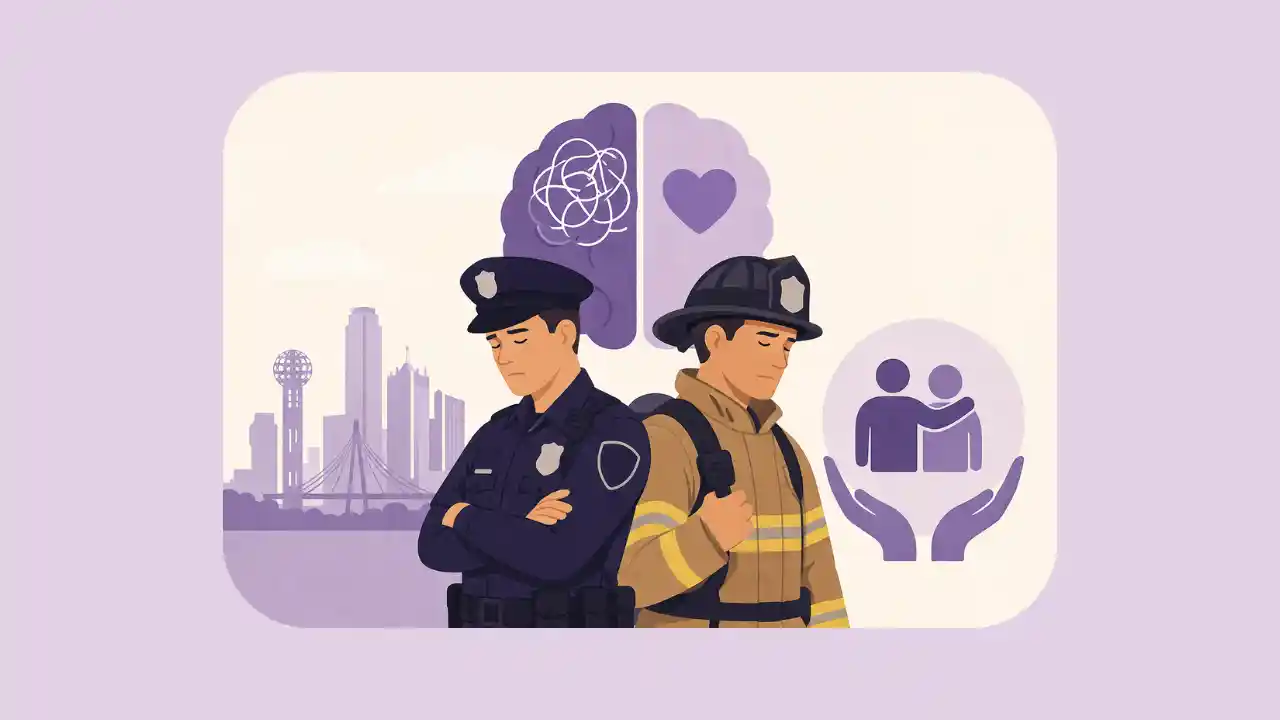
There is a particular kind of weight that comes with a job where you show up on the worst day of someone else’s life, over and over again, and then go home and act like everything is fine. You eat dinner and watch television. You tell your family that you are okay. Then you do it again the next shift, and the shift after that, because that is what the job demands and because somewhere along the way you learned that needing help and doing this job do not belong in the same sentence.
That belief is costing lives. Not slow. Right now.
Police officer mental health and firefighter mental health across Dallas-Fort Worth sit in a space where everyone quietly knows something is wrong, and almost nobody says it out loud. This blog is for people who are tired of staying quiet.
Key Takeaway:
- Why are police suicide rates and firefighter suicide rates higher than most people realize
- What first responder PTSD looks like on and off the job
- Why fitness for duty evaluation fears keep so many from asking for help
- What counseling for first responders looks like when it is done right
- Where to find real support in DFW today
What the Numbers Actually Say
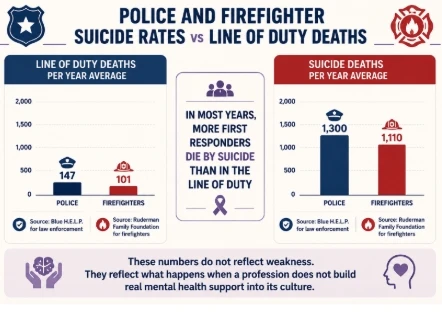
Police suicide rates tell a story that the profession has been reluctant to sit with, and the data tracked by the Blue H.E.L.P. organization puts that reality into numbers that are hard to look away from. Most years, more officers lose their lives to suicide than to anything they face on the job. Nobody reads that number out loud at roll call. It does not make the evening news the way an officer-involved shooting does. It just keeps climbing while the culture that drives it stays largely intact.
Firefighter mental health follows a similar pattern. Firefighters are significantly more likely to die by suicide than in a fire or on the scene. The same people trained to run toward danger are quietly struggling to survive what that danger does to them over time. The systems built around them never really accounted for that part.
These are not statistics about weaknesses. They are statistics about what happens when an entire profession is told for decades that asking for help is the same as failing.
Why First Responders Don’t Ask for Help
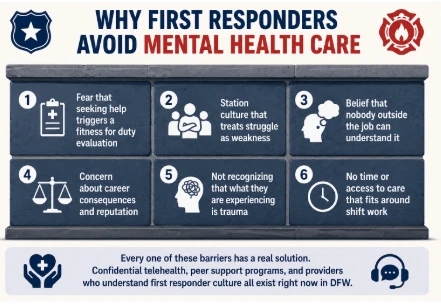
Mental health for first responders is complicated by the culture these jobs are built on. Strength, reliability, and emotional control are not just encouraged; they are the job. Showing up as someone who cannot handle what they have seen feels like a direct contradiction of everything the role demands.
Police officers’ mental health specifically gets tangled up in concerns about fitness for duty evaluation. This is one of the most cited reasons officers avoid mental health care entirely. Fear is real, and it is understandable. If seeking help means risking your badge, your rank, or your career, the math does not favor asking for help. That calculation happens quietly in the heads of thousands of officers who never make the call.
Firefighter mental health carries its own version of the same fear. Fire stations run on tight-knit crews where everyone knows everyone’s business. Admitting you are struggling feels like letting down the people you work alongside every day, the people whose lives depend on trusting you when things go sideways on a call.
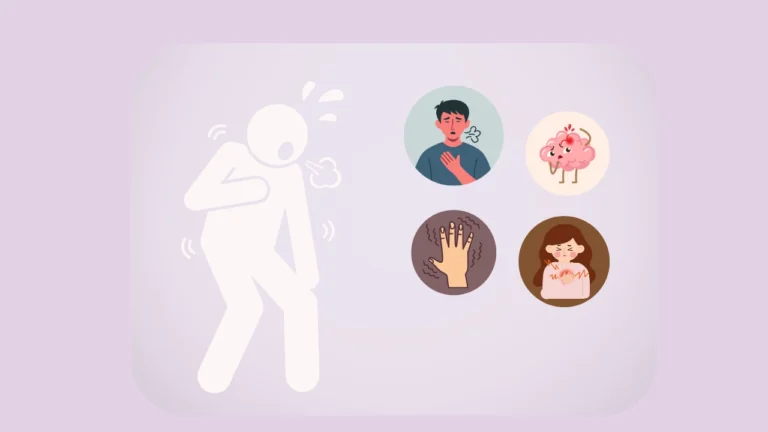
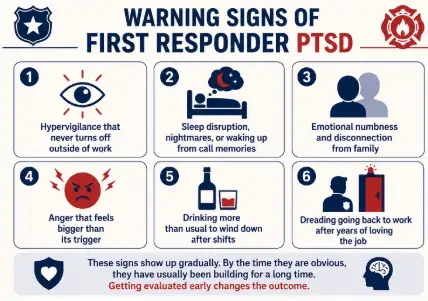
First responder PTSD sits underneath a lot of this without ever being named. Officers and firefighters who have been doing the job for years often describe symptoms that fit PTSD without ever connecting what they are experiencing to trauma. Hypervigilance that never shuts off. Sleep that does not come, or that gets interrupted by images from calls they handled years ago. Anger that shows up at home in ways that feel impossible to explain. Emotional numbness that slowly empties out the relationships they care about most.
None of that gets talked about in the locker room.
What First Responder PTSD Actually Looks Like
First responder PTSD does not always look like someone falling apart. A lot of the time it looks like someone who is highly functional at work and completely checked out everywhere else. You started having an extra drink after your shift to take the edge off. Sitting with your back to the door at a restaurant feels wrong in a way you can’t explain.
Police PTSD and firefighter PTSD share a lot of the same features, but they also have their own textures. Officers face violence, community anger, and legal pressure all at once. On top of that, they make calls in seconds that other people then review and debate for months. That kind of weight does not just disappear when the shift ends. Firefighters carry the images of what fire does to people and the physical toll of a job that breaks the body as reliably as it breaks the mind.
Cumulative trauma is what makes this so hard to see coming. It is not always a catastrophic call. It stacks up over time. One call, then another, then another, stretching across years until your mind and body start showing the cracks from holding all of it.
Critical incident stress debriefing exists specifically to address this. It is a structured process where first responders talk through a traumatic event with trained support shortly after it happens, before the brain has fully locked the experience into long-term memory in a way that becomes harder to process later. Departments that use critical incident stress debriefing consistently show better outcomes. The ones that treat it as optional or skip it entirely are leaving their people exposed.
The Organizations Working to Change This
The Behind the Badge Foundation is one of the organizations doing real work in this space. Their focus is on providing mental health support, financial assistance, and community law enforcement officers and their families, particularly in Texas. They understand the culture because they came out of it, and that matters when you are trying to reach people who have spent their careers being skeptical of anyone who does not.
A first responder support network built specifically around people who understand the job changes what help feels like. Peer support programs staffed by fellow officers and firefighters who have been through their own struggles carry a credibility that outside providers sometimes cannot. When the person sitting across from you has worn the same uniform, the conversation starts from a different place entirely.
Counselling for first responders works best when the provider actually understands the culture. A therapist who pathologizes hypervigilance without understanding that it kept you alive on hundreds of calls is going to lose the room fast. Good counseling for first responders meets people where they are in their experience rather than asking them to explain it from scratch.
What Getting Help Actually Looks Like
A lot of first responders picture getting mental health help as sitting in a waiting room, filling out forms, and talking to someone who has never been anywhere near a trauma call. That picture is outdated, and it keeps people from making calls.
Telehealth has changed the access question significantly. Confidential virtual appointments mean nobody sees your truck parked outside a behavioral health office. Nobody in the department knows you made an appointment. You can talk to a psychiatrist from your own home, on your own time, without it becoming part of the station gossip by the next shift.
Fitness for duty evaluation is a separate process from voluntary mental health care. Seeking help on your own does not automatically trigger a fitness-for-duty evaluation. Understanding that distinction matters because the conflation of the two is one of the main things keeping officers from picking up the phone.
Mental health for first responders has also expanded in terms of what treatment looks like. EMDR has strong evidence for trauma specifically. Cognitive processing therapy was actually built with people like you in mind. And medication, when a good doctor manages it right, can genuinely help with sleep, mood, and anxiety without leaving you foggy or slow on the job. A lot of people assume it will, but that is not how it has to go.
The families of first responders also carry a version of this weight. Spouses who absorb emotional distance, anger, and hypervigilance at home deserve support, too. Family therapy as part of the picture often accelerates the recovery of the first responder because it repairs the relationships that the job quietly eroded.
Frequently Asked Questions
Voluntary mental health care and fitness-for-duty evaluation are separate processes. Reaching out on your own does not automatically trigger any review. Confidential telehealth options add a layer of privacy for first responders who are concerned about visibility.
Critical incident stress debriefing is a structured group process that helps first responders process traumatic events shortly after they happen. Departments that use it consistently show better outcomes compared to those that skip it. It is most effective when used promptly after a significant incident rather than weeks later.
Counseling for first responders works best when the provider understands the culture, the specific stressors, and the way trauma accumulates over a career. A provider who meets you inside your experience rather than asking you to justify it from the beginning makes the process significantly more effective.
Hypervigilance that does not turn off outside of work, sleep disruption, emotional numbness, anger that feels disconnected from its triggers, and withdrawal from the people closest to you are all common signs. A proper psychiatric evaluation is the only way to get a clear picture of what is going on and what would help.
Getting Support at Beautiful Minds Psychiatry
Beautiful Minds Psychiatry in Frisco works with first responders across the DFW area who are ready to stop white-knuckling through it. The practice understands that police officer mental health and firefighter mental health come with a specific cultural context that generic mental health care often misses entirely.
Both telehealth and in-person appointments are available, and evaluations are thorough enough to address trauma, mood, sleep, and the conditions that tend to stack on top of each other after years in this work. Getting an evaluation does not mean giving up your career. It means taking the job of staying functional as seriously as you take everything else.
You showed up for everyone else. Showing up for yourself is not a contradiction of that. It is the only way to keep doing it.
Disclaimer: This content is for informational and educational purposes only. It is not a substitute for professional mental health advice, diagnosis, or treatment. If you are in crisis, call or text 988 for the Suicide and Crisis Lifeline.