Mental Health and Grief: When Loss in Frisco Needs More Than Therapy

If you have ever sat in a therapist’s office, done all the right things, and still driven home feeling like something inside you is quietly breaking, you already know grief does not follow the rules.
It does not wrap up in a set of sessions or respond to breathing exercises. For some people it stops being just grief and starts needing a different level of care entirely. Mental health and grief are more connected than most people realize, and knowing where that line is can change what kind of help you reach for.
Key Takeaway:
- Grief lasting months without improvement, or causing panic attacks and physical symptoms, has moved into clinical territory.
- Physical symptoms are not separate from grief; they are part of it.
- Traumatic losses need trauma-specific therapy, not just general bereavement counseling.
- Miscarriage grief is a legitimate clinical loss that deserves real psychiatric support.
- Medication does not avoid grief; it stabilizes the body enough to actually process it.
Grief Is Supposed to Hurt. But Not Like This.
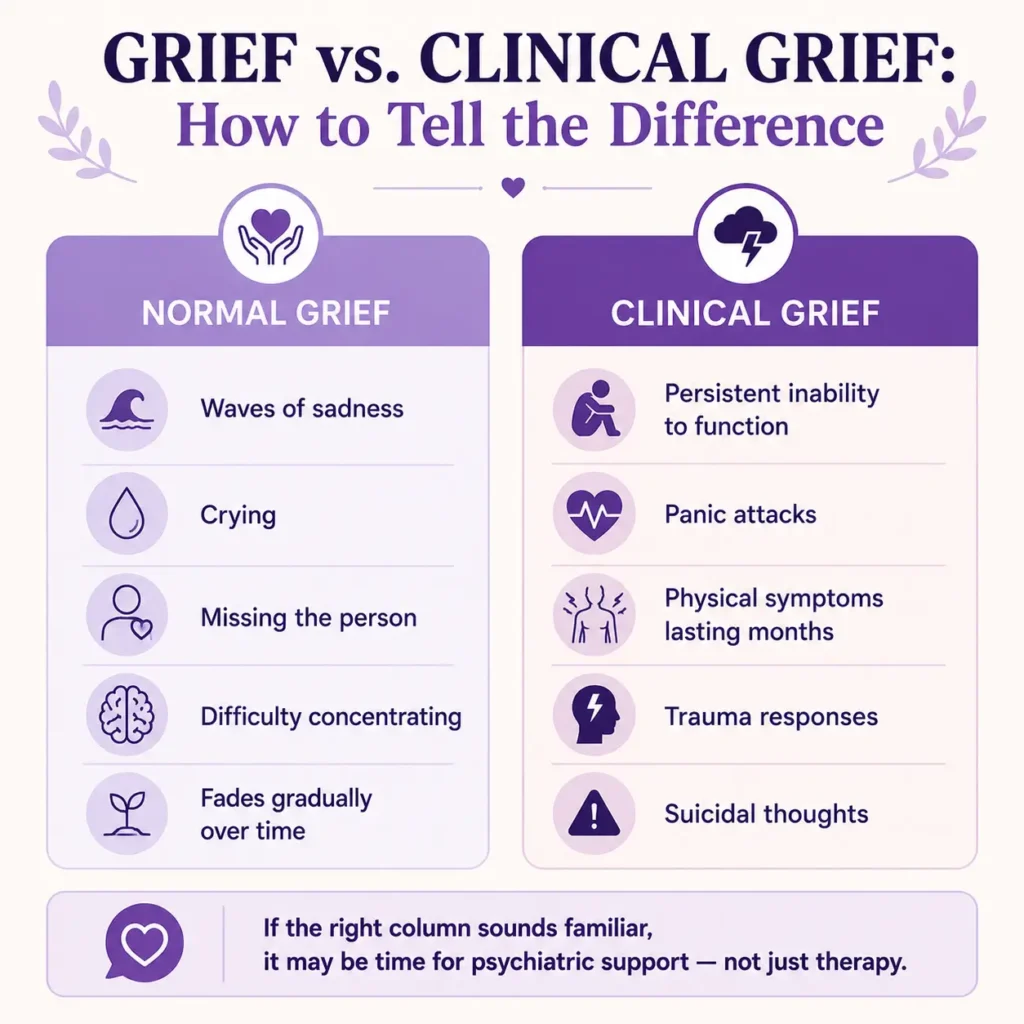
There’s a version of grief that’s painful but recognizable. You cry; you feel the absence of whoever or whatever you’ve lost; you have hard days and then slightly less hard days. That’s grief doing what grief is supposed to do moving through you, not setting up permanent residence.
Then there’s another version. The one where months pass and the weight haven’t shifted. Where you’re not just sad but completely unable to function. Sometimes loss triggers something that feels less like mourning and more like your entire mental health is unraveling. When that happens, the conversation needs to shift from grief counseling to psychiatric care, and recognizing that distinction early matters more than most people realize.
A standard therapist is extraordinarily valuable, but they are trained primarily in talk-based interventions. When grief has crossed into clinical territory, when it’s triggering panic attacks, disrupting sleep, manifesting in the body, or overlapping with trauma, the tools available in a therapy room may not be enough on their own. That’s not a criticism of therapy. It’s an honest acknowledgment of what the situation requires.
What Grief Actually Does to the Body
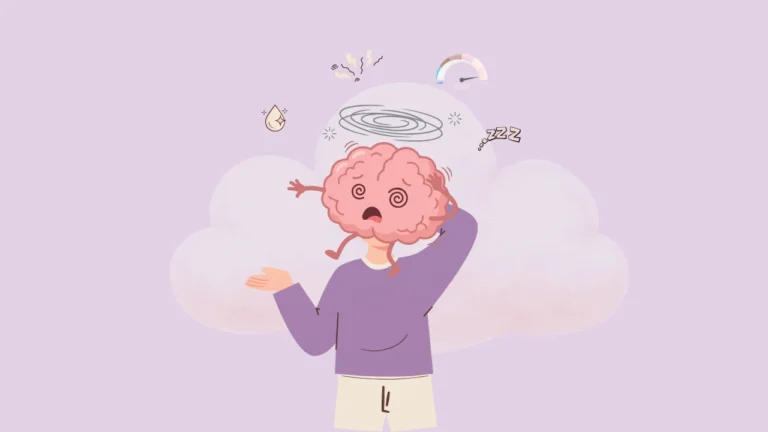
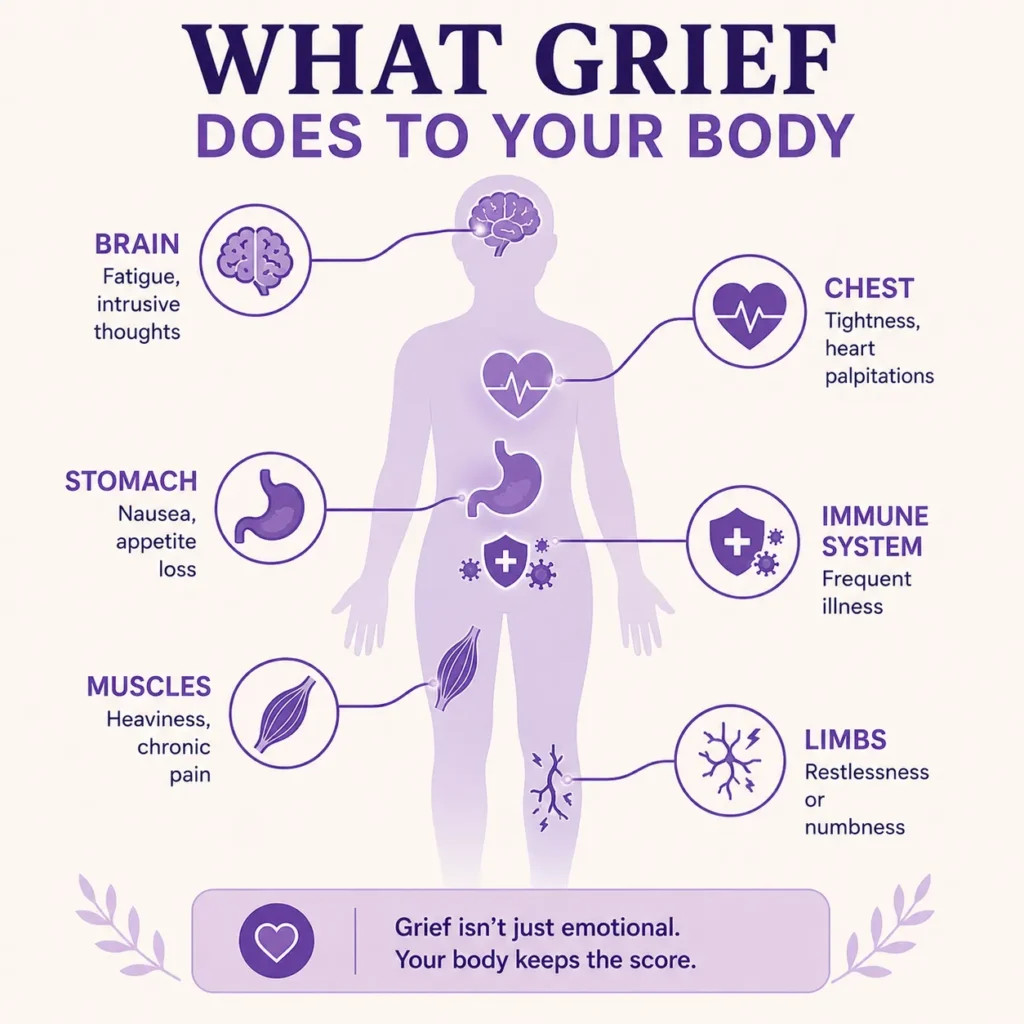
Most people expect grief to live in the chest. What they don’t expect is what it does everywhere else. Grief physical symptoms are far more common and far more disruptive than most conversations about loss to acknowledge, and they’re one of the clearest signs that what someone is experiencing has moved beyond ordinary mourning.
Chronic fatigue that sleep never fixes, headaches that appear out of nowhere and linger for days, digestive problems, chest tightness, and a physical heaviness that makes basic tasks feel enormous. Some people stop eating because food feels irrelevant. Others develop pain in places they never hurt before. The immune system takes a hit and suddenly every passing illness lands. The body and the mind are not separate systems, and grief makes that impossible to ignore.
When these physical symptoms persist alongside emotional ones, it’s a strong signal that the nervous system is under genuine strain not just emotional strain, but physiological strain that warrants proper medical and psychiatric evaluation, not just time and patience.
Grief and Panic Attacks: The Connection Nobody Warned You About
One of the least discussed but most disorienting experiences people have during grief is the sudden onset of grief and panic attacks. You’re not in a dangerous situation. Nothing threatening is happening in the room. And yet your heart is hammering, you can’t get a full breath, your hands are shaking, and some parts of your brain have decided that you are not safe.
Panic attacks during grief happen because loss fundamentally disrupts the nervous system’s sense of security. When someone or something that formed a core part of your emotional architecture is suddenly gone, the nervous system can go into a state of high alert that mimics threat response even when there’s no external threat present. The brain has lost something it relied on for regulation, and it responds accordingly.
For many people, panic attacks come without warning and feel completely disconnected from the grief itself. They hit in the grocery store, during a meeting, or while watching television. That unpredictability is what makes them so frightening. At this point medication management, structured therapy, and a proper psychiatric evaluation stop being optional and become necessary parts of getting stable.
When Grief and Trauma Live in the Same Space
Not all losses are equal in how they land in the body and the mind. Some losses are traumatic by nature sudden deaths, violent losses, witnessing someone’s final moments, loss through suicide, loss that came with no warning and no time to prepare. These kinds of losses don’t just cause grief. They cause grief and trauma therapy needs that are distinctly different from what standard bereavement counseling addresses.
Traumatic grief produces symptoms that look a lot like PTSD, intrusive memories, hypervigilance, avoidance, and emotional numbness that flips into overwhelming feeling without warning. A person dealing with it is not just sad. Their nervous system is physiologically stuck in the moment it happened, replaying it without choosing to, unable to move forward because the body has not processed it as over.
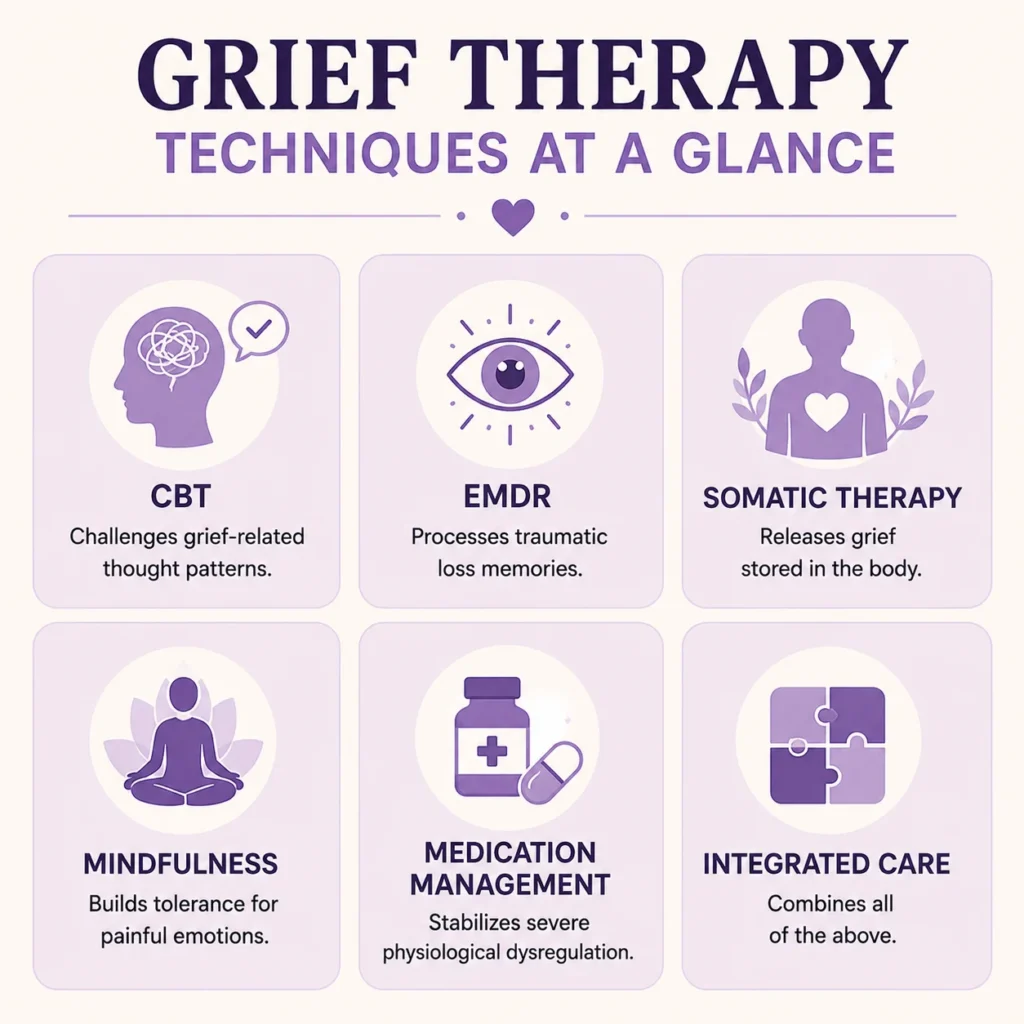
Grief therapy techniques for traumatic loss look different from standard grief counseling for a reason. Approaches like EMDR, somatic therapy, and trauma-focused cognitive behavioral therapy target the nervous system directly in ways that talk therapy alone often cannot reach. These are not fringe methods. They carry strong clinical evidence and are a core part of what separates a real grief treatment plan from general supportive counseling.
Grief After Miscarriage: The Loss That Often Goes Unacknowledged
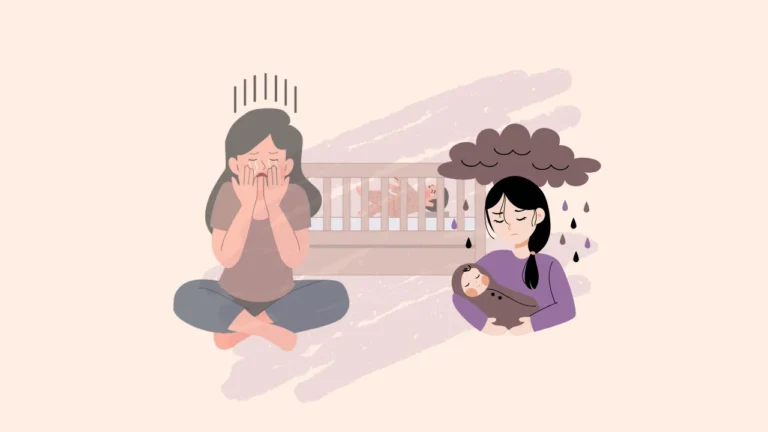
There is a particular kind of grief that sits in a painful middle space real enough to be devastating but often minimized by the world around it. Grief after miscarriage is one of the most common and most undertreated forms of loss that brings people into psychiatric care, and it deserves to be named specifically rather than folded into a general category.
Pregnancy loss takes more than a life. Pregnancy loss takes an imagined future, an identity already forming, and for many women a deep sense of bodily betrayal. Women who miscarry often feel completely alone while people around them say things like “at least it was early” or “you can try again.” Partners who were equally invested grieve in silence because the focus naturally centers on the person who carried it physically.
What providers at a mental health clinic Frisco TX see regularly is that unprocessed grief after miscarriage can develop into clinical depression, anxiety disorders, and in some cases PTSD, particularly after multiple losses or physically traumatic ones. That is where psychiatric care Frisco TX becomes not just appropriate but necessary, and where having a provider who takes the loss seriously makes an enormous difference in how treatment actually feels and works.
When Medication Becomes Part of the Conversation
There’s still a lot of hesitation around the idea of medication for grief, and it’s worth addressing that hesitation honestly. Medication doesn’t erase grief. It doesn’t skip you over the process of mourning or numb you into indifference. When grief produces severe physiological dysregulation, mental health medication management can stabilize the body enough to allow real emotional processing to happen.
When someone cannot sleep, cannot get through therapy without dissociating, and cannot function day to day, telling them to just feel their feelings misunderstands what the body and brain need under that level of strain. Sometimes the body has to stabilize before the mind can do the work healing actually requires.
This is where working with a provider who offers integrated care combining psychiatric medication management with therapy, rather than treating them as separate tracks makes a significant difference. The goal is never to medicate grief away. The goal is to make the person functional enough to actually grieve, which is a very different thing.
Frequently Asked Questions
Grief and trauma therapy goes deeper than talking through feelings. It addresses how loss gets stored in the body and the mind, using approaches like EMDR and somatic therapy that regular bereavement counseling does not always include.
Chest tightness, exhaustion that sleep does not fix, headaches, appetite changes, and a heavy physical weight that has no obvious medical cause. Grief lives in the body just as much as the mind.
Unprocessed grief and loss can develop into depression, anxiety, and complicated grief disorder over time. Mental health and grief are deeply connected, and grief that goes unaddressed rarely resolves on its own.
EMDR, cognitive processing therapy, and narrative therapy all have strong evidence. The right approach depends on the nature of the loss and how long symptoms have been present.
At Beautiful Minds Mental Health, grief is treated as the complex, multi-layered experience it is not a problem to be solved in six sessions. Care combines psychiatric evaluation, medication management when appropriate, and coordination with therapy to build a plan that fits your specific situation.
A Final Word from Beautiful Minds Mental Health
Grief does not come with a timeline and does not always respond to everyday coping tools. If what you are carrying feels bigger than any one conversation can hold, Beautiful Minds Mental Health in Frisco provides real psychiatric evaluation, integrated medication management, and a care environment that takes your loss seriously.
You do not have to keep managing this alone or wondering whether what you feel is bad enough to ask for help. It is. Reach out to Beautiful Minds Mental Health and let us figure out the right next step together.
Disclaimer: This content is for informational and educational purposes only. It is not a substitute for professional mental health advice, diagnosis, or treatment. If you are in crisis, call or text 988 for the Suicide and Crisis Lifeline.