Bipolar Disorder Treatment Guidelines: What Every Family in Frisco, TX Needs to Know
Watching someone you love to go from the most energetic, unstoppable version of themselves to someone who cannot get out of bed is one of the most confusing things a family can go through. And if that person is you, the weight of that confusion sits differently. The good news is that bipolar disorder is treatable and understanding how doctors approach it changes everything.
Key take away:
- Why bipolar disorder gets missed or misdiagnosed for years
- What mania and hypomania look like in daily life
- How a real diagnosis happens, step by step
- What current treatment guidelines recommend
- What long-term stability requires beyond just medication
What Is Bipolar Disorder and Why Does It Get Missed So Often?
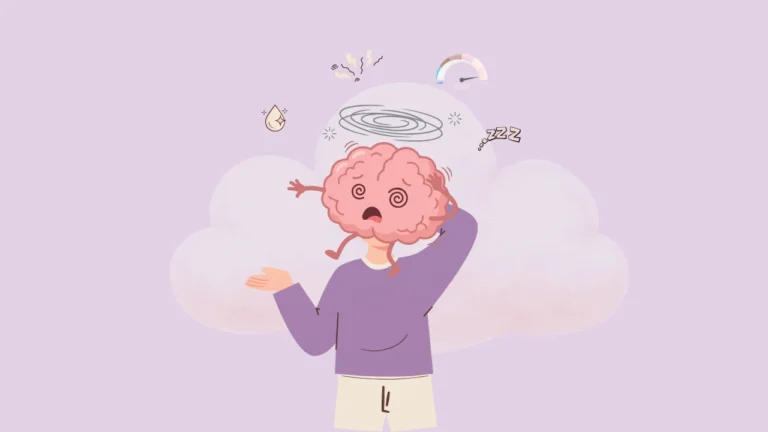
Bipolar disorder is a brain condition that causes extreme mood shifts. These are not just regular emotional ups and downs. They are intense episodes of mania, hypomania, or depression that can last days or weeks and severely affect daily life.
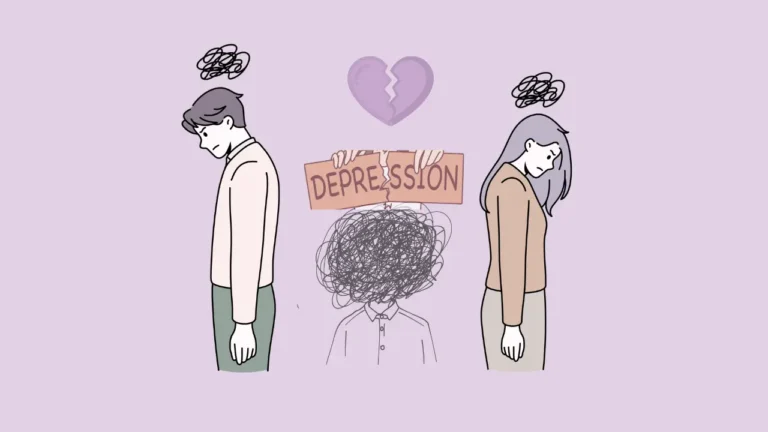
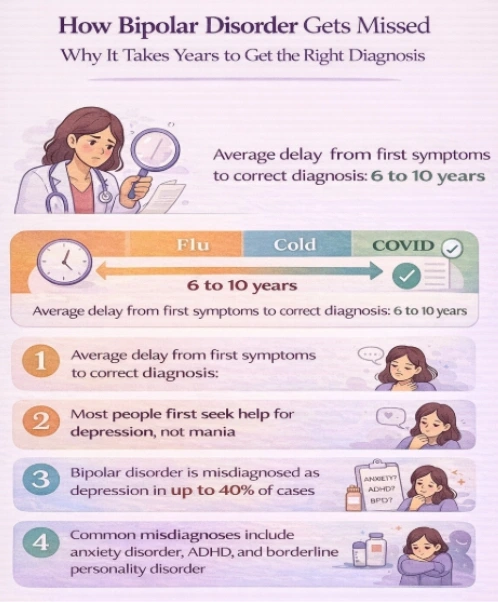
Most people walk into a doctor’s office feeling depressed, not manic. That is actually the biggest reason bipolar disorder gets missed. A person can go through several depressive episodes before a single manic one ever shows up. This is why every depression evaluation should always consider bipolar disorder as a possibility from the start.
Getting the right label matters because the wrong treatment, like taking antidepressants without a mood stabilizer, can make things worse. Monotherapy with antidepressants is contraindicated during manic episodes and in bipolar disorder. American Academy of Family Physicians says this is exactly why a proper bipolar disorder evaluation comes first.
What Does a Manic Episode Sign Actually Look Like Day to Day?
Most people picture mania as someone being wildly happy and reckless. Sometimes that is true. But the reality is a lot more varied, and bipolar disorder and irritability are actually one of the most overlooked signs.
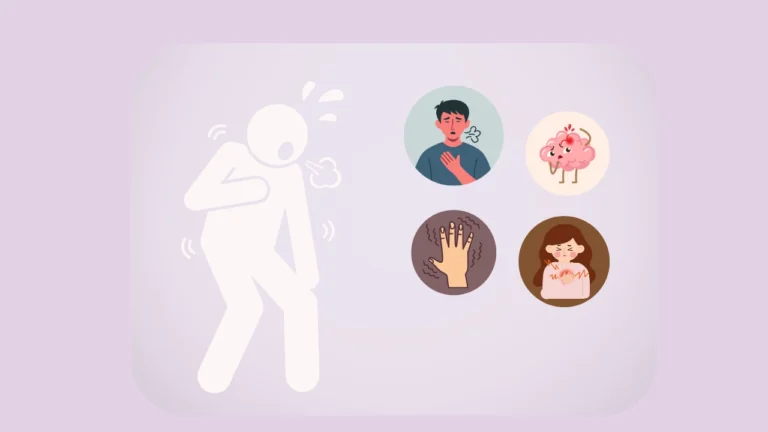
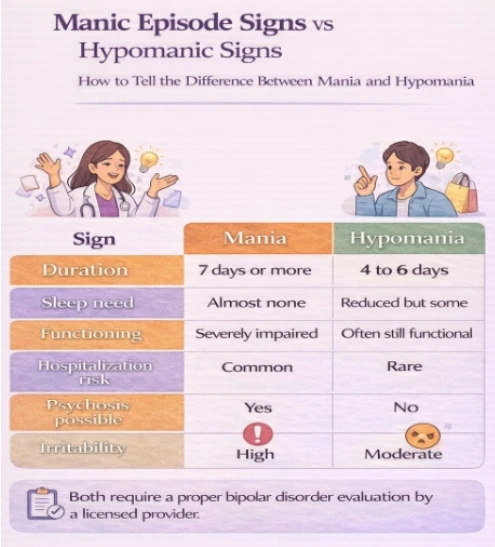
During manic episodes, a person may feel overexcited, jumpy, or wired, with racing or jumbled thoughts. Behaviors might be impulsive, dangerous, or reckless. Sleeplessness is common, and the person may feel unusually important, talented, or powerful.
The manic episode signs that families often notice first include things like your loved one suddenly not sleeping for days and still having enormous energy. Five new projects at midnight. Money spent without a second thought. Tiny things suddenly turning into full blown fights. That last one, irritability and anger, is one of the most misread signals in bipolar disorder.
Hypomania is a lighter version of mania. The symptoms of mania or hypomania look similar, but hypomania tend to be shorter and less severe. Someone in a hypomanic state might seem like they are just “finally doing great” until things start to unravel.
How Is Bipolar Disorder Diagnosed?
A lot of people wonder if there is a lab test or a brain scan for this. No lab test or brain scan can tell you this. A trained psychiatrist sits with you, asks the right questions, and pieces together the full picture. That conversation is the actual diagnostic tool.
Assessment of the current episode must include an evaluation of the severity, polarity, suicide risk, agitation, presence of psychotic symptoms, and functional impairment. Clinician-administered tools such as the Young Mania Rating Scale for manic episodes and the Hamilton Depression Rating Scale for depressive episodes help assess baseline symptom severity and track improvement over time.
Your provider will ask about your mood history, your sleep, your energy, your family history, and whether any of your episodes happened around major life events or substance use. They may use a bipolar disorder quiz or structured screening tool as part of the intake. But the conversation itself, the full picture, is what leads to an accurate bipolar disorder evaluation.
Many people in Frisco, Texas search for a bipolar psychologist near me or a bipolar disorder psychiatrist and are not sure which one they need. A psychiatrist can both diagnose and prescribe medications. A psychologist focuses on evaluation and therapy. For most people with bipolar disorders, you will eventually need both.
Bipolar Disorder Treatment Guidelines
Here is where things get real. The bipolar disorder treatment guidelines used by clinicians today are built on decades of research and are updated regularly by major psychiatric organizations.
Pharmacotherapy with mood stabilizers such as lithium, anticonvulsants, and antipsychotics is a first-line treatment that should be continued indefinitely because of the risk of relapse. Active lifestyle approaches including good nutrition, exercise, sleep hygiene, and proper weight management are also part of evidence-based care.
Medication alone is rarely enough. Therapy works alongside medication, not against it. Psychoeducation and cognitive behavioral therapy help you function better socially, stay out of the hospital, and cut down on relapses. The right combination of both genuinely changes long term outcomes.
This is what a real bipolar disorder treatment program looks like. It is not just a prescription. It is a team approach, built around your specific pattern of episodes, your history, your lifestyle, and your goals. If you are in Texas and looking for counseling for bipolar disorder that takes this seriously, the right provider will not hand you a pill and send you home.

What Does Staying Stable with Bipolar Disorder Actually Require Long Term?
One of the biggest myths about bipolar disorder is that treatment is something you do for a while and then stop. That is not how this works. Bipolar disorder is a long-term condition, and the bipolar disorder treatment guidelines are clear that ongoing management is essential.
Neurocognitive impairment in bipolar disorder affects nearly all areas of thinking and occurs across different phases of the illness, even during periods of remission. Psychosocial functioning is closely linked to processing speed, abstract thinking, verbal memory, and executive function.
This means that even when someone is feeling good, the work continues. Regular therapy appointments, medication checks, mood tracking, and open conversations with your care team are what keep things stable over time. A therapist for bipolar who has worked with you over the years is one of the most protective things you can have in your life.
If you are managing this for a family member, the family resource section of the International Bipolar Foundation have tools that can genuinely help you understand what your loved one is going through.
Frequently Asked Questions
Repeating mood cycles, days without sleep but full of energy, and impulsive decisions that feel out of nowhere are worth noting. Never try to figure this out alone though. Only a bipolar disorder evaluation with a real psychiatrist gives you an actual answer.
No, pure depression does not include mania. When both show up together, that changes the picture completely and usually points toward bipolar disorder instead. That distinction is exactly why getting a full evaluation matters so much.
Mostly through a deep, honest conversation. Your psychiatrist asks about your mood history, sleep, energy, and family background. No blood test exists for this. The conversation itself is genuinely the most important diagnostic tool a psychiatrist has.
The team at Beautiful Minds TX works specifically with people going through this. They handle everything from the first evaluation to long-term care.
Going days without sleep but still running at full speed, spending money impulsively, jumping between new ideas at midnight, and unusual irritability are the biggest ones. That irritability piece is the manic episode sign most families miss completely.
Finding Bipolar Disorder Help Near Me in Frisco, Texas
If you are in the Frisco or North Texas area, you have real options. Whether you are searching for a psychiatrist for Frisco TX, looking into therapy Frisco TX, or trying to understand what frisco wellness and counseling programs offer, the most important step is reaching out before things escalate.
At Beautiful Minds TX, our team offers comprehensive mental health support for people with navigating bipolar disorders. You can learn more about our bipolar disorder services page and our full mental health treatment approach. We work with people at every stage, whether they are newly diagnosed, managing a recent episode, or trying to build long-term stability.
For anyone not sure where to start, NAMI Texas offers a helpline, local support groups, and free family education programs across the state. The search for bipolar disorder helps me feel overwhelmed. But it gets clearer once you are on the door.
Disclaimer: This content is for informational and educational purposes only. It is not a substitute for professional mental health advice, diagnosis, or treatment. If you are in crisis, call or text 988 for the Suicide and Crisis Lifeline.