TMS Therapy Near Me for Anxiety and Does It Work?
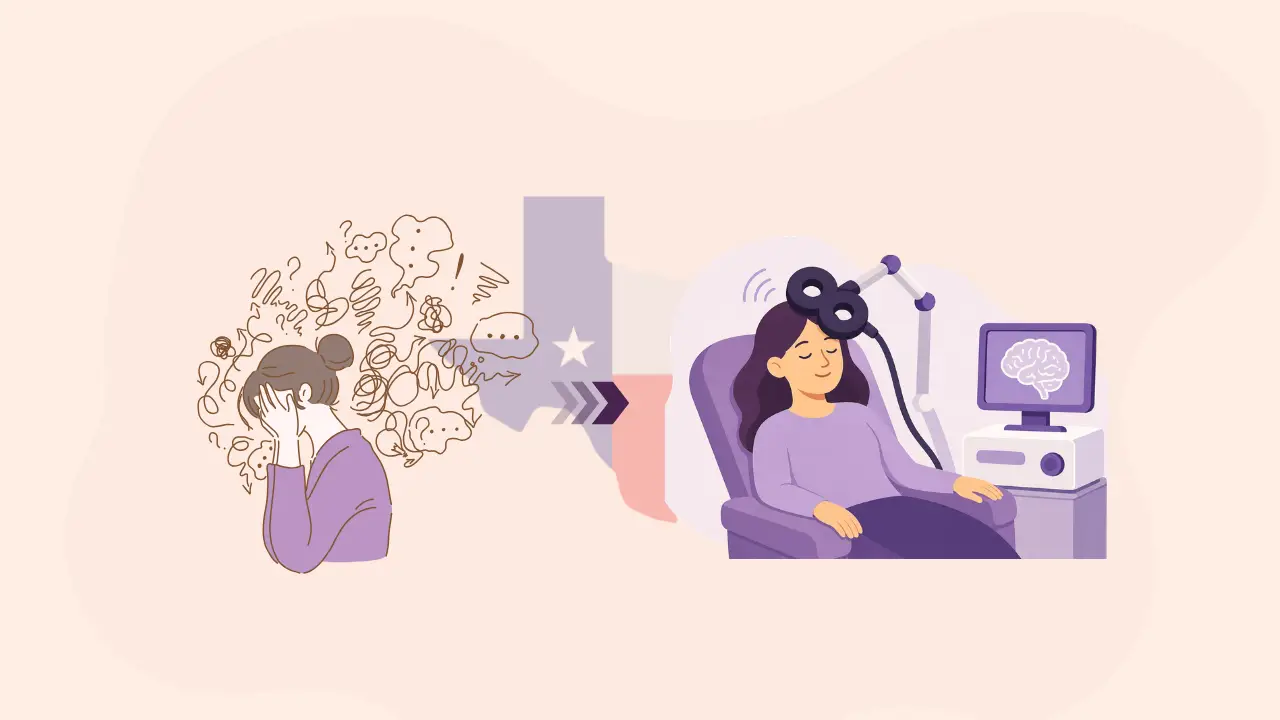
If you’ve typed “TMS therapy near me” into a search bar at 2 a.m. while your mind was still racing, you already know what it feels like when nothing else has worked. You’ve tried the pills. You’ve tried breathing exercises, journaling, and maybe even a few rounds of talk therapy. And yet the anxiety is still there, humming under everything you do. That’s usually the moment people start looking into Transcranial Magnetic Stimulation, or TMS, as something beyond the usual playbook.
This isn’t a sales pitch. It’s a straightforward look at what TMS is, who it tends to help, and where it fits if you’re dealing with anxiety that medication hasn’t touched.
Key takeaway:
- TMS offers a non-medication path when standard anxiety treatments haven’t worked.
- It targets brain regions tied to mood, not the bloodstream like medication.
- Sessions are short and require no downtime to be easy to fit into daily life.
- Side effects are typically mild; serious risks like seizure are rare.
- Insurance coverage varies, so verify benefits before starting.
- Best results come from pairing TMS with therapy, with gradual improvement over time.
When “Just Try Another Medication” Stops Working
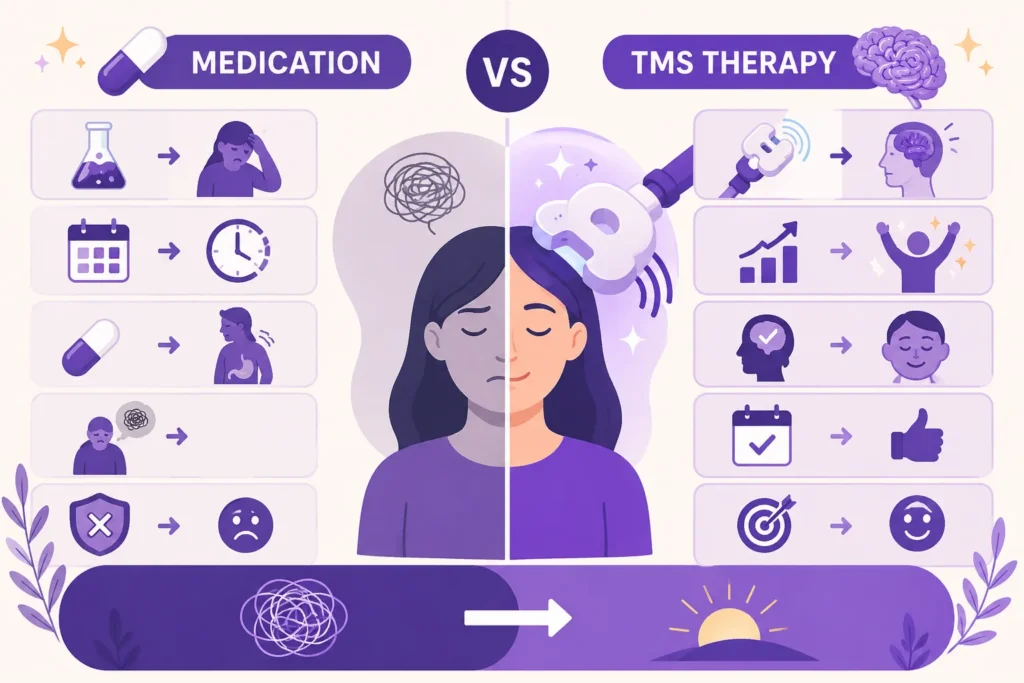
Anyone who has sat across from a psychiatrist and heard “let’s try a different dose” knows how discouraging that cycle gets. For a lot of people, anxiety medication not working is not a one-time disappointment. It becomes a pattern that repeats over months or years while side effects like weight changes, fatigue, emotional flatness, and sleep problems keep piling up.
This is the territory clinics like Frisco Mental Health Services are built around. Their work tends to focus on people who have already tried SSRIs, SNRIs, benzodiazepines, or a mix of all three and still have not found real relief. When adequate doses over a reasonable amount of time produce no meaningful change, that is generally what providers mean by medication resistant anxiety.
It’s worth saying clearly: this doesn’t mean something is wrong with you, or that you didn’t try hard enough. Brains respond to medication differently, and anxiety itself doesn’t always behave the same way from person to person. That variability is exactly why alternative treatment paths exist.
So, What Is TMS, actually?
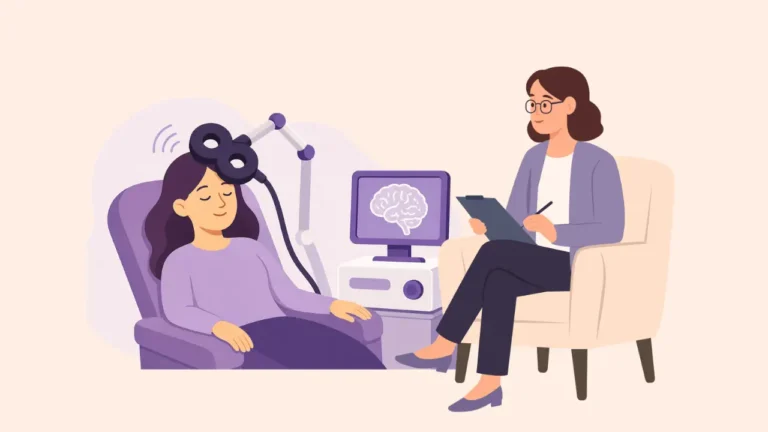
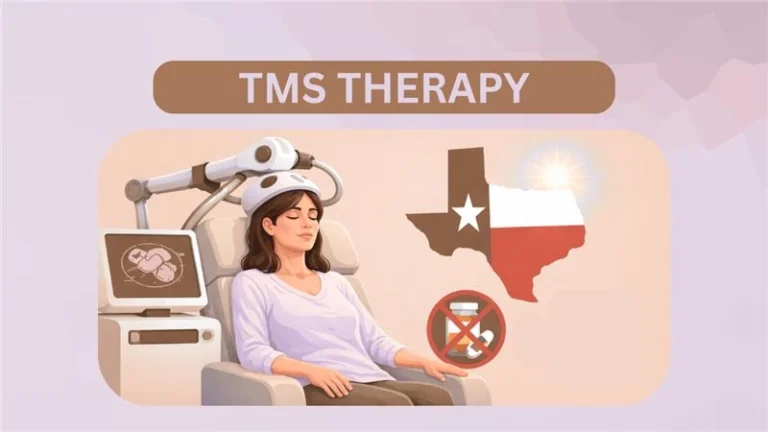
TMS uses a magnetic coil placed near the scalp to deliver targeted pulses to specific regions of the brain typically in areas involved in mood and emotional regulation, including the prefrontal cortex. No needles, no anesthesia, no sedation. You sit in a chair; the coil does its work for a set period, and you walk out and drive yourself home afterward.
The science behind it connects to how anxiety actually functions in the brain. Option 1:
Anxiety disorders connect directly to imbalances in neurotransmitters and anxiety circuits in the brain, particularly the serotonin and GABA pathways that control how the brain handles fear and emotional reactivity.
When those circuits are firing in unhelpful patterns, magnetic stimulation aims to recalibrate that activity rather than flood the body with chemicals the way medication does. This falls under what people broadly call brain health therapy, a treatment approach that targets brain function and circuitry directly instead of working through the bloodstream.
It’s a different mechanism entirely from a pill, which is part of why it sometimes works for people with whom medication alone hasn’t reached.
Who Tends to See This Recommended
An anxiety disorder specialist generally doesn’t jump straight to TMS. It usually comes up after a documented history of trying and not fully benefiting from at least one or two standard treatment routes. People who are considering it often share a few things in common:
They’ve been formally diagnosed with an anxiety disorder, not just dealing with everyday stress. They’ve tried medication, sometimes more than one type, with limited or short-lived results. They’re not able to tolerate the side effects well enough to stay consistent with treatment. They want a non-medication option but haven’t found one that addresses the intensity of what they’re experiencing.
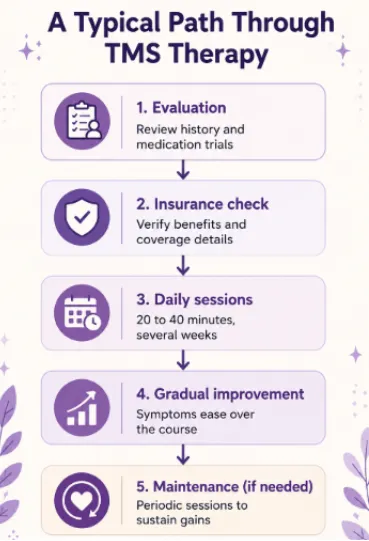
A real evaluation matters here. A thorough specialist will look at your full history of what’s been tried, what hasn’t worked, what your symptoms look like day to day before recommending anything.
What Sessions Look Like Day to Day
For people exploring this as outpatient anxiety treatment, the practical side matters as much as science. You’re not checking into a facility. You show up for sessions, typically daily on weekdays, for a course that often runs several weeks, and then you leave and go about your day’s work, school pickup, whatever’s on the calendar.
Each session itself is short, often somewhere in the range of 20 to 40 minutes depending on the protocol used. Many people describe a tapping or clicking sensation on the scalp during treatment, which tends to ease as sessions go on.
There’s no downtime needed afterward, which is part of why it fits into normal routines more easily than some other interventions.
The Question Nobody Skips: Side Effects
Anyone weighing this seriously wants to know about TMS therapy side effects before committing time and money to it. The honest answer is that most reported effects are mild and temporary. Scalp discomfort or tenderness at the treatment site is common, especially in the first week.
Some people get mild headaches, which typically respond to over-the-counter pain relief. Lightheadedness can happen but tends to be brief.
The more serious risk of seizure is rare. Clinics screen for risk factors like seizure history before starting treatment, which is one more reason a proper intake evaluation matters rather than skipping straight to scheduling.
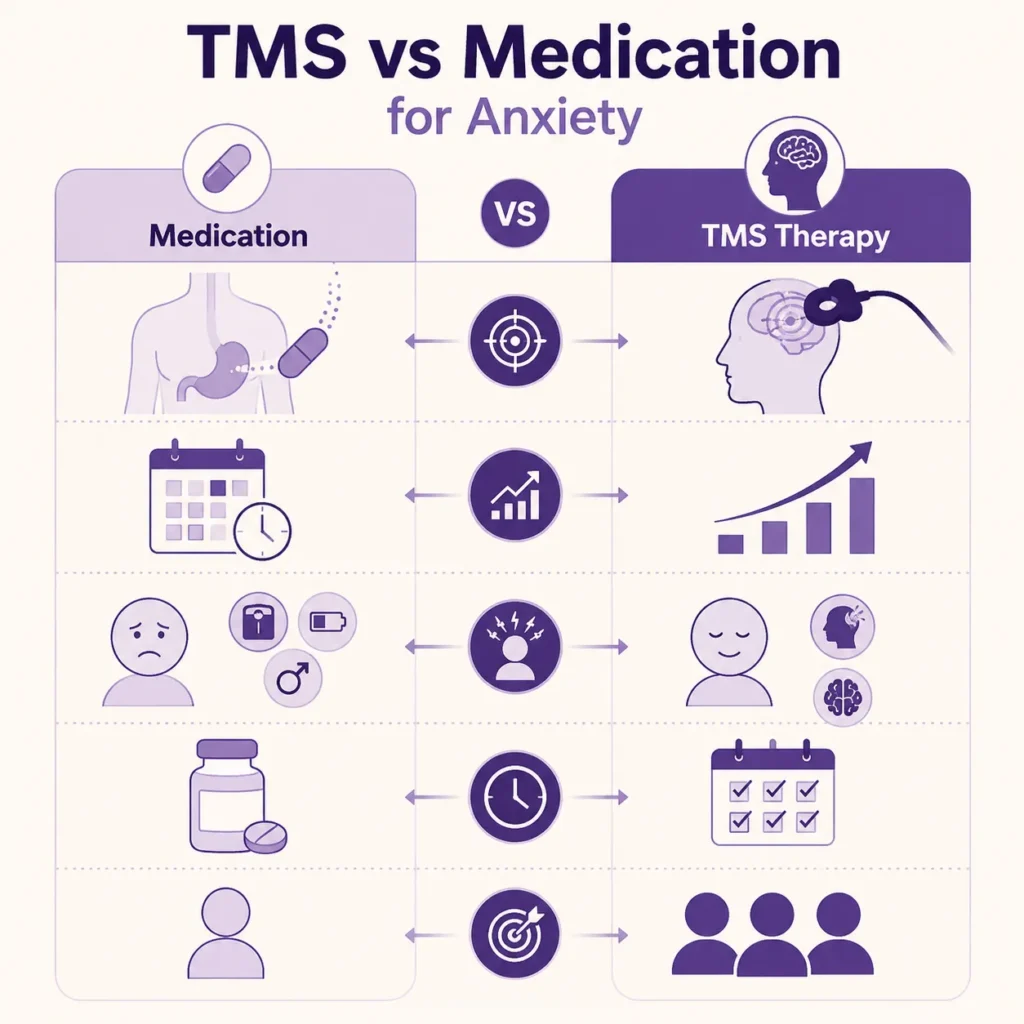
Many anxiety medications come with side effects that hit sleep, weight, or sexual function pretty hard. Compared to that, TMS carries a generally favorable risk profile, though it is still a medical decision you should make with a provider who knows your full history.
Does Insurance Actually Cover This?
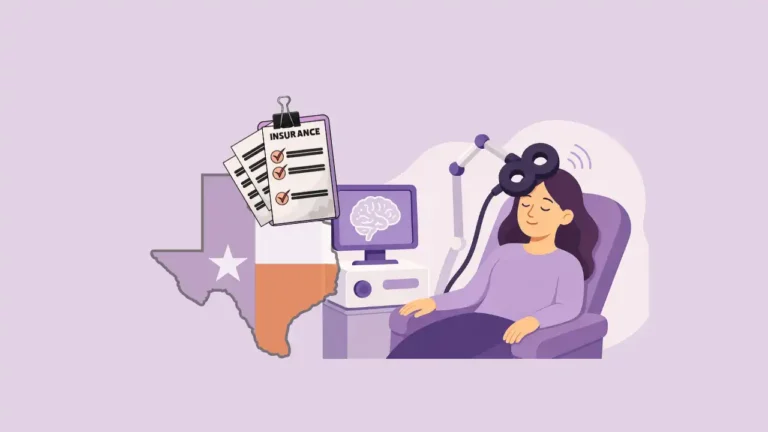
This is usually where the conversation gets practical fast. TMS therapy insurance coverage has expanded significantly over the past several years, particularly for depression, where FDA clearance and a long track record of insurer data exist. Coverage for anxiety specifically can be more variable and often depends on diagnosis codes, documented treatment history, and the specific insurer policies.
When checking coverage, start by asking your provider’s office to verify your benefits before anything begins. Request documentation of any prior medication trials because insurers usually want proof that other treatments were tried first.
Ask directly whether your plan requires a co-occurring depression diagnosis or handles anxiety-only cases differently. Some clinics offer payment plans or self-pay rates when insurance falls short, so ask about that too rather than assuming you are out of options.
TMS Doesn’t Have to Stand Alone
One thing that gets lost in a lot of TMS marketing is that it’s rarely presented as a stand-alone fix. Most thoughtful providers pair it with other support. Anxiety therapy techniques like CBT (cognitive behavioral therapy) remain useful alongside TMS, since therapy addresses thought patterns and coping skills while TMS works on the underlying brain activity. Combining the two is common practice rather than an either/or choice.
Lifestyle factors still matter to sleep quality, physical activity, and stress load all interact with how anxiety shows day to day, regardless of what treatment you’re using. TMS isn’t designed to replace good sleep or replace therapy; it’s designed to address a piece of the picture that medication and talk therapy alone sometimes can’t reach.
Setting Realistic Expectations
Not everyone responds the same way, and it would be misleading to promise guaranteed results. Clinical research on TMS has shown meaningful symptom improvement for a substantial portion of patients with treatment-resistant depression, and ongoing research continues to explore its application specifically for anxiety disorders.
Results generally build gradually over the course of treatment rather than appearing after a single session, and some people benefit from periodic maintenance sessions afterward to sustain improvement.
If you’re looking into a provider, ask about their specific experience treating anxiety (not just depression), their session protocols, what outcomes they typically see, and how they handle follow-up care after the initial treatment course ends.
Where This Leaves You
If you’ve been stuck cycling through prescriptions with little to show for it, it’s reasonable to want to understand every option on the table, not just the next pill. TMS isn’t right for everyone, and it isn’t a magic fix, but for people dealing with genuinely treatment-resistant anxiety, it represents a meaningfully different approach worth a real conversation with a qualified provider.
The right next step is usually a proper evaluation, not a Google search at midnight though that search is often what gets people there.
Frequently Asked Questions
Not really. Most people feel a tapping sensation on the scalp rather than pain. Scalp discomfort is common in the first few sessions and fades on its own within the first week. If something feels genuinely uncomfortable, the intensity can be adjusted without affecting the treatment.
Antidepressants travel through the bloodstream and affect multiple systems across the body. TMS targets specific brain regions tied to mood regulation directly using magnetic pulses. No sedation, no systemic effects, and no recovery time after each session.
Coverage depends on your insurer, your diagnosis, and your documented medication history. The team at Beautiful Minds handles prior authorization and insurance verification on your behalf. Visit beautifulmindstx.com to get started.
Absolutely. TMS addresses the neurological side while therapy builds the skills that support lasting improvement. Most providers pair the two rather than using either one alone.
Improvement builds gradually rather than after a single session. Most people notice changes somewhere between weeks two and four, with the fuller effect coming toward the end of the treatment course. Staying consistent with the schedule makes a significant difference in outcomes.
Ready to Find Out if TMS Is Right for You
At Beautiful Minds Psychiatry, we understand how exhausting it is to keep trying without real answers. If anxiety has outlasted every medication you’ve tried, you deserve a treatment plan built around what’s happening in your brain, not just another prescription refill.
Our team takes the time to understand your history, walk you through whether TMS is the right fit, and build a path forward that combines the right tools for your specific situation. You don’t have to keep managing this alone or guessing what comes next.
Reach out to Beautiful Minds Psychiatry to schedule an evaluation and find out if TMS could be the option that finally helps.
Disclaimer: This content is for informational and educational purposes only. It is not a substitute for professional mental health advice, diagnosis, or treatment. If you are in crisis, call or text 988 for the Suicide and Crisis Lifeline.